

Finding makeup that supports a radiant look while aligning with clean, vegan values can feel like a balancing act for many women in Atlanta. Mica, a naturally occurring mineral, brings a shimmering glow to cosmetics without harsh ingredients. Understanding its benefits helps you make informed choices for your skincare routine, whether you want a subtle highlight or a bold statement, all while staying mindful of ingredient transparency and ethical sourcing.
Table of Contents
- What Mica Is And Why It Shimmers
- Types Of Mica Used In Cosmetics
- How Mica Is Mined And Sourced
- Safety Of Mica For Skin And Health
- Ethical Sourcing And Industry Standards
- Clean, Vegan Alternatives To Mica
Key Takeaways
| Point | Details |
|---|---|
| Mica’s Unique Properties | Mica is a versatile mineral that enhances cosmetic formulations with its natural shimmer and blendable texture. |
| Natural vs. Synthetic Mica | Both natural and synthetic mica are used in cosmetics, each offering distinct aesthetic and ethical advantages. |
| Ethical Sourcing Importance | Responsible sourcing practices are critical in mica mining to combat child labor and promote fair working conditions. |
| Clean Alternatives | There are ethical and sustainable alternatives to mica that provide similar visual effects without the associated mining challenges. |
What Mica Is and Why It Shimmers
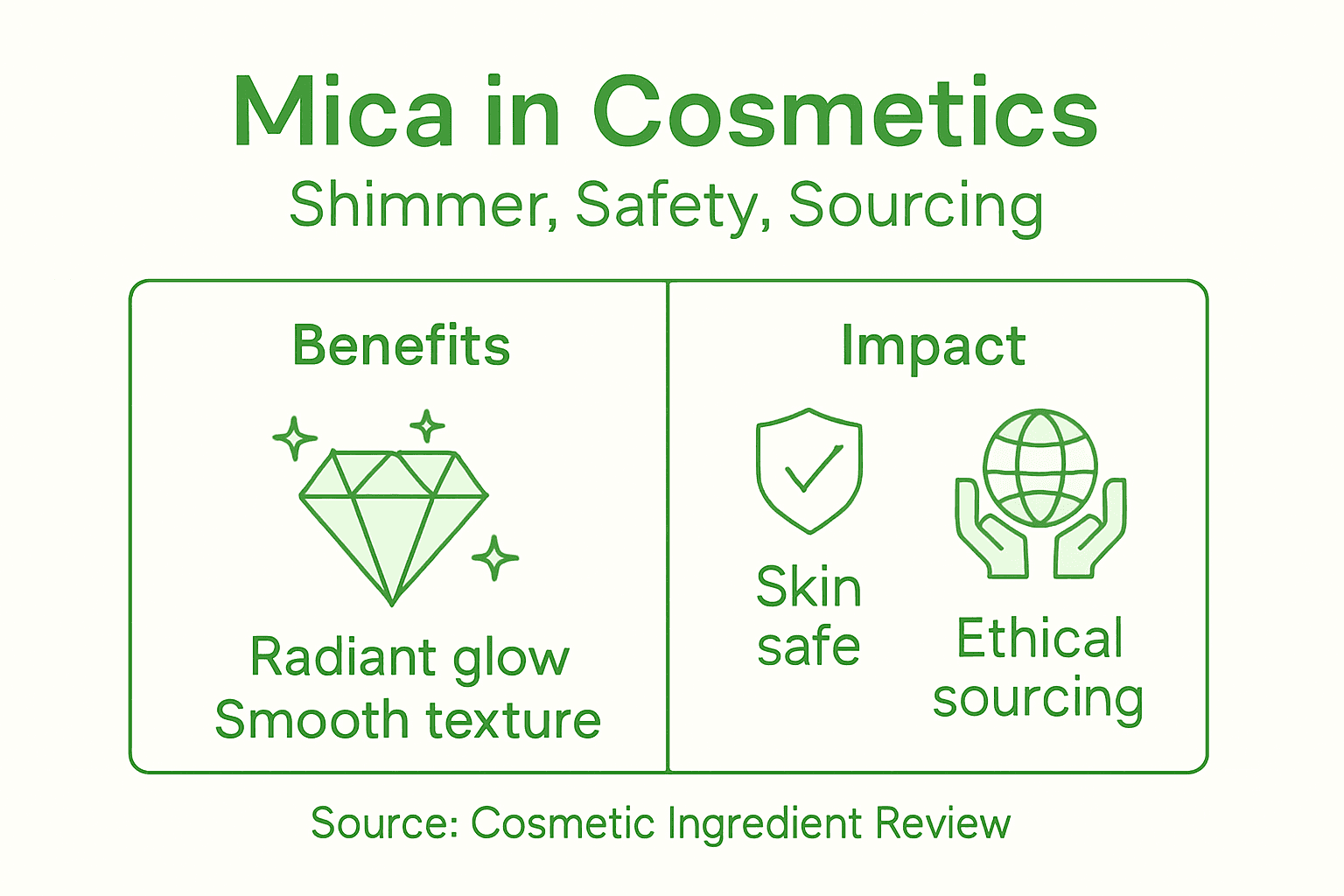
Mica is a fascinating natural mineral that brings radiance and shimmer to cosmetic formulations. Prized for its reflective properties, this lightweight silicate mineral transforms makeup products with its unique crystalline structure.
Geologically, mica exists as a group of sheet silicate minerals characterized by their remarkable ability to split into incredibly thin, transparent layers. These minerals form through complex metamorphic and igneous rock processes, creating crystals with extraordinary light-reflecting capabilities. The mineral’s natural shimmer comes from its unique molecular arrangement, which allows light to bounce and refract in multiple directions.
In cosmetic applications, mica offers several standout characteristics:
- Provides a natural, luminous glow
- Creates lightweight, blendable texture
- Offers versatile color and transparency options
- Enhances product finish and aesthetic appeal
- Works across multiple makeup product types
The mineral’s physical properties make it an exceptional ingredient for beauty formulations. Its sheet-like crystals can be transparent or subtly colored, enabling makeup artists and cosmetic chemists to create products with nuanced, ethereal effects. From soft highlighters to vibrant eyeshadows, mica transforms makeup from flat to radiant.
Pro tip: When selecting makeup with mica, look for products that balance shimmer with skin-friendly formulations to achieve a natural, luminous glow.
Types of Mica Used in Cosmetics
Cosmetic formulators have access to several distinct types of mica pigments, each offering unique characteristics for beauty products. Natural mica and synthetic mica represent the two primary categories that makeup chemists utilize in contemporary cosmetic formulations.
Natural mica minerals predominantly include two primary varieties:
- Muscovite: A lighter, transparent mineral known for exceptional purity
- Phlogopite: A warmer-tinted mineral with high-temperature stability
- Biotite: A darker variant with more complex light-reflecting properties
Natural mica pigments are typically combined with iron oxides and additional colorants to create a stunning spectrum of shimmering effects. The minerals naturally reflect light in unique patterns, enabling cosmetic designers to craft everything from soft pearlescent whites to dramatic metallic finishes.
Synthetic mica represents a more engineered alternative, offering consistent quality and enhanced purity. Synthetic fluorphlogopite, for instance, provides makeup formulators a controlled option with predictable shimmer and color properties. Unlike natural variants, synthetic mica eliminates potential contamination risks and allows for more precise color manipulation.
Synthetic and natural mica each bring distinctive advantages to cosmetic formulations, giving makeup artists unprecedented creative possibilities.
Pro tip: When choosing makeup with mica, examine the ingredient list to understand whether natural or synthetic mica has been used, as each offers unique aesthetic and performance characteristics.
Here’s a comparison of natural and synthetic mica used in cosmetics:
| Attribute | Natural Mica | Synthetic Mica |
|---|---|---|
| Source | Mined from the earth | Produced in controlled laboratories |
| Purity Level | May contain natural impurities | Extremely high purity |
| Color Consistency | Can naturally vary | Uniform and controlled |
| Ethical Concerns | May involve labor issues | No mining-related ethical worries |
| Cost | Generally less expensive | Typically higher production cost |
| Shimmer Quality | Subtle and varied shimmer | Brighter, more predictable shimmer |

How Mica Is Mined and Sourced
Mica mining operations span multiple global regions, with primary production concentrated in countries like India, China, and the United States. The extraction process involves complex geological exploration and specialized mining techniques designed to recover this valuable mineral from both surface and underground deposits.
The primary mining methods for mica include:
- Open-pit mining in surface-level mineral deposits
- Underground mining for deeper geological formations
- Byproduct extraction from feldspar and kaolin mining operations
- Selective mining targeting high-quality mica veins
- Artisanal mining in regions with significant mineral concentrations
The mica supply chain involves multiple critical stages of processing and sorting. Regions like Jharkhand and Bihar in India are particularly significant, with extensive mining operations that produce varying grades of mica. High-purity mica destined for cosmetics undergoes rigorous quality control, separating premium mineral fragments suitable for beauty applications from lower-grade industrial materials.
Ethical sourcing has become a crucial consideration in the mica mining industry. Many international organizations are working to address historical challenges related to child labor and poor working conditions in informal mining sectors. Responsible brands now seek transparent supply chains that ensure fair labor practices and sustainable extraction methods.
Responsible mica sourcing requires a comprehensive approach that balances economic needs with ethical and environmental considerations.
Pro tip: When purchasing cosmetics, research brands that prioritize ethical mica sourcing and can demonstrate transparent, responsible supply chain practices.
Safety of Mica for Skin and Health
Mica’s safety profile in cosmetics has been extensively researched and validated by regulatory bodies. The FDA has approved mica as a color additive exempt from certification, confirming its general safety for topical application in beauty and skincare products. This mineral undergoes rigorous testing to ensure it meets stringent health and safety standards.
Key safety characteristics of mica in cosmetic formulations include:
- Non-toxic composition
- Non-irritating to skin
- Stable under standard usage conditions
- Compliant with cosmetic regulatory requirements
- Safe for application around lips and eye areas
While mica is considered safe for external use, potential health concerns emerge primarily in industrial settings. Occupational health risks are associated with prolonged inhalation of raw mica dust, which can cause respiratory complications. However, cosmetic-grade mica is processed and formulated to eliminate these risks, making it safe for consumer use.
For individuals with sensitive skin, patch testing remains a recommended precaution. Some people might experience mild reactions, though these are relatively rare. Cosmetic manufacturers typically include mica in carefully controlled concentrations that minimize potential skin irritation.
Cosmetic-grade mica undergoes multiple purification processes that ensure its safety and compatibility with human skin.
Pro tip: If you have sensitive skin, always perform a small patch test when trying new makeup products containing mica to rule out potential allergic reactions.
Ethical Sourcing and Industry Standards
Mica sourcing challenges have long plagued the cosmetic industry, with significant ethical concerns emerging from mining regions in India and China. The primary issues center around child labor, unsafe working conditions, and economic exploitation in areas like Jharkhand and Bihar, where informal mining practices have historically undermined worker rights and community well-being.
Key ethical challenges in mica mining include:
- Widespread child labor practices
- Unsafe and unregulated mining conditions
- Lack of fair wage structures
- Limited community development opportunities
- Inadequate legal protections for mine workers
Responsible sourcing frameworks have emerged to address these systemic problems. The Responsible Mica Initiative (RMI) represents a collaborative effort among industry stakeholders to transform mining practices through:
- Supply chain transparency
- Community development programs
- Strict labor practice audits
- Legal compliance mechanisms
- Support for alternative economic opportunities
Cosmetic companies are increasingly adopting synthetic mica alternatives and implementing rigorous supply chain audits to mitigate ethical risks. These approaches not only protect vulnerable workers but also provide consumers with greater confidence in the products they purchase.
Ethical sourcing is not just a corporate responsibility, but a fundamental commitment to human dignity and sustainable development.
Pro tip: When purchasing cosmetics, research brands that can demonstrate transparent and ethical mica sourcing practices through third-party certifications or detailed supply chain documentation.
Clean, Vegan Alternatives to Mica
Mica-free makeup alternatives have gained significant traction among conscious consumers seeking ethical and sustainable beauty solutions. These innovative ingredients provide similar visual effects while addressing the complex ethical challenges associated with traditional mica mining.
Prominent clean and vegan alternatives to mica include:
- Synthetic fluorphlogopite: A lab-created mineral providing consistent shimmer
- Silica: Offers light-reflecting properties with superior skin compatibility
- Boron nitride: Creates smooth, luminescent finishes
- Rice powder: Provides natural matte and soft-focus effects
- Tapioca starch: Delivers subtle light-diffusing qualities
These alternative ingredients not only mimic mica’s aesthetic properties but also offer additional benefits. Synthetic options eliminate concerns about child labor and unsafe mining practices, while natural alternatives like rice powder and tapioca starch provide gentle, skin-friendly textures that appeal to environmentally conscious consumers.
The following table summarizes popular mica alternatives and their unique benefits for cosmetic formulas:
| Alternative Ingredient | Key Visual Effect | Additional Benefit |
|---|---|---|
| Synthetic fluorphlogopite | Brilliant, consistent shimmer | No ethical mining concerns |
| Silica | Soft light reflection | Excellent oil absorption |
| Boron nitride | Luminous finish | Improves skin feel and spreadability |
| Rice powder | Natural matte effect | Gentle and soothing for skin |
| Tapioca starch | Soft-focus, diffuse look | Plant-derived and biodegradable |
Manufacturers are increasingly developing clean makeup formulations that prioritize ethical sourcing and transparent production methods. By selecting these innovative alternatives, beauty brands can create products that are both visually stunning and socially responsible.
Clean beauty is more than a trend - it’s a commitment to ethical innovation and consumer well-being.
Pro tip: When shopping for makeup, look for brands explicitly stating their use of ethical, synthetic, or alternative shimmer ingredients to support responsible beauty practices.
Discover Ethical Radiance with Clean Skincare Solutions
Understanding the impact of mica in cosmetics reveals the importance of choosing products that are not only beautiful but also ethically sourced and skin-friendly. Many consumers face challenges with mica-containing makeup due to concerns about shimmer quality, purity, and ethical sourcing. Claribel Skincare addresses these critical issues by offering clean, natural skincare formulated without toxic fillers or questionable ingredients. Our commitment to vegan and cruelty-free products ensures you experience radiant skin safely and responsibly.
Explore our range of active ingredient formulations like Niacinamide for Skin Care and Vitamin C Benefits for Skin that bring both glow and nourishment without synthetic chemicals. Ready to embrace ethically mindful beauty that cares for your skin and the planet Visit Claribel Skincare today and take the first step toward a cleaner, brighter complexion.
Frequently Asked Questions
What is mica and how is it used in cosmetics?
Mica is a natural mineral known for its reflective properties, widely used in cosmetics to provide shimmer and a luminous glow. It enhances the texture and finish of products such as highlighters and eyeshadows.
What are the benefits of using mica in makeup products?
Mica offers several benefits including a natural, lightweight texture, versatility in color, and the ability to enhance product aesthetics with its unique light-reflecting characteristics. It helps achieve a radiant finish in various makeup formulations.
What are the differences between natural and synthetic mica?
Natural mica is sourced from mining and may contain impurities, while synthetic mica is lab-produced with enhanced purity and consistency. Synthetic mica provides uniform shimmer and reduces the risk of contamination, making it easier for formulators to manipulate colors accurately.
Is mica safe for skin and health?
Mica is generally considered safe for use in cosmetics, as confirmed by regulatory bodies. It is non-toxic and non-irritating when used in controlled concentrations. However, individuals with sensitive skin should perform a patch test to avoid potential mild reactions.