What Is a Natural Emulsifier and Why It Matters

Finding a moisturizer that feels smooth and lasts through humid Southern summers can feel impossible when you want only clean, natural ingredients. For eco-conscious women across Georgia, Florida, or Alabama, understanding the science behind what keeps creams and lotions stable is crucial. The secret is in natural emulsifiers, molecules sourced from plants and renewable materials that help blend oil and water in your favorite skincare without synthetic chemicals. This guide explains why emulsifiers matter and how they support both healthy skin and responsible beauty choices.
Table of Contents
- Natural Emulsifiers Defined For Skincare
- Common Types Of Natural Emulsifiers
- How Natural Emulsifiers Work In Products
- Benefits Of Choosing Natural Emulsifiers
- Comparing Natural Vs Synthetic Emulsifiers
Key Takeaways
| Point | Details |
|---|---|
| Importance of Natural Emulsifiers | Natural emulsifiers blend oil and water in skincare, ensuring product stability and luxurious texture. |
| Environmental Benefits | Choosing natural emulsifiers helps reduce toxicity and promotes biodegradability, aligning with eco-friendly choices. |
| Skin Compatibility | Natural emulsifiers are better recognized by the skin, leading to improved absorption and reduced irritation. |
| Evaluate Ingredients | Always check for specific natural emulsifiers like saponins or lecithin to confirm a brand’s commitment to clean formulations. |
Natural Emulsifiers Defined for Skincare
Imagine trying to mix oil and water in a jar. No matter how hard you shake it, they separate. This is the fundamental problem that skincare formulations face every single day. Your face produces natural oils, but you also need hydration from water-based ingredients. Without something to bridge that gap, you end up with separated, unstable products that feel greasy or watery rather than luxurious. That bridge is what emulsifiers stabilize in skincare formulations.
Natural emulsifiers are molecules that possess a unique molecular structure with two distinct personality types. They have one end that loves water (hydrophilic) and another end that loves oil (hydrophobic). Think of them as tiny diplomats standing at the boundary between oil and water phases, holding hands with both sides simultaneously. This dual nature allows natural emulsifiers to reduce the tension between incompatible ingredients and create what cosmetic chemists call a stable emulsion. When you apply a cream or lotion to your skin, you are experiencing the work of these molecular peacemakers. The consistency you feel, the way the product spreads smoothly across your face without separating into greasy pools or drying patches, is all because an emulsifier is doing its job behind the scenes.
What makes natural emulsifiers matter for your skincare routine goes beyond just texture and consistency. These ingredients derived from renewable sources align with the clean beauty movement you likely care about. Unlike synthetic emulsifiers that persist in the environment long after you rinse them down the drain, natural emulsifiers break down more readily and carry lower toxicity profiles. They reduce surface tension between oil and water phases while creating stable combinations in lotions and formulations, meaning your product maintains its intended balance from the moment you open the jar until the last application. For someone interested in understanding what goes on your face, recognizing the role of emulsifiers helps you evaluate whether a skincare brand truly commits to clean formulations. Many brands claim to be natural but rely on synthetic stabilizers that undermine that commitment. Understanding how natural emulsifiers work reveals whether a company genuinely chose eco-friendly ingredients or simply used greenwashing language.
The specific types of natural emulsifiers matter too, though their functions remain consistent. Some come from plant sources like lecithin and certain seed oils. Others derive from natural waxes or gums that provide similar bridging functions between incompatible phases. What connects them is their ability to maintain product stability, improve texture, and ensure that active ingredients reach your skin in their intended form. When skincare is formulated with quality natural skin care ingredients, the emulsifier choice becomes particularly important because it supports the efficacy of those premium botanical extracts and healing compounds you paid for.
Pro tip: When evaluating a new moisturizer or cream, check the ingredient list for natural emulsifiers like plant-derived lecithin, vegetable glycerin, or beeswax rather than synthetic stabilizers, as these indicate a brand’s genuine commitment to clean formulation standards.
Common Types of Natural Emulsifiers
Nature has been creating stable mixtures long before chemists understood how. When you look at the most effective natural emulsifiers used in skincare today, you are looking at ingredients that evolved in plants and seeds specifically to solve the oil-water problem. Each type brings its own strengths, and understanding them helps you choose products that work with your skin rather than against it.
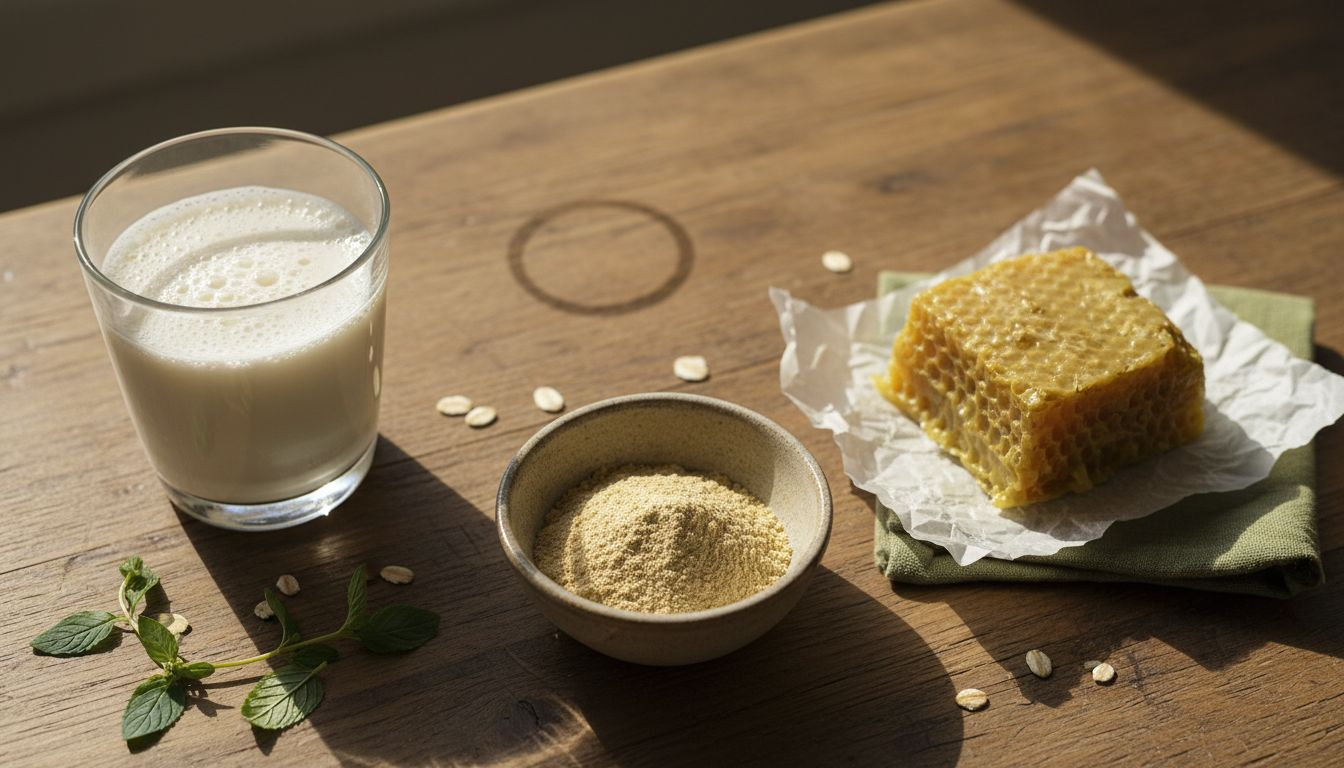
One of the most powerful natural emulsifiers comes from plants in the form of saponins. These naturally occurring compounds are found in seeds, roots, and leaves of various plants and have been used for centuries in traditional beauty practices across cultures. Saponins form and stabilize nanoemulsions with remarkable performance, making them excellent for creating lightweight lotions and serums that absorb quickly into skin without leaving a heavy residue. The reason saponins work so effectively is their complex molecular structure, which allows them to surround oil droplets and keep them suspended in water indefinitely. For someone living in the humid Southeast, this means products formulated with saponins can maintain their texture and effectiveness even when exposed to moisture and temperature fluctuations that typically break down less stable formulations.
Another emerging category gaining traction in clean beauty is plant-derived lecithin and phospholipids. These emulsifiers come from sources like sunflower seeds and soybeans and mimic compounds your skin naturally recognizes and accepts readily. Lecithin works by aligning its molecular structure at the oil-water interface, creating what chemists call a phospholipid bilayer. This structure is so similar to your skin cell membranes that your skin absorbs moisturizers formulated with lecithin more effectively than those using other stabilizers. Additionally, sugar-based emulsifiers derived from saccharides offer eco-friendly alternatives that provide excellent characteristics for personal care applications. These bio-surfactants support sustainability while maintaining safety, making them ideal for brands committed to environmental responsibility.
You will also encounter plant waxes and natural gums in cleaner formulations. Beeswax, candelilla wax, and emulsifying wax derived from vegetable sources all work by creating a protective barrier that helps hold oil and water together. Gums like guar gum and xanthan gum function differently but achieve the same goal through their ability to thicken the water phase and distribute oil particles evenly. While these tend to create slightly heavier textures than saponins, they are invaluable for richer creams and balms designed for dry or compromised skin barriers. The beauty of understanding these options is that you can match the emulsifier type to your skin’s actual needs. If you tend toward oily skin, you might prefer the lightweight feel of saponin-based formulations, while dry skin often responds better to products using plant waxes and gums that provide more occlusive benefits. When skincare uses natural moisturizers formulated with appropriate emulsifiers, the combination becomes greater than the sum of its parts, creating products that feel luxurious while truly nourishing your skin.
Here’s a summary of prominent natural emulsifier types and their effects in skincare:
| Emulsifier Type | Common Sources | Skin Texture Effect | Ideal Use Case |
|---|---|---|---|
| Saponins | Seeds, roots, leaves | Lightweight, fast absorbing | Oily and combination skin |
| Lecithin & Phospholipids | Sunflower, soybeans | Smooth, easily absorbed | Enhanced active ingredient delivery |
| Plant Waxes | Beeswax, candelilla | Rich, more occlusive | Dry or compromised skin |
| Natural Gums | Xanthan, guar gum | Thicker, stabilizing | Creams, balms for dry skin |
Pro tip: Check your product’s ingredient list for saponins, lecithin, plant waxes, or natural gums rather than synthetic stabilizers like polysorbate or cetyl alcohol, as these natural choices absorb better into skin and break down safely in the environment.
How Natural Emulsifiers Work in Products
Think of your favorite cream or lotion sitting on your bathroom shelf right now. The fact that it remains smooth, consistent, and ready to use after weeks of sitting there is a small miracle of molecular chemistry. Without emulsifiers actively doing their job, that product would separate into two distinct layers like a poorly mixed salad dressing. Understanding how natural emulsifiers accomplish this feat helps you recognize why quality matters and why some products deliver better results than others.
At the molecular level, natural emulsifiers function as tiny bridges that overcome a fundamental problem in chemistry. Oil and water are incompatible by nature, and they desperately want to separate. What makes emulsifiers special is their dual personality. They have one part of their molecule that absolutely loves water (hydrophilic) and another part that loves oil (hydrophobic). This dual affinity allows them to position themselves right at the boundary between oil and water phases, essentially holding hands with both sides. When you have millions of these emulsifier molecules doing this simultaneously, they create a stable structure that keeps oil droplets suspended throughout the water phase. Natural emulsifiers reduce interfacial tension by forming protective films around droplets, preventing them from colliding and merging back into a single oil layer. For someone using a moisturizer, this means the product maintains its intended consistency from the first application to the last drop in the container.
The actual mechanism is even more elegant than it first appears. Molecular structures with both hydrophilic and hydrophobic parts allow emulsifiers to stabilize the smaller phase droplets in emulsions, effectively keeping oil and water mixed together. Think of it like this: imagine oil droplets trying to escape through the water phase and reunite with other oil molecules. Each droplet is surrounded by a protective coating of emulsifier molecules, all oriented the same way. The hydrophobic tails point inward toward the oil droplet, while the hydrophilic heads point outward into the water phase. This arrangement creates an energetic barrier that makes it difficult or impossible for oil droplets to touch and merge. The result is consistent texture and sensory qualities that make your skincare products feel luxurious and perform as intended. When you apply a cream formulated with natural emulsifiers, you experience smooth absorption and even distribution across your skin because the product maintains its structural integrity.
What distinguishes natural emulsifiers in this process is their compatibility with your skin and the environment. Synthetic emulsifiers accomplish similar stabilization, but they often create barriers that can interfere with skin absorption or persist in waterways after you rinse them away. Natural emulsifiers work with your skin’s own chemistry and break down safely in the ecosystem. The consistency you feel when you apply a product also depends on emulsifier choice and concentration. A natural face cream designed to address wrinkles relies on emulsifiers to maintain the exact texture that allows active ingredients to penetrate effectively. Too little emulsifier and the product separates. Too much and it becomes difficult to absorb into your skin. The formulator’s skill lies in selecting the right natural emulsifier and using exactly the correct amount to create a product that feels beautiful while delivering real benefits.
Pro tip: If a cream or lotion separates into layers within weeks of opening, it signals that the emulsifier system is failing, which means active ingredients are no longer being delivered evenly to your skin and the product’s efficacy has declined.
Benefits of Choosing Natural Emulsifiers
When you choose skincare products formulated with natural emulsifiers, you are making a decision that benefits your skin, your health, and the planet. This choice represents more than just a preference for cleaner ingredients. It reflects a commitment to understanding what you put on your body and the impact those choices create beyond your bathroom mirror.
The most immediate benefit is what you actually experience when you use the product. Natural emulsifiers create textures that feel luxurious and absorb beautifully into your skin without leaving that occlusive, heavy sensation that some synthetic stabilizers create. Your skin recognizes and accepts compounds derived from plants and natural sources more readily than petrochemical derivatives. This means products formulated with natural emulsifiers penetrate more effectively, allowing active ingredients like botanical extracts and nourishing oils to reach the layers of skin where they can actually help. Additionally, natural emulsifiers tend to feel less irritating to sensitive skin. If you have ever experienced redness, tightness, or discomfort after applying a product, synthetic emulsifiers could have been the culprit. They can disrupt your skin barrier or trigger inflammation in reactive skin types. Natural alternatives work in harmony with your skin’s own chemistry, reducing the risk of adverse reactions while delivering the hydration and nourishment you need.
Beyond personal skin health, choosing natural emulsifiers supports environmental responsibility. Natural emulsifiers replace petrochemical-derived ingredients with renewable, biodegradable materials that align with sustainable cosmetic practices. When you rinse a cleanser or moisturizer containing synthetic emulsifiers down the drain, those chemicals enter waterways where they persist for years, accumulating in ecosystems and potentially harming aquatic life. Natural emulsifiers break down safely in the environment, leaving no toxic legacy. For eco-conscious women in the Southeast, this matters deeply. Your region’s waterways support diverse ecosystems, and choosing products that do not contribute to their pollution is a direct action you can take daily. Furthermore, natural emulsifiers provide effective performance often equal to conventional synthetics while promoting environmental benefits and supporting clean-label formulations. You are not sacrificing quality or efficacy when you choose natural options. The science is solid, and the results speak for themselves through improved skin health and reduced environmental footprint.
There is also a significant ethical dimension to this choice. Natural emulsifiers typically come from plant sources or materials harvested without animal exploitation. Synthetic emulsifiers often derive from petrochemical processes or animal-derived compounds processed in ways that raise ethical concerns. By selecting natural moisturizers formulated with plant-based stabilizers, you support formulation practices that respect animal welfare and reduce reliance on fossil fuels. Your skincare routine becomes an expression of your values. Every time you apply a product made with natural emulsifiers from a brand committed to clean beauty, you are voting with your dollars for a different approach to skincare. You are telling the beauty industry that consumers care about transparency, ingredient sourcing, and long-term environmental impact. Over time, this collective demand drives innovation in natural emulsifier technology and makes clean formulations more accessible and affordable for everyone. The benefits accumulate in ways beyond what any single product can deliver alone.
Pro tip: Compare products by looking not just at whether they claim to be natural, but specifically at the emulsifier type listed on the ingredient panel; products using saponins, lecithin, plant waxes, or natural gums are more likely to deliver both superior skin benefits and genuine environmental responsibility.
Comparing Natural vs Synthetic Emulsifiers
The skincare aisle is full of products that claim to be natural, yet many contain synthetic emulsifiers that undermine that promise. Understanding the real differences between natural and synthetic stabilizers helps you make informed choices rather than relying on marketing language. The distinction matters far more than most consumers realize, and it affects everything from how your skin feels to what happens after you rinse the product away.
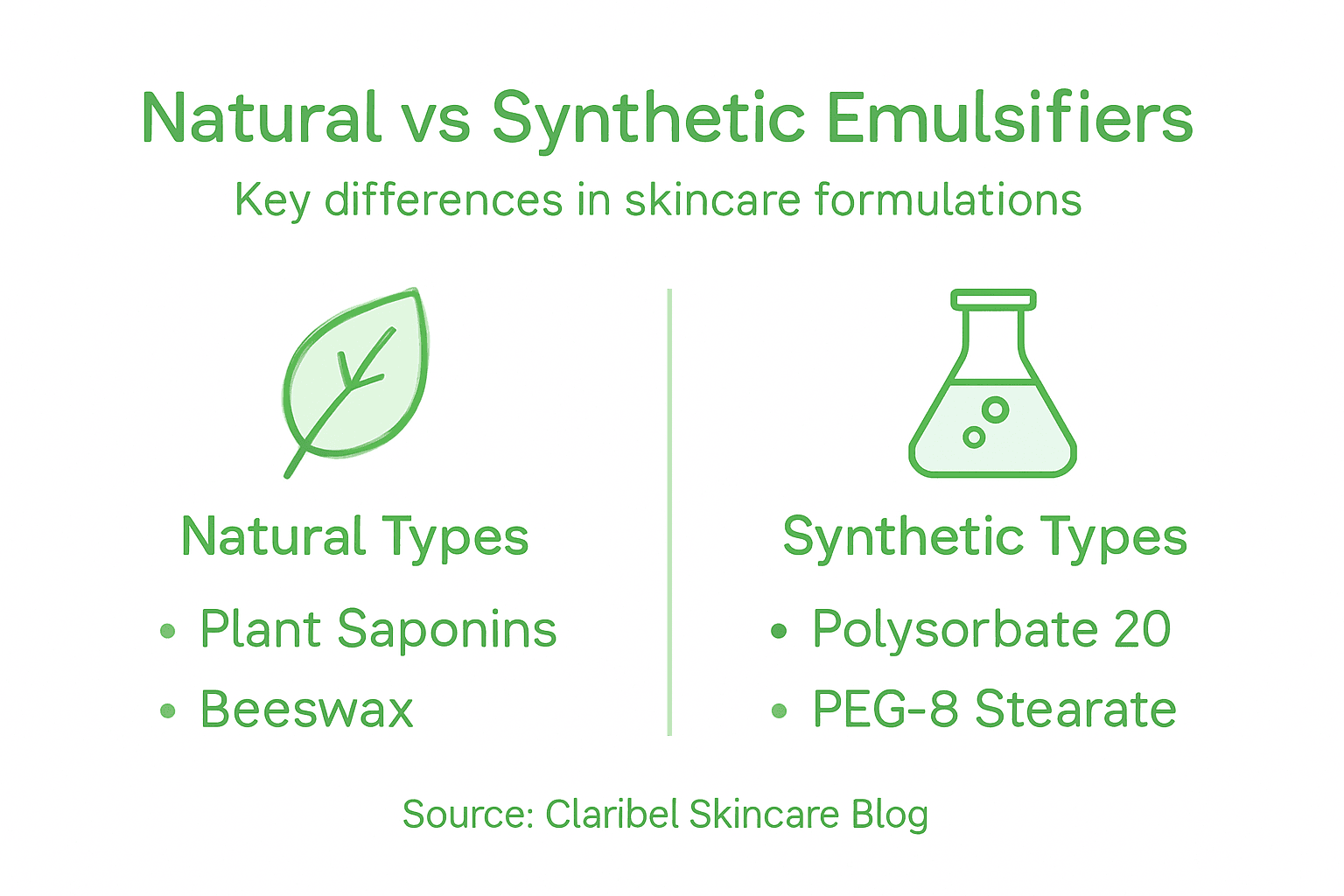
Synthetic emulsifiers have dominated the skincare industry for decades because they offer certain advantages. They are chemically engineered for maximum consistency and shelf stability, meaning a product formulated with synthetic emulsifiers will maintain identical texture and performance across millions of units produced. From a manufacturer’s perspective, this predictability is valuable. Synthetic options like polysorbate, cetyl alcohol, and other petroleum-derived stabilizers also cost less to produce at scale. However, that cost savings often masks real problems. Synthetic emulsifiers may cause health and environmental concerns while natural alternatives offer safer profiles. Synthetic emulsifiers can disrupt your skin barrier, trigger sensitivity reactions, and persist in the environment for years after entering waterways. Many people do not realize they are experiencing sensitivity to an emulsifier rather than the active ingredients they assumed were the problem.
Natural emulsifiers take a fundamentally different approach. Natural emulsifiers are favored for better biocompatibility, biodegradability, and lower toxicity compared to synthetic options. They work with your skin’s chemistry rather than against it, which means better absorption of active ingredients and fewer irritation concerns. Natural options like saponins, lecithin, and plant waxes break down naturally in the environment without accumulating in ecosystems. Your skin recognizes these compounds because they come from sources your body already knows how to process. This compatibility extends to the formulation process itself. While synthetic emulsifiers create uniform results every single time, natural emulsifiers bring slight variations based on seasonal plant conditions and extraction methods. Some formulators see this as a limitation. Smart brands see it as authenticity. The variability ensures that what you are getting is truly a natural product, not a standardized chemical compound engineered in a laboratory.
The performance question comes up frequently. Do natural emulsifiers actually work as well as synthetic ones? The answer is yes, with nuance. While synthetic emulsifiers offer consistent performance, natural emulsifiers differ by being derived from plant and animal sources, potentially offering better skin compatibility and reduced ecological footprints. Modern formulation science has advanced to the point where natural emulsifiers deliver comparable results to their synthetic counterparts in most applications. Where formulation becomes more complex is in achieving specific textures or extended shelf life under extreme conditions. This is why you might occasionally see a hybrid approach in genuinely clean brands that use a natural emulsifier as the primary stabilizer and minimal synthetic support only when absolutely necessary. The key difference in your actual experience is that natural emulsifier formulations often feel better on skin, absorb more completely, and leave you with confidence about what you are applying.
Here is what matters most for your decision making. Cost and availability are not legitimate reasons to choose synthetic emulsifiers when natural alternatives perform comparably. Marketing claims about natural products mean nothing if the emulsifier is still petrochemical-derived. When you see a skincare brand based in the Southeast claiming clean credentials, verify the emulsifier choice. Look for transparency about sourcing and extraction methods. Brands committed to actual natural formulation will detail this information openly. The comparison ultimately comes down to this: synthetic emulsifiers prioritize manufacturer convenience and profit margins, while natural emulsifiers prioritize your skin health and environmental responsibility. Over time, repeated exposure to synthetic stabilizers accumulates in your body and the ecosystem. Natural alternatives offer a cleaner path forward without sacrificing efficacy.
Directly compare natural and synthetic emulsifiers to clarify their differences:
| Characteristic | Natural Emulsifiers | Synthetic Emulsifiers |
|---|---|---|
| Environmental Impact | Biodegradable, low toxicity | Persist, potential toxicity |
| Skin Compatibility | High, reduces irritation | Can disrupt skin barrier |
| Sourcing | Renewable, plant-derived | Petrol-based, animal-derived |
| Formulation Challenges | Seasonal variation, authentic | Uniform results, lab-created |
| Performance in Skincare | Comparable, better feel | High consistency, longer shelf life |
Pro tip: When comparing two products with similar active ingredients but different prices, check the emulsifier type first; products using natural stabilizers may cost slightly more due to higher sourcing and formulation complexity, but that premium reflects genuine clean formulation standards rather than marketing hype.
Experience the Power of Natural Emulsifiers with Claribel Skincare
If you have been searching for skincare products that truly respect your skin’s natural chemistry and the environment you love, understanding natural emulsifiers is key. Many people struggle with creams that separate, cause irritation, or feel heavy because they contain synthetic stabilizers. Our products at Claribel Skincare embrace natural emulsifiers like plant-derived lecithin and beeswax to create stable, luxurious formulas that nourish your skin without any of the harsh chemicals that disrupt your skin barrier or harm nature.
Discover how choosing clean, gluten-free, and cruelty-free formulas can transform your skincare routine right now. Our small-batch, vegan products from Atlanta, Georgia, deliver the hydration and active ingredient absorption you deserve while being free from parabens, sulfates, and synthetic fragrances. Visit Claribel Skincare to explore our collection and feel confident that every ingredient is chosen with care. Don’t wait for irritation or product breakdown to disappoint you—switch to skincare that works with you and the planet today.
Start your journey to healthier skin with our clean formulations that highlight natural emulsifiers and authentic botanical ingredients. Your skin and conscience will thank you.
Frequently Asked Questions
What is a natural emulsifier?
Natural emulsifiers are molecules that contain both hydrophilic (water-loving) and hydrophobic (oil-loving) properties, allowing them to stabilize mixtures of oil and water in skincare products.
Why are natural emulsifiers important in skincare formulations?
Natural emulsifiers help create stable emulsions, reduce the separation of ingredients, improve texture, and ensure that active ingredients can effectively penetrate the skin, resulting in a better user experience.
How do natural emulsifiers differ from synthetic emulsifiers?
Natural emulsifiers are derived from renewable sources and tend to be biodegradable with lower toxicity, while synthetic emulsifiers may persist in the environment and can disrupt skin barrier function.
What are some common types of natural emulsifiers used in skincare products?
Common types of natural emulsifiers include saponins from plants, lecithin from soybeans and sunflower seeds, plant waxes like beeswax, and natural gums such as xanthan gum, each providing unique benefits to skincare formulations.
Recommended
- Why Natural Skin Care Moisturizer Is Your Skin’s Best Friend in 2025 – Claribelskincare.com
- Natural Skin Care Ingredients: 33 You Can’t Live Without – Claribelskincare.com
- Natural Skin Moisturizer for Face: The Ultimate Guide to Choosing One – Claribelskincare.com
- Natural Night Face Cream ৹ 10 Reasons Why You Need One – Claribelskincare.com
- Organic Hair Conditioner: Everything You Need to Know | MyHair
