


Finding truly clean vegan skincare can feel challenging for many urban American women. With more brands making bold claims, only a few deliver on safety and transparency. Over 60 percent of American skincare consumers are avoiding synthetic chemicals in favor of natural sources. Knowing how natural preservatives work means you can confidently select products that are both gentle and genuinely clean.
Table of Contents
- What Are Natural Preservatives in Skincare
- Types of Natural Preservatives and Sources
- How Natural Preservatives Protect Products
- Safety and Regulation in the United States
- Comparing Natural and Synthetic Preservatives
Key Takeaways
| Point | Details |
|---|---|
| Natural Preservatives Enhance Product Stability | Plant-derived ingredients help prevent microbial growth and extend the shelf life of skincare products. |
| Combination is Key for Effectiveness | Using multiple natural preservatives can provide comprehensive protection against contamination and oxidation. |
| Regulatory Compliance Ensures Safety | Natural preservatives are subject to strict FDA regulations to guarantee consumer safety and ingredient transparency. |
| Consumer Preference for Clean Beauty | Natural preservatives are perceived as safer and less irritating, responding to the growing demand for clean, sustainable skincare options. |
What Are Natural Preservatives in Skincare
Natural preservatives are plant-derived ingredients designed to prevent microbial growth and extend the shelf life of vegan skincare products. Unlike synthetic alternatives, these botanical extracts protect formulations from bacteria, fungus, and oxidation while maintaining product integrity. Natural preservative systems represent a critical innovation in clean beauty, addressing consumer demands for safer, more sustainable skincare solutions.
These botanical ingredients work through multiple protective mechanisms. Some natural preservatives contain antimicrobial compounds like polyphenols, essential oils, and organic acids that inhibit microorganism proliferation. Others create an inhospitable environment for bacterial growth by adjusting product pH levels or introducing molecular structures that disrupt cellular membranes. Common natural preservative sources include rosemary extract, grape seed extract, neem oil, and certain citrus derivatives.
The effectiveness of natural preservatives depends on strategic formulation and understanding their unique properties. Skincare manufacturers must carefully balance multiple botanical extracts to achieve comprehensive protection against microbial contamination. This approach requires advanced scientific knowledge and precise ingredient selection to ensure product stability without compromising the delicate balance of natural active ingredients.
Pro tip: When selecting skincare products, look for multiple natural preservatives listed in the ingredients to ensure comprehensive protection and extended product freshness.
Types of Natural Preservatives and Sources
Natural preservatives encompass a diverse range of ingredients sourced from botanical, microbial, and organic origins. Comprehensive preservative systems typically fall into three primary categories: plant-derived extracts, organic acids, and fermented ingredients. Each category offers unique antimicrobial properties that help protect skincare formulations from bacterial and fungal contamination.
Botanical sources represent the most common natural preservative type, featuring potent extracts like rosemary, tea tree, neem, and grape seed. These plant-based ingredients contain powerful compounds such as polyphenols, terpenes, and essential oils that naturally inhibit microbial growth. Some standout botanical preservatives include cinnamon bark extract, which demonstrates strong antimicrobial action, and green tea extract, known for its robust antioxidant properties that prevent product oxidation.
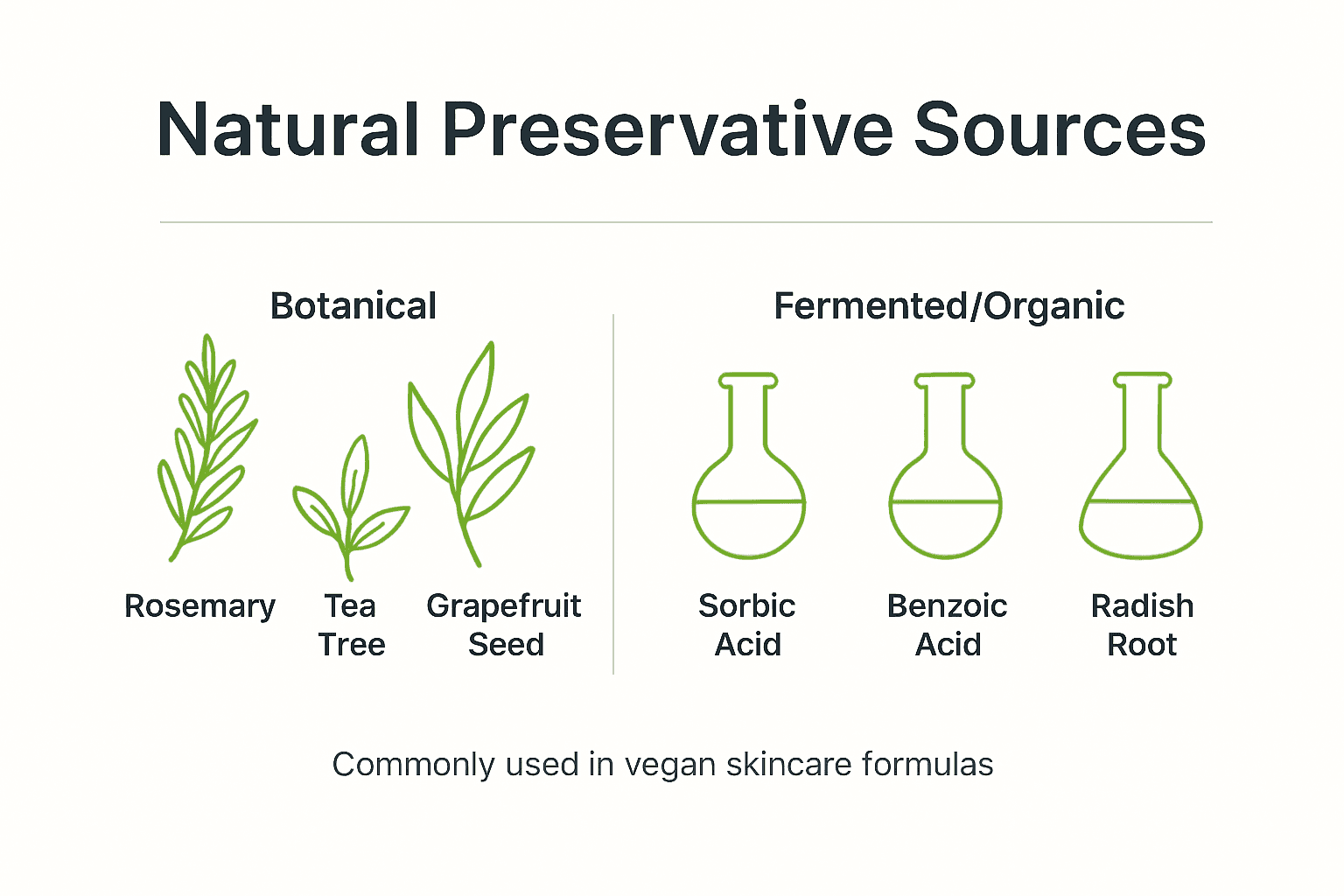
Organic acids and fermentation byproducts offer another critical preservation strategy. Ingredients like benzoic acid, sorbic acid, and lactic acid create an acidic environment that prevents harmful microorganism proliferation. Fermented ingredients such as radish root ferment and leuconostoc (a probiotic microorganism) provide advanced preservation mechanisms that protect skincare products while maintaining their natural integrity.
Pro tip: When evaluating natural preservatives in skincare, seek products that combine multiple botanical extracts for comprehensive protection and enhanced product stability.
Here’s an overview of key natural preservative types and their primary benefits:
| Preservative Type | Example Ingredient | Main Benefit | Common Application |
|---|---|---|---|
| Botanical Extracts | Rosemary oil | Antimicrobial protection | Face creams |
| Organic Acids | Lactic acid | pH control and preservation | Serums |
| Fermented Ingredients | Radish root ferment | Enhanced skin compatibility | Moisturizers |
How Natural Preservatives Protect Products
Natural preservatives employ sophisticated mechanisms to protect skincare products from microbial contamination and degradation. Advanced preservation strategies typically involve three primary defense mechanisms: disrupting microbial cell structures, modifying product pH, and neutralizing oxidative threats. These multifaceted approaches ensure that vegan skincare formulations remain safe, stable, and effective throughout their intended shelf life.
Microbial inhibition represents the most critical protective function of natural preservatives. Botanical extracts like tea tree oil, neem, and cinnamon contain powerful compounds that penetrate and destabilize bacterial and fungal cell walls. Essential oils and plant-based compounds create an inhospitable environment for microorganisms by interrupting their cellular metabolism and preventing reproduction. This targeted approach allows natural preservatives to provide comprehensive protection without relying on harsh synthetic chemicals.

Antioxidant properties play an equally important role in product preservation. Natural preservatives neutralize free radicals and prevent oxidative degradation, which can compromise a product’s integrity, color, and effectiveness. Ingredients like green tea extract, rosemary oil, and vitamin E work synergistically to maintain the molecular stability of sensitive skincare formulations, extending their usable lifespan and protecting their nutritional value.
Pro tip: Check skincare product labels for multiple natural preservative ingredients to ensure robust, comprehensive protection against microbial growth and oxidation.
Safety and Regulation in the United States
Natural preservatives in vegan skincare are subject to rigorous federal oversight through multiple regulatory agencies. Comprehensive cosmetic safety regulations established by the Food and Drug Administration (FDA) ensure that skincare ingredients meet strict safety standards. The Modernization of Cosmetics Regulation Act of 2022 (MoCRA) significantly expanded consumer protection by mandating more detailed reporting, ingredient transparency, and mandatory facility registration for cosmetic manufacturers.
The regulatory framework for natural preservatives involves multiple layers of scrutiny. Manufacturers must substantiate the safety of each ingredient through comprehensive testing and documentation. The FDA maintains a prohibited and restricted substances list that specifically addresses preservative ingredients, requiring companies to demonstrate that natural preservatives do not pose health risks. This includes evaluating potential allergenic properties, long-term exposure effects, and interactions with other skincare ingredients.
Additional regulatory bodies like the Environmental Protection Agency (EPA) and the Federal Trade Commission (FTC) provide supplemental oversight. These agencies ensure that product claims about natural preservatives are scientifically substantiated and that marketing materials accurately represent the ingredients’ safety and efficacy. Companies must maintain detailed records of ingredient sourcing, testing protocols, and potential adverse events, creating a transparent system that prioritizes consumer health and safety.
Pro tip: Always verify a skincare brand’s ingredient transparency and third-party testing certifications to ensure compliance with federal safety regulations.
Comparing Natural and Synthetic Preservatives
Comprehensive preservation research reveals significant differences between natural and synthetic preservatives in skincare formulations. Synthetic preservatives like parabens and phenoxyethanol have traditionally dominated the market due to their broad-spectrum antimicrobial effectiveness and low-cost production. These chemical compounds provide consistent protection against bacteria, fungi, and other microorganisms with minimal variation in performance across different product types.
Natural preservatives, by contrast, offer unique advantages rooted in botanical and organic ingredients. Essential oils, plant extracts, and organic acids create preservation systems that not only prevent microbial growth but also provide additional skin-nourishing benefits. Unlike synthetic alternatives, natural preservatives often contain antioxidant properties that can simultaneously protect the product and enhance its nutritional profile. However, they typically require more complex formulation strategies to achieve equivalent protection levels compared to their synthetic counterparts.
The primary trade-offs between natural and synthetic preservatives center on efficacy, safety, and consumer perception. Synthetic preservatives generally demonstrate more consistent and predictable microbial control, while natural preservatives are perceived as cleaner and potentially less irritating to sensitive skin. Manufacturers must carefully balance these considerations, often developing hybrid preservation systems that combine the strengths of both natural and synthetic approaches to maximize product stability and consumer safety.
Pro tip: Look for skincare products using multiple natural preservation strategies to ensure comprehensive protection and minimize potential skin sensitivity.
The following table highlights differences between natural and synthetic preservatives in skincare:
| Characteristic | Natural Preservatives | Synthetic Preservatives |
|---|---|---|
| Ingredient Source | Plant or microbial derived | Chemically manufactured |
| Skin Sensitivity | Lower irritation risk | Higher risk for sensitive skin |
| Antioxidant Effect | Frequently present | Rarely present |
| Formulation Complexity | Requires multiple ingredients | Generally simple mixtures |
Experience the Power of Natural Preservation in Your Skincare Routine
If you are concerned about harsh synthetic preservatives or seeking vegan skincare products that harness the protective benefits of botanical extracts and organic acids then our clean list at Claribel Skincare is designed for you. We understand the challenge of finding vegan formulations that rely on natural preservatives like rosemary oil and fermented ingredients while avoiding fillers and toxic chemicals. Our products deliver the antimicrobial and antioxidant protection your skin deserves without compromise.

Discover the difference with Claribel Skincare where every product combines multiple natural preservation strategies to ensure freshness and safety throughout its use. Shop now at https://claribelskincare.com for cruelty-free solutions trusted for their purity and efficacy. Don’t wait to protect your skin with the best nature has to offer. Explore our full range today at Claribel Skincare and start your journey toward truly clean and stable vegan skincare.
Frequently Asked Questions
What are natural preservatives in skincare?
Natural preservatives are plant-derived ingredients that prevent microbial growth and extend the shelf life of vegan skincare products. They protect formulations from bacteria, fungi, and oxidation while maintaining product integrity.
How do natural preservatives work in skincare products?
Natural preservatives inhibit microbial growth by utilizing compounds like polyphenols, essential oils, and organic acids. They may create an inhospitable environment for bacteria or disrupt microbial cell structures, ensuring product safety and stability.
Are natural preservatives effective compared to synthetic preservatives?
Natural preservatives offer unique advantages, such as additional skin-nourishing benefits and antioxidant properties. However, they typically require more complex formulation strategies to achieve comparable levels of protection seen with synthetic preservatives.
How can I identify if a skincare product contains natural preservatives?
Look for multiple natural preservatives listed in the ingredients. Common sources include botanical extracts like rosemary and tea tree oil, organic acids like lactic acid, and fermented ingredients, which can signal effective preservation in the formulation.