

Finding gentle, effective face care can feel confusing with so many choices in Atlanta. For health-conscious women wanting a fresh routine, using vegan and cruelty-free products has real benefits for sensitive skin. A few simple steps with the right natural cleansers and moisturizers can keep your skin clean and comfortable every day. This guide shares the simple science behind gentle cleansing and shows you how easy it is to make your skincare both kind and effective.
Table of Contents
- Step 1: Prepare Your Face With Gentle Removal
- Step 2: Cleanse Using Vegan, Natural Products
- Step 3: Rinse Thoroughly And Pat Dry
- Step 4: Verify Skin Cleanliness And Hydrate
Quick Summary
| Key Point | Explanation |
|---|---|
| 1. Use Lukewarm Water for Cleansing | Lukewarm water effectively opens pores and avoids irritation, making it ideal for all skin types during cleansing. |
| 2. Apply Cleanser with Fingertips | Using your fingertips minimizes friction and irritation, ensuring effective cleansing without damage to the delicate facial skin. |
| 3. Rinse Thoroughly to Remove Residue | Consistently rinsing with lukewarm water removes cleanser residue, preventing irritation and ensuring your skin feels clean and smooth. |
| 4. Verify Cleanliness Before Moisturizing | Check for any leftover oil or grit on your skin; it’s critical to ensure a completely clean surface before applying moisturizer. |
| 5. Moisturize on Damp Skin | Applying moisturizer on slightly damp skin improves absorption, helping to effectively hydrate and maintain your skin barrier. |
Step 1: Prepare Your Face with Gentle Removal
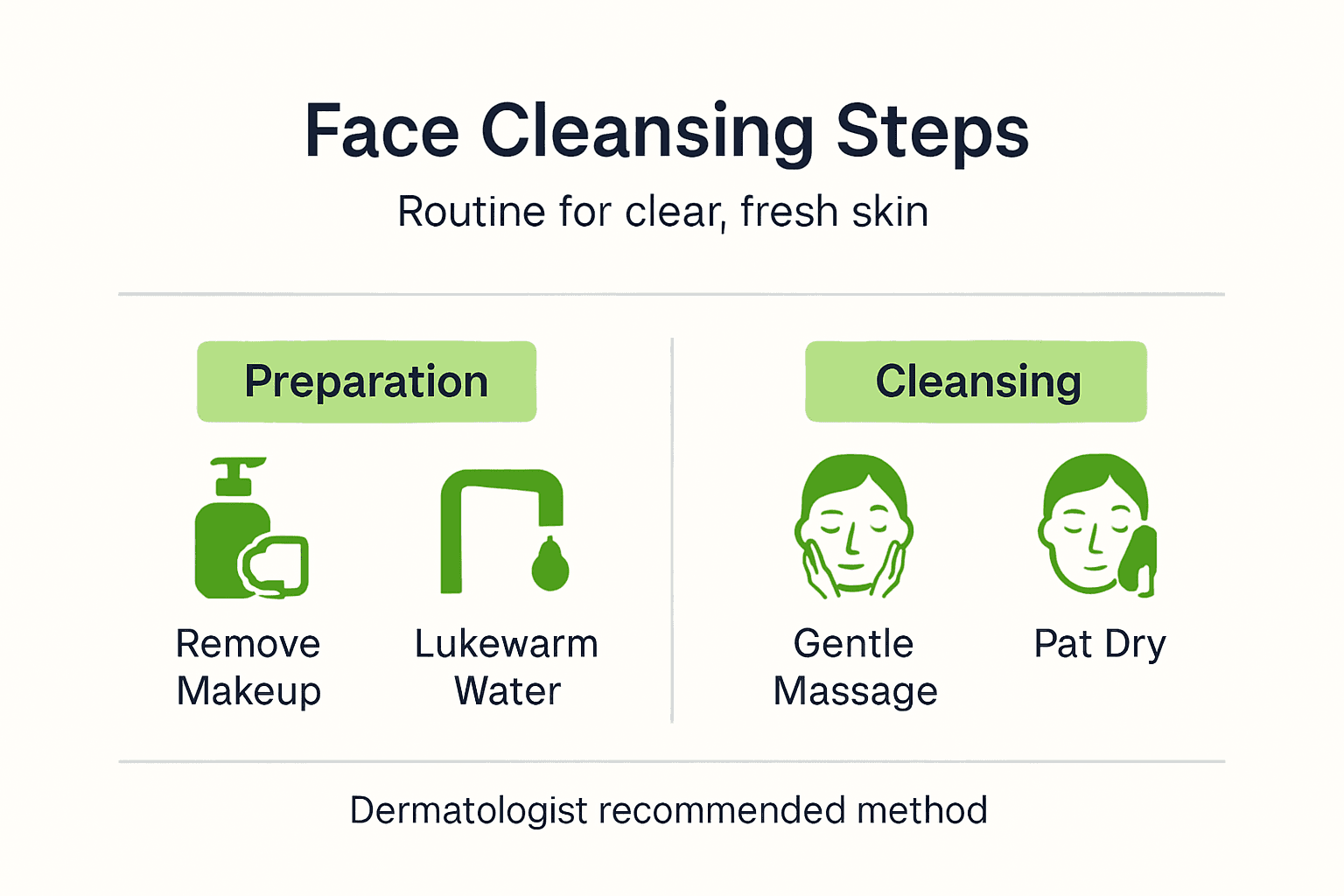
Before diving into a deep cleanse, your skin needs preparation. This step removes surface-level impurities, excess oil, and environmental debris without disrupting your skin’s natural barrier. Think of it as priming your canvas before applying anything else.
Start by splashing your face with lukewarm water. This is crucial because hot water can strip natural oils and trigger irritation, while cold water won’t effectively open your pores or help loosen debris. Lukewarm is the sweet spot for most skin types.
Here’s a summary of water temperature effects during cleansing:
| Water Temperature | Impact on Skin | Recommended For |
|---|---|---|
| Hot | Strips natural oils, causes redness | Should be avoided |
| Cold | Does not loosen debris well | Not effective for most |
| Lukewarm | Cleanses gently, protects barrier | Ideal for all skin types |
Next, apply a small amount of your cleanser to your fingertips. The American Academy of Dermatology recommends using your fingertips rather than washcloths to avoid unnecessary friction and irritation on delicate facial skin.
Here’s what effective gentle removal looks like:
- Use light, circular motions across your entire face
- Pay attention to the T-zone, but don’t scrub aggressively
- Include your jawline and neck, which often trap makeup and dirt
- Spend about 60 seconds massaging the cleanser into your skin
When drying, avoid the urge to rub your face with a towel. Instead, gently pat your skin dry with a soft, clean towel. Rubbing can irritate even resilient skin, so blotting is the gentler approach.
The goal isn’t to strip your skin clean—it’s to remove buildup without compromising your skin’s protective barrier.
If you wear makeup, you might use an oil-based or micellar water first, then follow with your regular cleanser. This two-step approach ensures thorough removal without over-cleansing.
Your skin should feel fresh but not tight after this step. Tightness signals you’ve removed too much moisture, which means adjusting your pressure or cleanser formula.
Pro tip: Use room-temperature water from a clean cup rather than directly from the faucet—tap pressure can be too harsh, and you’ll have better control over water temperature and gentleness.
Step 2: Cleanse Using Vegan, Natural Products
Now that your face is prepped, it’s time to apply your cleanser. Using vegan and natural products means you’re working with plant-based formulas designed to cleanse effectively without harsh chemicals that irritate sensitive skin. This is where Claribel Skincare’s clean formulations shine for health-conscious women seeking ethical beauty solutions.
Dispense a pea-sized amount of your vegan cleanser into your palm. Less is more here, and a small amount will go further than you’d expect. If you’re using a concentrated formula, you might need even less.
Work the cleanser across your entire face using gentle upward strokes. Start at your chin and move toward your forehead, then massage along your cheekbones and temples. The goal is to let the formula work for you rather than forcing it through aggressive scrubbing.
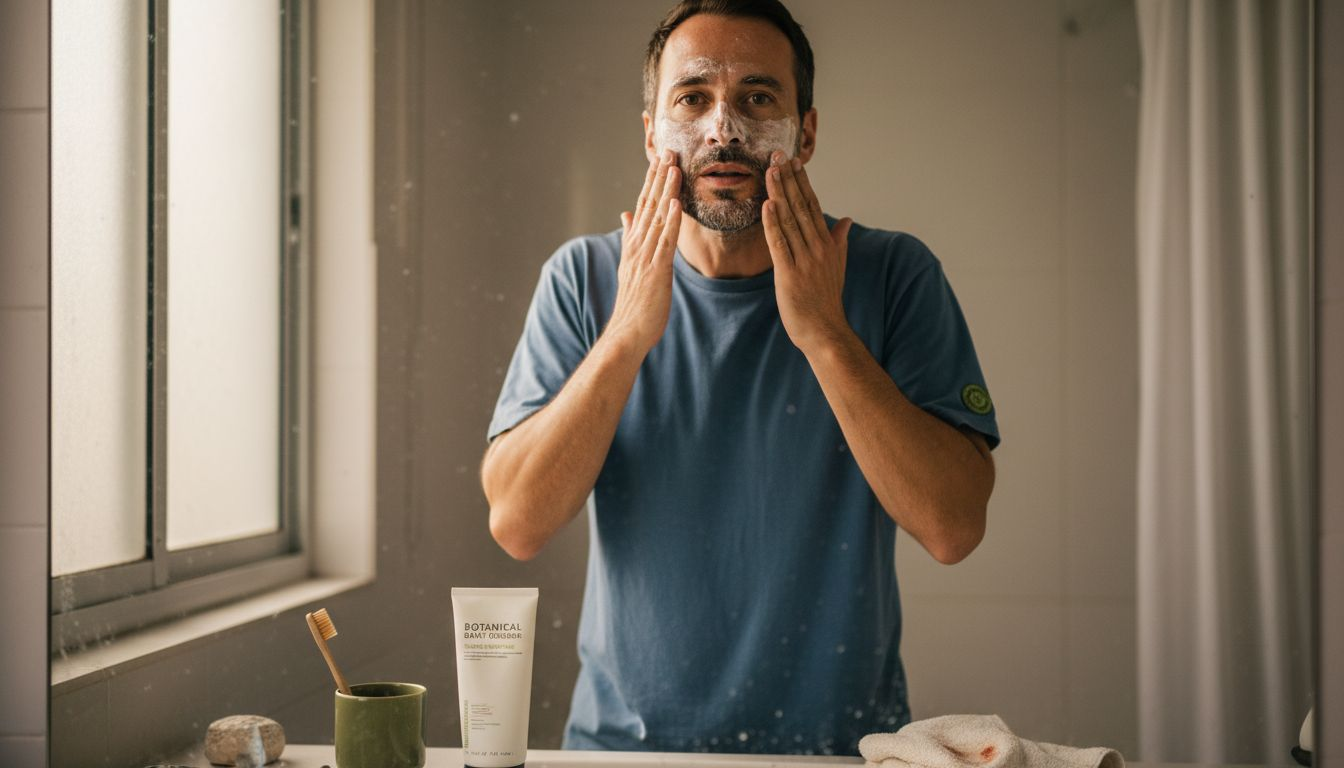
When selecting your cleanser, understanding how surfactants in natural cleansers work helps you choose products that clean without compromising your skin barrier. Plant-based cleansers contain gentler surfactants that lift dirt and oil without stripping essential moisture.
Key actions during cleansing:
- Massage for 30 to 60 seconds across all zones
- Don’t skip often-forgotten areas like ears and your hairline
- Avoid tugging or pulling on delicate under-eye skin
- Let the cleanser emulsify with your skin’s natural oils for better cleaning
Vegan formulas are particularly beneficial because they’re typically formulated without synthetic chemicals, making them less likely to trigger sensitivity or redness. Plant-based options support a healthier skin environment while delivering genuine cleaning power.
Natural cleansers work with your skin, not against it, making them ideal for maintaining your skin barrier while removing buildup.
Once you’ve massaged the cleanser thoroughly, you’re ready to rinse. Your skin should feel clean but still supple and comfortable.
Pro tip: Apply your vegan cleanser to damp skin rather than completely dry skin—moisture helps the formula spread more evenly and reduces the chance of over-cleansing any single area.
Step 3: Rinse Thoroughly and Pat Dry
This final step is just as important as cleansing itself. Proper rinsing removes all cleanser residue, and the way you dry your skin sets the stage for everything that follows. Skip this step carelessly, and you’ll compromise all the good work you just did.
Start rinsing with lukewarm water, the same temperature you used to wet your face initially. Splash your face multiple times, working your hands upward to remove every trace of cleanser. Pay special attention to your hairline, jawline, and areas where product tends to hide.
You’ll know you’re done rinsing when your skin feels completely clean and smooth with no soapy residue remaining. Run your fingers across your face—there should be no slickness or tightness. This typically takes 10 to 15 seconds of consistent rinsing.
Patting your skin dry gently with a soft towel protects your delicate facial skin from unnecessary irritation. The urge to rub can be strong, especially if your skin feels wet, but resist it.
Here’s the proper drying technique:
- Use a clean, soft towel dedicated to your face (not your body towel)
- Press the towel gently against your skin rather than dragging it
- Blot each area, holding the towel for a second or two
- Work from your forehead down to your chin
- End with a final gentle blot to remove excess moisture
Your skin should feel slightly damp, not completely dry. This residual moisture helps with absorption of your next skincare step. Completely dry skin can feel tight and may actually absorb products less effectively.
Gentle blotting rather than rubbing prevents micro-tears and irritation that accumulate over time.
If you have sensitive skin prone to redness, using a thick-pile cotton towel or soft cloth designed specifically for facial use reduces inflammation risk even further.
Your skin is now clean and prepped for the next steps in your routine. You should see a visible improvement in clarity and texture once you make this gentle approach part of your daily habit.
Pro tip: Wash your cleansing towel at least twice weekly with fragrance-free detergent to prevent bacteria buildup and keep your skin from being re-exposed to impurities during the drying process.
Step 4: Verify Skin Cleanliness and Hydrate
You’re almost done. Now it’s time to assess your cleansing work and seal in hydration before your skin loses moisture. This step takes just a moment but makes a real difference in how your skin feels and looks throughout the day.
Run your fingertips across your face to check for cleanliness. Your skin should feel smooth and free of oil buildup without any slickness or residue. If you detect gritty spots or oily patches, those areas need another quick rinse—don’t skip this verification.
Your skin should feel clean but not tight or uncomfortable. After cleansing and drying, it is important to verify that the skin feels clean but not stripped of moisture. Tightness signals over-cleansing, which means adjusting your cleanser formula or massage duration next time.
Once you’ve confirmed cleanliness, it’s time to hydrate. This is where many people make their biggest mistake by waiting too long. Apply moisturizer within one to two minutes of cleansing while your skin is still slightly damp. Damp skin absorbs hydrating products far more effectively than completely dry skin.
Choose a moisturizer suited to your skin type:
Use this quick reference for post-cleansing moisturizer choices:
| Skin Type | Ideal Moisturizer | Key Benefit |
|---|---|---|
| Oily/Combination | Lightweight gel | Balances hydration |
| Dry | Rich cream | Deep moisture support |
| Normal | Balanced formula | Maintains softness |
| Sensitive | Fragrance-free option | Reduces irritation risk |
- Lightweight gel formulas for oily or combination skin
- Rich creams for dry skin
- Balanced moisturizers for normal skin
- Fragrance-free options for sensitive skin
Look for ingredients like hyaluronic acid, glycerin, or plant-based hydrators that support your skin barrier. Claribel Skincare’s vegan moisturizers deliver these benefits without synthetic chemicals or harsh additives that can aggravate sensitive skin.
Apply your moisturizer using gentle upward strokes, working from your jawline toward your forehead. Include your neck and décolletage, which often get neglected but show signs of aging quickly. Moisturizing immediately after cleansing helps seal in moisture and keeps the skin comfortable and healthy, especially for dry or sensitive skin types.
Clean, hydrated skin is the foundation for everything else in your skincare routine and visible improvements in clarity.
Let your moisturizer absorb for a minute or two before applying makeup or sunscreen. Your skin should feel soft and comfortable, never tight or sticky.
Pro tip: Keep your moisturizer in a cool spot—a slightly cool product absorbs more efficiently and feels more refreshing, plus it helps reduce any morning puffiness around your eyes.
Elevate Your Cleansing Ritual with Claribel Skincare
Your quest for fresh and clear skin begins with a gentle and effective cleansing routine that respects the skin’s natural barrier. If you struggle with irritation from harsh chemicals or tightness after washing your face, choosing the right products is crucial. The article highlights the importance of using lukewarm water, gentle massage, and vegan, plant-based cleansers that remove impurities without stripping moisture. These key steps align perfectly with Claribel Skincare’s commitment to clean, natural ingredients free from parabens, sulfates, and synthetic fragrances.
Discover our range of Natural Cleansers designed to work harmoniously with your skin. Our small-batch, cruelty-free formulas offer effective cleansing while supporting sensitive skin’s comfort and hydration. For those seeking to enhance glow and clarity, explore our Brightening Skin Care Products that nourish your skin post-cleansing. Ready to transform your daily face wash into a mindful beauty ritual with products that truly care about your skin’s health Visit Claribel Skincare today and start experiencing the difference of clean, ethical skincare that brings out your natural radiance.
Frequently Asked Questions
How can I prepare my face before cleansing?
Start by splashing your face with lukewarm water to help open your pores and remove surface impurities. Follow this by applying a small amount of your cleanser using gentle circular motions to avoid irritation.
What type of cleanser should I use for my face?
Use a vegan, natural cleanser that is gentle on your skin. Look for plant-based formulas that effectively cleanse without harsh chemicals, helping to maintain your skin’s barrier.
How long should I massage the cleanser on my face?
Massage the cleanser into your skin for about 30 to 60 seconds. This allows the formula to work effectively and ensures that all areas of your skin, including your jawline and hairline, are cleaned thoroughly.
Why is rinsing important in my face cleansing routine?
Rinsing removes all cleanser residue, preventing buildup that can clog pores. Splash your face multiple times with lukewarm water to ensure your skin feels clean, smooth, and free of any soapiness.
How can I effectively hydrate my skin after cleansing?
Apply your moisturizer within one to two minutes of cleansing while your skin is still slightly damp to enhance absorption. Use a product suited to your skin type to maintain hydration and comfort throughout the day.
What should I do if my skin feels tight after cleansing?
If your skin feels tight, it usually means you’ve over-cleansed or removed too much moisture. Adjust your cleansing technique by applying less pressure and using a gentler formula next time.