Turmeric in Skin Care: Benefits for Acne-Prone Skin

Turmeric in Skin Care: Benefits for Acne-Prone Skin
Finding clean skincare for acne-prone skin can feel challenging when so many American beauty products contain harsh additives. Atlanta women dedicated to wellness often search for vegan solutions that truly nurture their skin.
Turmeric stands out with its vibrant color and clinically proven benefits, offering antioxidant and anti-inflammatory power. This guide uncovers how turmeric supports clear, healthy complexions and helps you choose pure formulas without compromising your values.
Table of Contents
- What Is Turmeric and How It Helps Skin
- Forms of Turmeric in Skincare Products
- Turmeric’s Benefits for Acne-Prone Skin
- Possible Risks and Safety Considerations
- Choosing Clean Vegan Turmeric in Skin Care
Key Takeaways
| Point | Details |
|---|---|
| Turmeric’s Benefits | Turmeric, rich in curcumin, offers anti-inflammatory, antimicrobial, and antioxidant properties beneficial for acne-prone skin. |
| Forms of Turmeric | Various forms such as turmeric powder, oil, and curcumin extracts provide different skin benefits; choose products accordingly. |
| Safety Considerations | Individuals should perform patch tests and consult healthcare professionals before using turmeric-based products, especially those with sensitive skin or underlying health conditions. |
| Choosing Clean Products | Look for certified clean and vegan turmeric skincare products to ensure effectiveness and avoid harmful ingredients. |
What Is Turmeric and How It Helps Skin
Turmeric is a powerful botanical ingredient deeply rooted in traditional medicine with remarkable potential for skin health. Native to Southeast Asia, this vibrant yellow spice comes from the Curcuma longa plant and contains curcumin, its primary active compound. Researchers have documented turmeric’s extensive history in treating various skin conditions through its potent medicinal properties.
The magic of turmeric lies in its extraordinary biochemical profile. Curcumin provides robust anti-inflammatory, antimicrobial, and antioxidant benefits that make it particularly effective for acne-prone skin. By reducing skin inflammation and combating harmful bacteria, turmeric helps address multiple underlying causes of acne. Its natural compounds work to calm redness, minimize breakouts, and promote a more balanced complexion.
Scientific investigations reveal turmeric’s multifaceted approach to skin wellness. Traditional medicine systems have long recognized its therapeutic potential, and modern research continues to validate these claims. The ingredient’s antioxidant properties help neutralize free radicals, potentially reducing oxidative stress that can contribute to skin aging and persistent acne. Additionally, turmeric may help regulate sebum production, which is crucial for individuals struggling with oily, acne-prone skin.
Pro tip: For best results, look for skincare products containing stabilized turmeric extract or incorporate a high-quality turmeric supplement into your wellness routine to maximize its skin-healing potential.
Our Acne Breakout Spot Treatment includes turmeric and a skin loving list of plant and earth derived ingredients for clearer skin:

Forms of Turmeric in Skin Care Products
Turmeric offers multiple versatile forms for skincare applications, each delivering unique benefits for addressing acne and skin inflammation. Topical cosmetic formulations range from herbal creams to specialized extract-based products, providing consumers with diverse options for incorporating this powerful botanical ingredient into their skincare routine.
The primary forms of turmeric in skincare include turmeric powder, turmeric oil, curcumin extracts, and oleoresins. Each form presents distinct advantages for skin health. Turmeric powder can be used in DIY masks and scrubs, offering direct exfoliation and anti-inflammatory properties. Turmeric oils provide concentrated antioxidant benefits, while curcumin extracts represent the most potent and scientifically studied form of the ingredient.
Bioactive compound variations significantly impact turmeric’s effectiveness in skincare products. Extraction methods and formulation techniques determine the final product’s potency and skin-healing potential. Professional skincare brands typically use advanced extraction processes to preserve curcumin’s therapeutic properties, ensuring maximum stability and efficacy in their formulations.
Here’s how different forms of turmeric in skin care compare:
| Form of Turmeric | Main Use in Skincare | Potency of Active Compounds | Typical Product Type |
|---|---|---|---|
| Turmeric Powder | Exfoliation, DIY masks | Moderate, less stable | Face masks, scrubs |
| Turmeric Oil | Antioxidant, nourishment | High, concentrated compounds | Serums, facial oils |
| Curcumin Extracts | Targeted anti-inflammatory | Highest, standardized strength | Professional creams, serums |
| Oleoresins | Broad spectrum benefits | Variable, depends on extraction | Lotions, multi-use balms |
Pro tip: When selecting turmeric-based skincare products, prioritize those with standardized curcumin extracts and look for third-party testing to ensure maximum potency and purity.
Turmeric’s Benefits for Acne-Prone Skin
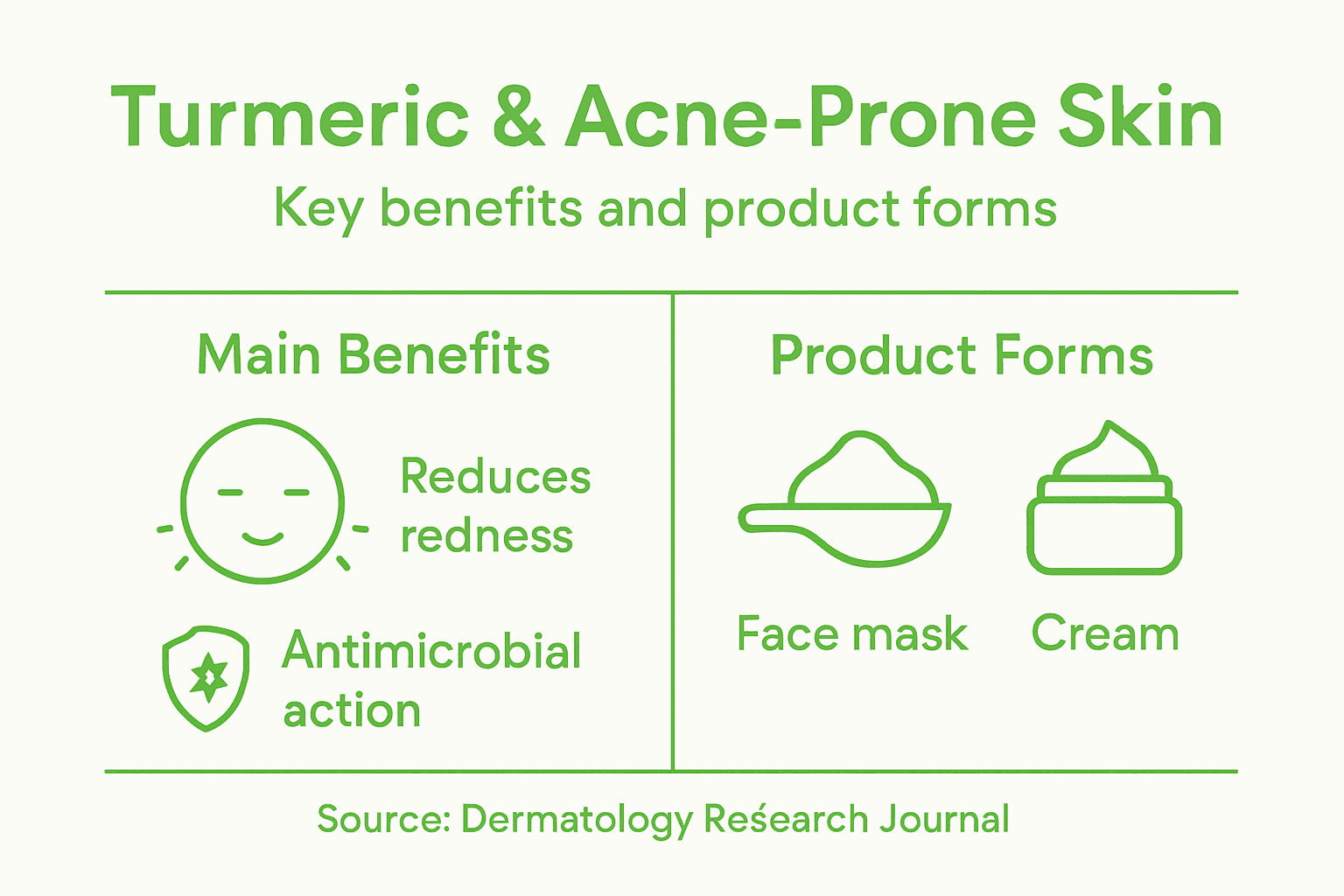
Turmeric represents a powerful natural solution for individuals struggling with acne-prone skin, offering multiple therapeutic mechanisms to combat breakouts and inflammation. Antibacterial research demonstrates its remarkable potential to suppress harmful bacteria like Staphylococcus aureus, which frequently contributes to persistent acne development.
The anti-inflammatory properties of turmeric make it exceptionally beneficial for managing skin conditions. By reducing redness, calming irritation, and preventing bacterial growth, turmeric helps address multiple root causes of acne. Its active compound, curcumin, works at a cellular level to modulate inflammatory responses, potentially minimizing breakout severity and promoting faster healing of existing blemishes.
Scientific evidence suggests turmeric’s effectiveness extends beyond traditional treatment approaches. The ingredient’s potent antimicrobial characteristics can help regulate sebum production, reduce skin inflammation, and create an environment less hospitable to acne-causing bacteria. This multifaceted approach makes turmeric a promising natural alternative for those seeking gentler, holistic skincare solutions.
Pro tip: When incorporating turmeric into your skincare routine, start with patch testing and choose products with stabilized curcumin extracts to ensure maximum effectiveness and minimize potential skin sensitivity.
Possible Risks and Safety Considerations
Turmeric safety research indicates potential risks that users should carefully consider before incorporating this ingredient into their skincare routine. While generally safe for topical use, turmeric can cause skin reactions in some individuals, particularly those with sensitive skin or existing allergies. Potential side effects may include mild irritation, redness, or contact dermatitis.
Individuals with pre-existing medical conditions or those taking specific medications should exercise additional caution. Medication interactions are a significant concern, especially for people using blood thinners, diabetes medications, or chemotherapy treatments. The potent biochemical properties of turmeric can potentially alter the effectiveness of these medications, making professional medical consultation crucial before extensive use.
Medical experts recommend several key precautions when using turmeric-based skincare products. People with a history of liver problems, kidney stones, or hormonal sensitivities should be particularly vigilant. Pregnant and breastfeeding individuals should consult healthcare providers before using turmeric-based treatments, as limited research exists on its long-term effects during these periods.
Pro tip: Always perform a patch test on a small skin area and consult with a dermatologist or healthcare professional before introducing new turmeric-based skincare products, especially if you have sensitive skin or underlying health conditions.
Choosing Clean Vegan Skin Care Products with Turmeric
Clean skincare standards demand rigorous scrutiny when selecting turmeric-based products for acne-prone skin. Ethical consumers seek skincare solutions that are not only effective but also align with vegan principles, avoiding animal-derived ingredients and harmful synthetic chemicals. The key is identifying brands that prioritize transparency, natural ingredients, and cruelty-free manufacturing processes.
When evaluating turmeric in skin care products, look for certification markers that validate clean and vegan status. These include third-party certifications like PETA Vegan, Leaping Bunny, or EWG Verified. Critical factors include checking ingredient lists for pure turmeric extracts, ensuring no hidden animal-derived components, and verifying the absence of potentially harmful synthetic additives like parabens, sulfates, and artificial fragrances.
Environmental Working Group’s database offers an invaluable resource for consumers seeking comprehensive ingredient safety assessments. By cross-referencing product ingredients with scientific research, individuals can make informed choices that support both skin health and ethical manufacturing practices. This approach ensures that turmeric skincare products not only deliver therapeutic benefits but also maintain the highest standards of ingredient purity and environmental responsibility.
Below is a summary of key considerations for clean vegan turmeric in skin care choices:
| Criteria | Why It Matters | What to Look For |
|---|---|---|
| Certification | Validates ethical standards | PETA Vegan, EWG Verified labels |
| Ingredient Transparency | Avoids hidden irritants | Full ingredient list access |
| Source of Turmeric | Ensures highest efficacy | Pure, standardized extracts |
| Absence of Synthetics | Reduces risk of irritation | No parabens, sulfates, or fragrance |
Pro tip: Download the EWG Skin Deep app to instantly scan and verify the safety of skincare ingredients while shopping, helping you make informed clean and vegan turmeric skincare selections.
Discover Clean Solutions for Acne-Prone Skin with Claribel Skincare
If you are struggling with redness, breakouts, or persistent inflammation caused by acne, you understand the frustration of finding gentle yet effective products. This article highlights how turmeric’s natural anti-inflammatory and antibacterial powers can help calm and balance your skin. At Claribel Skincare we share your goal for clear, healthy skin without harsh chemicals or irritants that can worsen sensitivity.
Explore our collections like Green Tea for Skin Care: Antioxidant Action for Anti Aging and Acne which feature powerful natural antioxidants to complement turmeric’s benefits. Pair these with our Vitamin C Benefits for Skin | A Top Powerful Antioxidant collection for enhanced skin brightness and protection. Every product is crafted with clean, vegan, and cruelty-free ingredients for your peace of mind.
Take control of your skincare routine now with Claribel Skincare’s thoughtfully formulated products designed to soothe acne-prone skin safely and effectively. Begin your journey to radiant, balanced skin today by visiting Claribel Skincare. Your skin deserves the best nature and science have to offer.
Our Acne Breakout Spot Treatment includes turmeric and a skin loving list of plant and earth derived ingredients for clearer skin:

Frequently Asked Questions
What are the benefits of turmeric for acne-prone skin?
Turmeric offers anti-inflammatory, antimicrobial, and antioxidant properties, making it effective in reducing redness, calming irritation, and combating acne-causing bacteria.
How can I incorporate turmeric into my skin care routine?
You can incorporate turmeric through topical products like creams and serums containing curcumin extracts, or you can create DIY masks and scrubs using turmeric powder for direct application.
Are there any risks associated with using turmeric in skin care?
While generally safe, some individuals may experience skin irritation or allergic reactions. It’s important to perform a patch test and consult a healthcare professional if you have sensitive skin or pre-existing conditions.
What types of turmeric are most effective in skincare products?
Curcumin extracts are considered the most potent and scientifically studied form of turmeric, while turmeric oil and turmeric powder can also provide benefits depending on the formulation and intended use.
Recommended
- Green Tea for Skin Care: Antioxidant Action for Anti Aging & Acne – Claribelskincare.com
- What’s Good for Blemishes: Expert Tips & Ingredients – Claribelskincare.com
- Natural Skin Care Ingredients – Claribelskincare.com
- Centella Asiatica Skin Care Products: 5 Surprising Benefits – Claribelskincare.com
- Indian Hair Growth Oil: Best Options and Expert Tips for 2025 | MyHair