What Is a Moisturizer and Why It Matters
Finding a gentle moisturizer that actually works for sensitive skin can feel challenging, especially when you care about health and the environment. Atlanta’s humid climate and urban stressors make choosing the right formula even more important. This guide unpacks the truth about moisturizers, highlighting what clean, vegan options truly offer and clearing up common myths so you can nourish your skin with calm confidence.
Table of Contents
- Moisturizer Defined And Common Misconceptions
- Types Of Moisturizers For Different Skin Needs
- Active Ingredients In Clean And Vegan Moisturizers
- How Moisturizers Support Sensitive Skin
- Benefits Of Vegan And Cruelty-Free Formulations
- Mistakes To Avoid When Choosing A Moisturizer
Key Takeaways
| Point | Details |
|---|---|
| Understanding Moisturizers | Moisturizers hydrate and protect the skin, preventing water loss and addressing various skin needs through specific formulations. |
| Selecting the Right Type | Choose a moisturizer based on your skin type and environmental conditions for optimal benefits and avoid trendy marketing claims. |
| Importance of Ingredients | Focus on key components such as occlusives, humectants, and emollients to ensure effective hydration and skin protection. |
| Avoiding Common Mistakes | Be aware of your unique skin needs and avoid products with harsh fragrances or synthetic chemicals to maintain skin health. |
Moisturizer Defined and Common Misconceptions
A moisturizer is a skincare product designed to hydrate and protect the skin by preventing water loss and maintaining optimal skin health. Scientific preparations that modify water retention play a crucial role in maintaining skin’s appearance and functionality.
At its core, a moisturizer serves several fundamental purposes:
- Trapping water within the skin’s outer layers
- Creating a protective barrier against environmental stressors
- Preventing transepidermal water loss
- Supplying essential hydration to dry or dehydrated skin
Contrary to popular belief, moisturizers are not just cosmetic luxuries but scientifically formulated products with specific skin health objectives. Emollients that lubricate and protect skin come in various forms including creams, lotions, ointments, and oils, each designed to address different skin needs.
Common misconceptions about moisturizers often stem from exaggerated marketing claims. While many products promise miraculous anti-aging effects or vitamin-infused transformations, the primary function remains straightforward: hydration and protection. Consumers should focus on understanding ingredient lists and how different formulations interact with their unique skin type.
Key Moisturizer Components:
- Occlusives: Create a protective film to prevent water loss
- Humectants: Attract and bind water molecules
- Emollients: Soften and smooth skin texture
Pro Tip: Select a moisturizer based on your specific skin type and environmental conditions, not just trendy packaging or marketing claims.
Types of Moisturizers for Different Skin Needs
Understanding your skin type is crucial when selecting the right moisturizer. Moisturizers vary significantly in formulation to address specific skin concerns and hydration needs, making it essential to choose wisely.
The primary types of moisturizers include:
- Lotions: Lightweight and water-based, ideal for normal to oily skin
- Creams: Thicker consistency with higher oil content, perfect for dry skin
- Gels: Lightweight and fast-absorbing, best for acne-prone or oily skin
- Ointments: Heaviest and most occlusive, recommended for extremely dry or damaged skin
Different moisturizer types provide unique skin benefits based on their composition and occlusive properties. Lotions offer minimal barrier protection and are quickly absorbed, making them excellent for people with combination or oily skin. Creams provide more substantial hydration and create a moderate protective layer, suitable for individuals with normal to dry skin conditions.
Oily and acne-prone skin requires a different approach compared to dry or sensitive skin types. Gel-based moisturizers work best for those prone to breakouts, as they are non-comedogenic and provide hydration without clogging pores. People with sensitive skin should opt for fragrance-free and hypoallergenic formulations that minimize potential irritation.
Here’s a comparison to help you select the right moisturizer type for your skin needs:
| Moisturizer Type | Best For | Texture & Absorption | Main Benefit |
|---|---|---|---|
| Lotion | Normal to oily skin | Light, fast-absorbing | Refreshes, won’t clog pores |
| Cream | Dry or mature skin | Thick, semi-occlusive | Deep, long-lasting hydration |
| Gel | Oily or acne-prone skin | Weightless, absorbs quickly | Hydrates without residue |
| Ointment | Extremely dry or damaged skin | Heavy, slow-absorbing | Intense moisture protection |
Moisturizer Selection Factors:
- Skin type (oily, dry, combination, sensitive)
- Climate and environmental conditions
- Specific skin concerns (acne, aging, sensitivity)
- Ingredient sensitivity
Pro Tip: Always patch test a new moisturizer on a small area of skin to ensure compatibility and prevent potential allergic reactions.
Active Ingredients in Clean and Vegan Moisturizers
Clean and vegan moisturizers represent a thoughtful approach to skincare that prioritizes both human and environmental health. Ingredients pre-approved by sustainability standards ensure that these products deliver effective hydration without compromising ethical principles.
Key active ingredients in clean and vegan moisturizers typically include:
- Botanical Oils: Jojoba, coconut, and argan oil
- Plant-Based Humectants: Glycerin and hyaluronic acid
- Natural Antioxidants: Green tea extract, vitamin E
- Herbal Emollients: Aloe vera, shea butter
Cruelty-free formulations rely on innovative plant-based alternatives that replace traditional animal-derived ingredients. These carefully selected components not only provide deep hydration but also offer additional skin-nourishing benefits without compromising ethical standards.
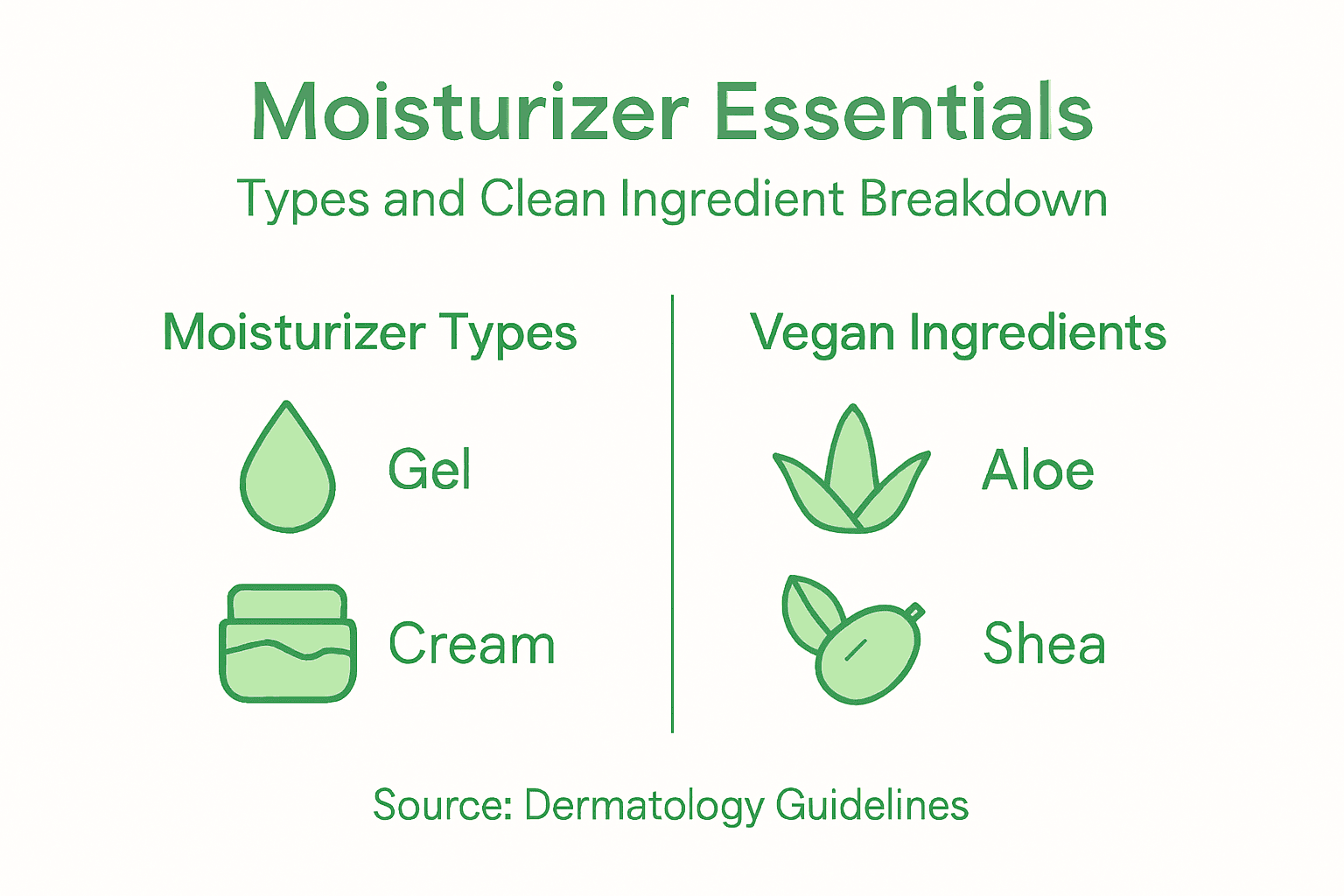
The philosophy behind clean and vegan moisturizers extends beyond ingredient selection. These products prioritize transparency, avoiding harmful chemicals like parabens, sulfates, and synthetic fragrances. Consumers seeking skin-friendly solutions can trust that these moisturizers are developed with both personal health and environmental sustainability in mind.
Use this summary to identify top ingredients found in clean and vegan moisturizers and their key benefits:
| Ingredient Type | Examples | Primary Skin Benefit |
|---|---|---|
| Botanical Oils | Jojoba, argan, coconut | Nourishes and smooths skin |
| Plant-Based Humectants | Glycerin, hyaluronic acid | Attracts and retains moisture |
| Natural Antioxidants | Green tea, vitamin E | Protects from free radicals |
| Herbal Emollients | Aloe vera, shea butter | Soothes and repairs barrier |
Ethical Skincare Principles:
- No animal-derived ingredients
- No animal testing
- Environmentally conscious sourcing
- Minimal processing of natural components
- Transparent ingredient disclosure
Pro Tip: Always read ingredient lists carefully and look for certifications that validate a product’s clean and vegan claims.
How Moisturizers Support Sensitive Skin
Sensitive skin requires specialized care, and moisturizers play a critical role in maintaining its delicate balance. Moisturizers protect and repair the skin barrier by addressing fundamental skin health challenges and minimizing potential irritation.
Key strategies for supporting sensitive skin through moisturization include:
- Reducing transepidermal water loss
- Replenishing essential skin lipids
- Calming inflammation and redness
- Strengthening the skin’s natural protective barrier
- Preventing environmental damage
Specific ingredients work synergistically to soothe sensitive skin by providing multiple layers of protection. Ceramides, fatty acids, and gentle humectants help rebuild the skin’s protective barrier, while avoiding potential irritants like synthetic fragrances and harsh chemicals.
People with sensitive skin must be particularly mindful of moisturizer ingredients. Hypoallergenic formulations that include soothing botanical extracts like chamomile, aloe vera, and calendula can help minimize potential allergic reactions. These carefully selected components work to calm inflammation, reduce redness, and provide the gentle hydration that sensitive skin desperately needs.
Sensitive Skin Moisturizer Essentials:
- Fragrance-free formulations
- Minimal ingredient lists
- Hypoallergenic certification
- Dermatologist-tested products
- Natural, soothing botanical extracts
Pro Tip: Always perform a patch test with new moisturizers, applying a small amount to your inner forearm and waiting 24 hours to check for any adverse reactions.
Benefits of Vegan and Cruelty-Free Formulations
Vegan and cruelty-free moisturizers represent a powerful approach to skincare that goes beyond personal beauty. Ethical cosmetic formulations promote sustainability by eliminating animal-derived ingredients and avoiding traditional animal testing methods.
Key advantages of vegan and cruelty-free moisturizers include:
- Eliminating animal exploitation
- Reducing environmental impact
- Using plant-based, sustainable ingredients
- Supporting ethical manufacturing practices
- Minimizing potential allergens from animal-derived components
Conscious consumer choices drive positive change in the beauty industry. These formulations leverage advanced scientific techniques like in vitro testing and computer modeling to ensure product safety without compromising animal welfare.
Beyond ethical considerations, vegan moisturizers often deliver superior skin nutrition. Plant-based ingredients like botanical oils, natural antioxidants, and herbal extracts provide comprehensive skin benefits while maintaining a commitment to transparency and environmental responsibility. By choosing these products, consumers actively participate in a more compassionate and sustainable approach to personal care.
Ethical Skincare Principles:
- Zero animal testing
- 100% plant-based ingredients
- Environmentally responsible sourcing
- Transparent production methods
- Cruelty-free certification
Pro Tip: Research brands thoroughly and look for verified cruelty-free and vegan certifications to ensure your skincare choices align with ethical standards.
Mistakes to Avoid When Choosing a Moisturizer
Selecting the right moisturizer requires more than simply grabbing the most attractive packaging. Common moisturizer selection errors can compromise skin health and potentially lead to long-term skincare challenges.
Frequent moisturizer selection mistakes include:
- Ignoring your specific skin type
- Choosing products with harsh fragrances
- Overlooking ingredient lists
- Expecting instant results
- Using inappropriate formulations
- Neglecting seasonal skin changes
Dermatologists caution against rushed skincare decisions that can potentially damage your skin’s natural balance. Understanding your skin’s unique needs helps prevent irritation, breakouts, and ineffective hydration.
Each skin type demands a tailored approach. Oily skin requires lightweight, non-comedogenic gels, while dry skin benefits from richer cream-based formulations. People with sensitive skin must be especially vigilant, avoiding products containing alcohol, synthetic fragrances, and potential allergens that can trigger inflammation or adverse reactions.
Red Flags in Moisturizer Selection:
- Excessive synthetic chemicals
- Strong artificial fragrances
- Unverified marketing claims
- Lack of ingredient transparency
- Incompatibility with skin type
Pro Tip: Perform a patch test on a small skin area and wait 24 hours to ensure no allergic reactions before fully incorporating a new moisturizer into your routine.
Discover the Power of Clean, Natural Moisturizers for Healthy Skin
Understanding what a moisturizer truly does is essential to addressing common skin challenges like dryness, sensitivity, and imbalance. This article highlights the importance of hydration and barrier protection using carefully selected ingredients such as occlusives, humectants, and emollients. If your goal is to nourish and protect your skin while avoiding harsh chemicals and irritants, you deserve a moisturizer that aligns with these clean beauty principles.
Experience the benefits of ethically crafted skincare with Claribel Skincare. Our Natural Moisturizers are thoughtfully formulated without parabens, sulfates, or synthetic fragrances, delivering hydration through plant-based humectants and soothing emollients. Enhance your regimen with products rich in Hyaluronic Acid Benefits for Skin to boost moisture retention and restore your skin’s natural barrier. Ready to prioritize your skin’s health without compromise? Visit Claribel Skincare today and find your perfect clean moisturizer for lasting hydration and comfort.
Frequently Asked Questions
What is a moisturizer and what does it do?
A moisturizer is a skincare product designed to hydrate and protect the skin by preventing water loss and maintaining optimal skin health. Its primary functions include trapping water within the skin, creating a protective barrier against environmental stressors, and supplying essential hydration to dry or dehydrated skin.
How do I choose the right moisturizer for my skin type?
Choosing the right moisturizer depends on your skin type. Lotions are ideal for normal to oily skin, creams work best for dry skin, gels are great for acne-prone skin, and ointments are recommended for extremely dry skin. Always assess your specific skin needs and climate conditions when selecting a product.
What ingredients should I look for in a moisturizer?
Key ingredients in moisturizers include occlusives (like petrolatum), humectants (such as glycerin and hyaluronic acid), and emollients (like plant oils). For clean and vegan options, look for botanical oils, natural antioxidants, and herbal emollients that provide hydration without harmful chemicals.
Why are clean and vegan moisturizers important?
Clean and vegan moisturizers prioritize both personal health and environmental sustainability. They are formulated without animal-derived ingredients and harmful chemicals, ensuring that they deliver effective hydration while also being ethically sourced and cruelty-free.
Recommended
- Natural Skin Moisturizer for Face: The Ultimate Guide to Choosing One – Claribelskincare.com
- Sunscreen First or Moisturizer? And Other Important SPF Questions – Claribelskincare.com
- Why Natural Skin Care Moisturizer Is Your Skin’s Best Friend in 2025 – Claribelskincare.com
- Sunscreen First or Moisturizer? And Other Important SPF Questions
- Shea Moisture Hair Loss: Myths, Facts & 2025 Insights | MyHair