What Is Silicone Free Skincare – Impact on Sensitive Skin
Finding gentle skincare can feel challenging when so many products rely on synthetic ingredients that might trigger sensitive skin. Atlanta women who value clean, vegan routines often question the impact of silicones found in most cosmetic aisles. Silicone-free skincare means more than skipping an ingredient—it reflects a thoughtful choice for breathable, skin-compatible options that let your natural glow shine without unwanted irritation.
Table of Contents
- Silicone Free Defined in Skincare Products
- Types of Silicones Commonly Avoided
- Why Choose Silicone Free for Sensitive Skin
- How to Identify Silicones in Ingredients Lists
- Benefits and Drawbacks of Silicone Free Formulas
- Clean Beauty Alternatives to Silicones
Key Takeaways
| Point | Details |
|---|---|
| Silicone-Free Skincare | These products intentionally avoid synthetic silicones, prioritizing natural alternatives and breathability for healthier skin. |
| Potential Benefits | Silicone-free formulations can reduce the risk of pore clogging and enhance active ingredient absorption, especially beneficial for sensitive skin. |
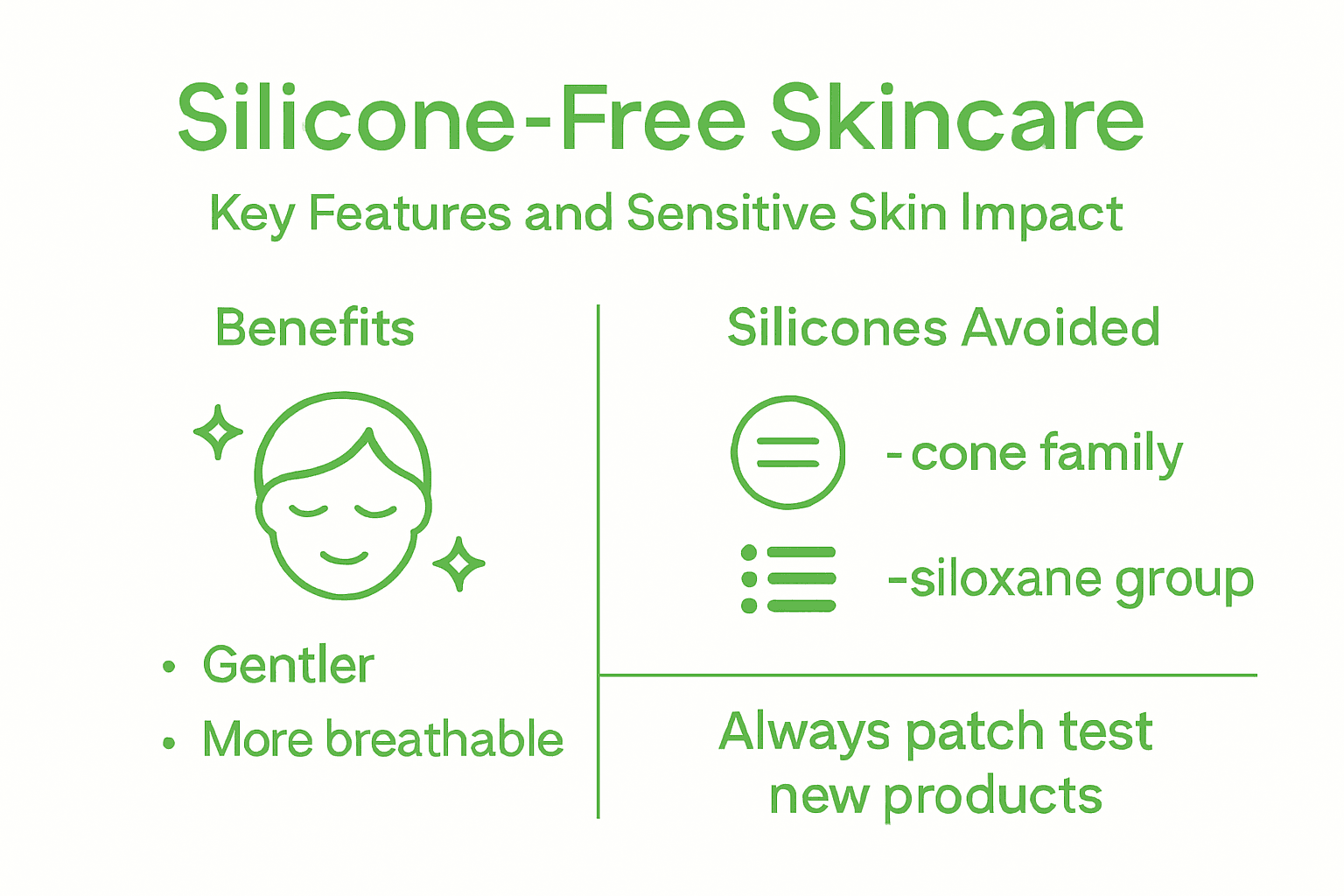
| Identifying Silicones | Consumers should look for common suffixes in product labels such as ‘-cone’ or ‘-siloxane’ to easily identify silicone ingredients. |
| Clean Beauty Alternatives | A range of bio-based emollients and botanical oils are available as sustainable, effective replacements for traditional silicones, addressing both skin health and environmental concerns. |
Silicone Free Defined in Skincare Products
Silicone-free skincare represents a growing trend in beauty formulations that intentionally exclude synthetic polymers traditionally used in cosmetic products. Silicone compounds are synthetic materials composed of silicon and oxygen atoms, characterized by their smooth texture and unique hydrophobic properties.
In skincare terminology, silicone-free specifically refers to product formulations that deliberately avoid synthetic silicone derivatives like polydimethylsiloxanes. These compounds are commonly used for their ability to create a smooth application, form protective barriers, and enhance product spreadability. However, consumers increasingly seek alternatives due to potential skin sensitivity concerns and environmental considerations.
Key characteristics of silicone-free skincare products include:
- Absence of synthetic silicone polymers
- Use of natural, plant-based alternatives
- Focus on breathable skin formulations
- Emphasis on skin compatibility and minimal ingredient complexity
The motivation behind silicone-free products stems from growing consumer awareness about potential skin interactions. While silicones create an initially smooth sensation, they can potentially:
- Create a temporary barrier that might prevent active ingredients from penetrating
- Potentially trap bacteria and sebum underneath the skin
- Cause potential long-term skin congestion
Silicone-free skincare prioritizes ingredient transparency and skin health over cosmetic texture alone.
Pro tip: When transitioning to silicone-free products, patch test new formulations and observe how your skin responds to the different texture and ingredient profile.
Types of Silicones Commonly Avoided
Skincare professionals and consumers are increasingly scrutinizing specific types of silicones due to potential skin and environmental concerns. Cyclic silicones like cyclomethicone and cyclopentasiloxane (D5) are among the most frequently avoided synthetic compounds in modern skincare formulations.
The most common silicones that consumers and brands are choosing to eliminate include:
- Cyclomethicone: A volatile silicone known for its quick evaporation
- Cyclopentasiloxane (D5): Criticized for environmental persistence
- Cyclohexasiloxane: Another cyclic silicone with potential ecological concerns
- Dimethicone: A linear silicone polymer often linked to potential skin buildup
These synthetic compounds are typically avoided for several critical reasons. Environmental accumulation concerns have become particularly significant, with regulatory bodies increasingly examining the long-term impact of these non-biodegradable ingredients.
Specifically, cosmetic researchers have identified potential issues with these silicones:
- Poor biodegradability
- Potential for skin barrier interference
- Risk of long-term product buildup
- Possible environmental contamination
Silicone avoidance represents a critical shift towards more transparent and environmentally conscious skincare formulations.
Pro tip: When reviewing product labels, look for scientific names ending in -siloxane or -methicone to identify potential silicone ingredients.
Why Choose Silicone Free for Sensitive Skin
Sensitive skin requires specialized care, and silicone-free skincare options offer a promising solution for individuals struggling with reactive skin conditions. These formulations focus on eliminating synthetic ingredients that can potentially trigger inflammation and irritation, providing a gentler approach to skincare.
The primary reasons for choosing silicone-free products for sensitive skin include:
- Reduced risk of skin barrier disruption
- Minimized potential for allergic reactions
- Improved breathability of skin
- Enhanced absorption of active ingredients
- Lower likelihood of pore clogging
Individuals with sensitive skin often experience significant challenges with traditional skincare formulations. Silicones, while providing a smooth initial application, can create several problematic interactions:
- Forming an occlusive layer that prevents skin from breathing
- Trapping bacteria and excess sebum
- Potentially exacerbating existing skin sensitivity
- Masking underlying skin conditions
Sensitive skin thrives when given breathable, natural formulations that support its innate healing mechanisms.
Moreover, silicone-free skincare typically incorporates plant-based skincare advantages for sensitive skin that provide genuine nourishment without synthetic barriers. These alternatives often include soothing botanical extracts, natural emollients, and ingredients that actively support skin health.
Pro tip: Conduct a patch test with new silicone-free products and introduce them gradually to monitor your skin’s unique response.
How to Identify Silicones in Ingredients Lists
Understanding how to spot silicones in product labels requires careful attention to ingredient naming conventions. Most silicone ingredients follow specific linguistic patterns that make them relatively easy to identify with a trained eye.
The most common silicone indicators in ingredient lists include specific word endings and scientific terminology:
- Endings in ‘-cone’
- Endings in ‘-siloxane’
- Endings in ‘-silicone’
- Specific prefixes like ‘dimethicone’
- Scientific terms like ‘cyclopentasiloxane’
Most silicone ingredients can be categorized into several recognizable groups:
- Linear silicones (dimethicone)
- Cyclic silicones (cyclomethicone)
- Silicone elastomers (trimethylsiloxysilicate)
- Silicone crosspolymers
Cosmetic ingredient databases provide comprehensive reference points for identifying these complex chemical names. Consumers seeking silicone-free products should become familiar with these common identifiers to make informed skincare choices.
Recognizing silicone ingredients is the first step toward creating a truly clean skincare routine.
Pro tip: Photograph ingredient lists and use smartphone apps designed to decode complex cosmetic terminology for quick silicone identification.
The table below summarizes how to quickly spot silicone ingredients when reading skincare labels:
| Indicator Type | Example Suffixes | Ingredient Example | Useful Tip |
|---|---|---|---|
| Name Endings | -cone, -siloxane | Cyclopentasiloxane | Search for recurring endings |
| Scientific Terms | Dimethicone, Trimethicone | Cetearyl Dimethicone | Longer, complex ingredient names |
| Category Hints | Crosspolymers | Dimethicone Crosspolymer | Usually found near label middle |
Benefits and Drawbacks of Silicone Free Formulas
Silicone-free skincare formulations represent a nuanced approach to skincare that balances potential benefits with inherent challenges. These alternative formulations aim to provide effective skin nutrition while avoiding synthetic polymers that may cause sensitivity or long-term skin complications.
Key benefits of silicone-free skincare include:
- Reduced risk of pore clogging
- Enhanced skin breathability
- Minimized potential for product buildup
- Greater compatibility with sensitive skin types
- Improved absorption of active ingredients
However, silicone-free formulas are not without their limitations. Manufacturers face significant challenges in replicating the unique sensory properties of traditional silicone-based products:
- Less smooth initial application
- Potentially shorter product shelf stability
- More complex formulation requirements
- Higher production costs
Advanced organic polymers are emerging as promising alternatives, addressing many traditional drawbacks of silicone-free formulations.
The future of skincare lies in innovative, skin-compatible ingredients that prioritize long-term health over temporary cosmetic effects.
Pro tip: When transitioning to silicone-free products, introduce new formulations gradually and observe how your skin responds to the different texture and ingredient profile.
Clean Beauty Alternatives to Silicones
Bio-based emollients are revolutionizing skincare by providing sustainable alternatives to traditional silicone ingredients. These innovative solutions focus on delivering comparable performance while addressing environmental and skin health concerns that consumers increasingly prioritize.
Key clean beauty alternatives to silicones include:
- Natural plant-based esters
- Hydrocarbon derivatives
- Botanical oils with similar spreading properties
- Renewable polymer technologies
- Hybrid molecular compounds
These alternatives offer multiple benefits for conscious consumers:
- Enhanced environmental compatibility
- Improved biodegradability
- Reduced chemical persistence
- Greater skin-friendly formulations
- Comparable sensory experiences
Green chemistry initiatives continue developing innovative solutions that mimic silicones’ performance without compromising sustainability or skin health.
Here’s a comparison of common silicones versus clean beauty alternatives to help you make informed skincare choices:
| Category | Common Silicones | Clean Beauty Alternatives | Distinctive Benefits |
|---|---|---|---|
| Main Ingredient | Dimethicone, Cyclomethicone | Jojoba esters, Squalane | Vegan, plant-based, sustainable |
| Skin Compatibility | May cause buildup, congestion | Enhances breathability, supports healing | Suitable for sensitive skin |
| Environmental Impact | Non-biodegradable, accumulates | Biodegradable, renewable | Lower long-term impact |
| Sensory Characteristics | Silky, very smooth finish | Lightweight, naturally absorbent | Comparable texture, less occlusive |
Clean beauty alternatives represent a transformative approach that prioritizes both product efficacy and environmental responsibility.
Pro tip: Look for products featuring ingredients like jojoba esters, squalane, and renewable plant-based polymers as effective silicone replacements.
Embrace Silicone Free Skincare for Sensitive Skin with Claribel
If you struggle with sensitive skin that feels weighed down or irritated by synthetic ingredients like silicones this is your chance to discover a cleaner, gentler approach. Silicone free skincare avoids common issues such as pore clogging and skin barrier disruption highlighted in the article while promoting breathability and improved absorption of active ingredients. At Claribel Skincare we specialize in organic, vegan, and cruelty free formulations crafted in small batches without silicones parabens sulfates and other irritants.
Explore our carefully curated collection of Oily Skin Solutions designed to support sensitive complexions in need of natural nourishment and soothing relief. Take control of your skincare routine today and experience the benefits of breathable textures and transparent ingredients. Visit Claribel Skincare now to find your perfect silicone free products and start your journey toward healthier glowing skin.
Frequently Asked Questions
What does silicone-free skincare mean?
Silicone-free skincare refers to products that intentionally do not contain synthetic silicone derivatives, such as polydimethylsiloxanes. These products use natural alternatives and focus on skin compatibility rather than just cosmetic texture.
Why is silicone-free skincare recommended for sensitive skin?
Silicone-free skincare is beneficial for sensitive skin because it reduces the risk of skin irritation, enhances breathability, and minimizes the chances of pore clogging or allergic reactions. These products allow for better absorption of active ingredients.
How can I identify silicones in skincare products?
You can identify silicones by looking for specific suffixes in ingredient lists, such as ‘-cone’, ‘-siloxane’, and ‘-silicone’. Common examples include dimethicone and cyclopentasiloxane.
What are the benefits of using silicone-free skincare products?
Benefits include reduced risk of pore clogging, improved skin breathability, less potential for product buildup, and compatibility with sensitive skin types. Additionally, these products often enhance the absorption of beneficial ingredients.
Recommended
- Vegan Skincare for Sensitive Skin: Myths and Tips – Claribelskincare.com
- What Is Preservative Free? The Impact on Natural Skincare
- 7 Key Benefits of Vegan Skincare Every Woman Should Know
- 7 Key Plant-Based Skincare Advantages for Sensitive Skin
- Healthy Natural Hair Products: Better Growth and Safety | MyHair
