


Most American skincare routines rely on multiple products at once, yet over 60 percent of adults experience irritation from layering too many actives together. With growing interest in gentler, more strategic methods, skin cycling has become a buzzword among those who want healthy results without the guesswork. This approach offers a smarter path for anyone frustrated by confusion, product overload, or lingering skin redness, while clearing up myths that keep many from building the balanced routine they crave.
Table of Contents
- Skin Cycling Defined and Common Myths
- Understanding Steps of the Skin Cycling Routine
- Benefits of Skin Cycling for Skin Health
- Common Mistakes and Risks to Avoid
- Choosing the Right Products for Skin Cycling
Key Takeaways
| Point | Details |
|---|---|
| Skin Cycling Routine | A structured four-night routine alternates between exfoliation, retinoid application, and recovery to optimize skin benefits while minimizing irritation. |
| Myths Clarified | Skin cycling benefits all skin types and simplifies skincare rather than complicating it. |
| Caution with Products | Over-exfoliation and incompatible products can harm the skin; introduce active ingredients carefully and observe their effects. |
| Personalization is Key | Tailor the routine to your skin’s unique needs, starting slow and adjusting as needed for long-term health. |
Skin Cycling Defined and Common Myths
Skin cycling is an innovative skincare approach that strategically rotates product usage to maximize skin benefits while minimizing potential irritation. Developed as a structured four-night routine, this method systematically introduces active ingredients like exfoliants and retinoids with deliberate recovery periods.
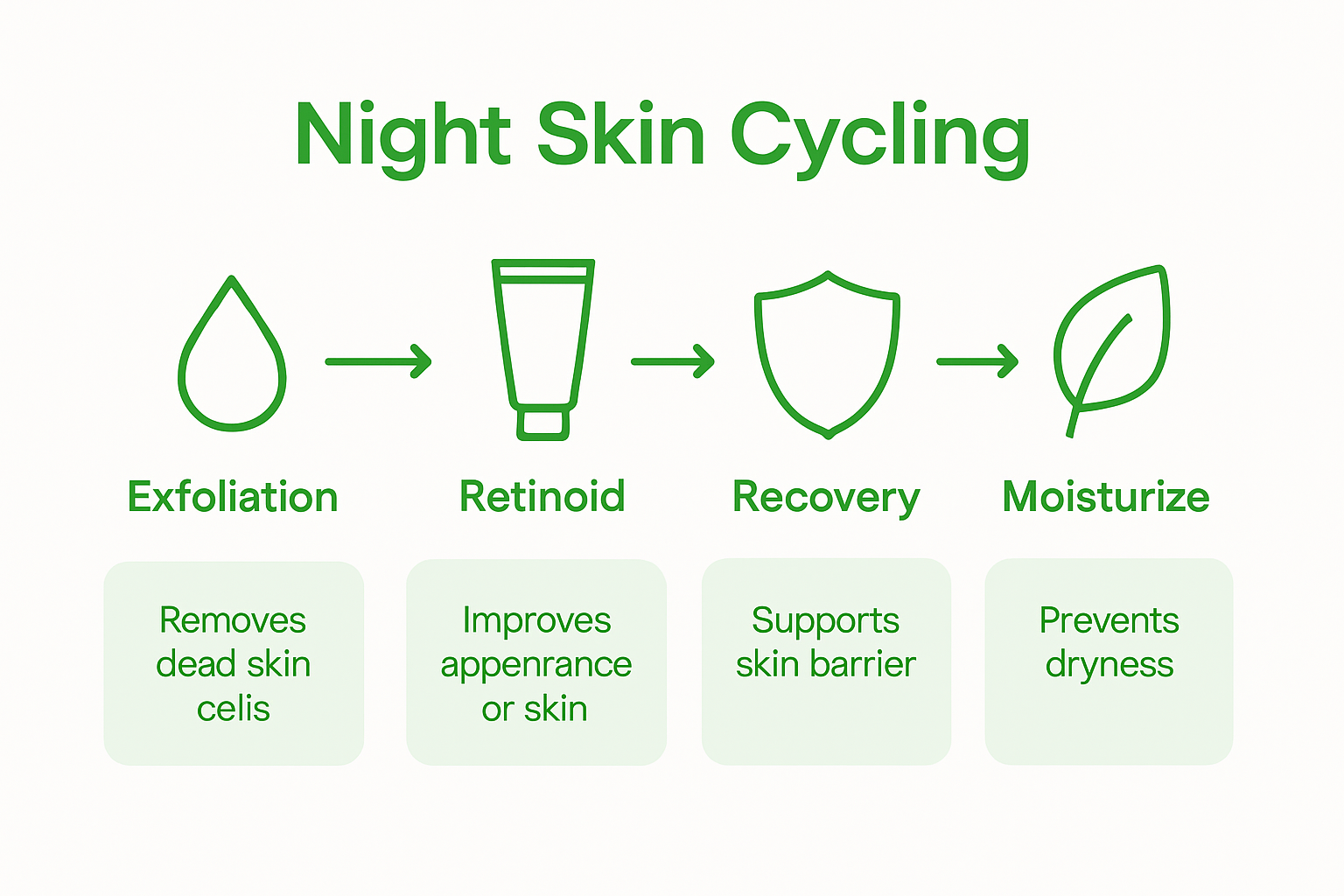
The typical skin cycling process involves a carefully choreographed sequence: Night 1 focuses on chemical exfoliation to remove dead skin cells, Night 2 introduces retinoid application for cellular renewal, and Nights 3 and 4 are dedicated to skin recovery and hydration. This approach prevents overwhelming the skin with intense treatments, allowing natural regeneration and reducing the risk of inflammation. The Washington Post reports that this method has gained significant popularity among skincare enthusiasts seeking a more balanced approach to active ingredient usage.
Despite its growing popularity, several myths surround skin cycling that require clarification. Many people mistakenly believe skin cycling is only for those with sensitive skin, when in reality, it can benefit all skin types. Another common misconception is that the routine is overly complicated or time-consuming. In truth, skin cycling simplifies skincare by providing a clear, predictable framework that reduces guesswork. The method also challenges the notion that more product equals better results - instead, it emphasizes strategic, targeted treatment that respects the skin’s natural healing processes.
For those interested in implementing skin cycling, the key is understanding your unique skin needs and being patient with the process. Start by introducing one active ingredient at a time, monitor your skin’s response, and adjust the routine as needed. Consistency and observation are crucial in developing an effective skin cycling regimen that promotes long-term skin health and radiance.
Understanding Steps of the Skin Cycling Routine
Skin cycling is a strategic four-night skincare approach designed to optimize skin health through a carefully structured routine. The routine follows a precise cycle that alternates between active treatment and recovery periods, ensuring your skin receives targeted care without overwhelming its natural regeneration processes.
The four-night cycle breaks down into specific, intentional stages. Night 1 is dedicated to chemical exfoliation, where you use gentle yet effective exfoliating products to remove dead skin cells and promote cellular turnover. On Night 2, the focus shifts to retinoid application, introducing a powerful ingredient that stimulates collagen production and accelerates skin renewal. This ‘less is more’ approach then transitions to Nights 3 and 4, which are pure recovery nights - characterized by gentle cleansing and intensive moisturization to help the skin heal and restore its protective barrier.

Implementing skin cycling requires understanding your skin’s unique needs and being patient with the process. Start by selecting products appropriate for each stage of the cycle. For exfoliation nights, choose chemical exfoliants like AHAs or BHAs that match your skin type. Retinoid selection should be based on your skin’s tolerance and sensitivity level. During recovery nights, prioritize hydrating and barrier-repairing moisturizers that contain ingredients like ceramides, hyaluronic acid, and niacinamide.
For maximum effectiveness, consistency is key. Pay attention to how your skin responds and be prepared to adjust the routine. Some individuals might need to modify the cycle duration or product strengths based on their skin’s reaction. Patience and careful observation will help you develop a personalized skin cycling routine that promotes long-term skin health, reduces irritation, and reveals a more radiant, balanced complexion.
Benefits of Skin Cycling for Skin Health
Skin cycling emerges as a revolutionary approach to skincare, offering profound benefits that go beyond traditional skincare routines. Reducing irritation from active ingredients stands out as one of the most significant advantages, allowing individuals to incorporate powerful treatments without overwhelming their skin’s natural healing processes.
The method provides multiple transformative benefits for overall skin health. By strategically alternating between active ingredient application and recovery periods, skin cycling helps improve skin texture, tone, and resilience. This approach is particularly advantageous for those with sensitive skin, providing a structured method to introduce potent skincare ingredients while minimizing potential adverse reactions. The controlled exposure prevents the common pitfalls of overtreatment, such as inflammation, redness, and compromised skin barrier function.
Beyond immediate skin improvements, skin cycling offers long-term advantages that contribute to sustained skin health. The routine encourages a more mindful approach to skincare, promoting cellular regeneration and skin barrier protection. By allowing designated recovery nights, the skin can effectively repair itself, boost natural collagen production, and maintain optimal hydration levels. This systematic approach reduces the risk of product resistance, ensures more consistent results, and helps individuals develop a more intuitive understanding of their skin’s unique needs.
Implementing skin cycling requires patience and observation. Start by introducing one active ingredient at a time, monitoring your skin’s response and adjusting the routine as needed. Pay attention to how your skin feels, looks, and responds to different stages of the cycle. The goal is not perfection but progress - creating a personalized skincare strategy that respects your skin’s natural rhythms and supports its inherent ability to heal and regenerate.
Common Mistakes and Risks to Avoid
Skin cycling, while innovative, requires careful implementation to avoid potential pitfalls that could compromise your skin’s health. Common mistakes in skin cycling often stem from overzealous product application and insufficient understanding of the routine’s delicate balance, with many individuals inadvertently causing more harm than good.
One of the most critical risks involves over-exfoliation and improper use of active ingredients. Excessive chemical exfoliants or retinoids can strip the skin’s protective barrier, leading to increased sensitivity, redness, and potential long-term damage. Consulting with a dermatologist becomes crucial in customizing a skin cycling routine that respects your unique skin type and sensitivity levels. Some individuals make the mistake of following a one-size-fits-all approach, neglecting the importance of personalized skincare strategies.
Additional risks include neglecting critical skincare fundamentals during the skin cycling process. Sunscreen application becomes paramount, especially when introducing active ingredients that can increase skin sensitivity. Many people forget that skin cycling does not exempt them from daily sun protection. Other common mistakes include rushing the process, not allowing sufficient recovery time between active ingredient applications, and using incompatible product combinations that can cause chemical interactions or reduce overall effectiveness.
To mitigate these risks, approach skin cycling with patience and mindfulness. Start with lower concentrations of active ingredients, introduce new products gradually, and always patch test. Pay close attention to your skin’s response, and be prepared to adjust the routine. Observation is key - if you experience persistent irritation, redness, or discomfort, pause the routine and consult a skincare professional. Remember, the goal of skin cycling is to support and enhance your skin’s natural healing processes, not to overwhelm or compromise its delicate balance.
Choosing the Right Products for Skin Cycling
Selecting the right products is crucial for successfully implementing a skin cycling routine, and the process requires careful consideration of your unique skin type and specific concerns. Understanding the nuanced world of active skincare ingredients becomes the foundation for creating an effective and personalized skin cycling approach.
For the exfoliation night, focus on gentle yet effective chemical exfoliants that match your skin’s sensitivity level. Alpha-hydroxy acids (AHAs) like glycolic and lactic acid work well for normal to dry skin, while beta-hydroxy acids (BHAs) like salicylic acid are ideal for oily and acne-prone skin types. When selecting retinoids for the second night, start with lower concentrations - prescription-strength retinoids should be introduced gradually, while over-the-counter retinol products offer a milder alternative for beginners. The recovery nights demand rich, barrier-repairing moisturizers containing ingredients such as ceramides, hyaluronic acid, and niacinamide to support skin healing and hydration.
Product compatibility is paramount in skin cycling. Avoid combining multiple strong active ingredients on the same night, which can lead to irritation and compromise your skin’s protective barrier. Pay attention to product pH levels, ingredient interactions, and your skin’s individual tolerance. Some individuals might need to modify the standard four-night cycle based on their skin’s response, potentially extending recovery periods or adjusting product strengths. Always patch test new products and introduce them one at a time to accurately assess how your skin responds.
Building an effective skin cycling routine is a journey of self-discovery and patience. Observation is your most powerful tool - track how your skin reacts, be willing to adjust your approach, and remember that skincare is not one-size-fits-all. Start with minimal, high-quality products that address your specific concerns, and gradually build complexity as you understand your skin’s unique needs. Consulting with a dermatologist can provide personalized insights tailored to your individual skin health and goals.
Elevate Your Skin Cycling Routine with Clean, Effective Ingredients
Understanding the importance of skin cycling means knowing how vital it is to use the right active ingredients without overwhelming your skin. Many face challenges like irritation or confusion around product choices. Our clean, vegan, and cruelty-free products are designed to help you build a personalized skin cycling routine that respects your skin’s natural healing and regeneration. Whether you are looking for the powerful antioxidant support of Vitamin C or the restorative benefits of Coenzyme Q10, each product supports your skin without any fillers or toxic chemicals.

Start transforming your skincare approach today with products that empower your skin to recover and thrive during each phase of your routine. Visit Claribelskincare.com and discover the difference of clean, targeted ingredients shipped for free in the US. Take the next step to radiant, balanced skin by choosing ingredients that work in harmony with your skin cycling plan.
Frequently Asked Questions
What is skin cycling?
Skin cycling is a structured skincare approach that involves rotating the use of active ingredients over a four-night period. This method optimizes skin health by alternating between treatments and recovery nights, minimizing irritation while maximizing benefits.
How do you implement a skin cycling routine?
Implementing skin cycling involves a four-night routine: Night 1 for chemical exfoliation, Night 2 for retinoid application, and Nights 3 and 4 for recovery and hydration. Start by selecting suitable products for each step and monitor your skin’s response.
Who can benefit from skin cycling?
Skin cycling can benefit all skin types, not just those with sensitive skin. It is designed to help individuals incorporate active ingredients into their routine without overwhelming their skin, promoting overall skin health.
What are the common mistakes to avoid in skin cycling?
Common mistakes in skin cycling include over-exfoliation, using incompatible products, and neglecting sunscreen. It’s important to use products as directed, listen to your skin, and allow adequate recovery time between active ingredient applications.