Animal Derived Ingredients – Why They Matter in Skincare
Searching for truly vegan skincare can feel like navigating a maze of unfamiliar ingredient names and tiny print on labels. For many Atlanta women who value conscious beauty decisions, understanding exactly what goes into your daily moisturizer or cleanser becomes essential. With animal-derived ingredients like lanolin, collagen, or beeswax often hidden under scientific terms, learning how to spot animal-based components on cosmetic labels empowers you to choose products that match your ethical standards and support cruelty-free living.
Table of Contents
- Defining Animal Derived Ingredients In Beauty
- Common Types Found In Skincare Products
- How To Spot Animal Ingredients On Labels
- Ethical, Health, And Legal Concerns
- Vegan And Plant-Based Alternatives Explained
Key Takeaways
| Point | Details |
|---|---|
| Understanding Ingredients | Familiarize yourself with common animal-derived materials in skincare to make informed choices about product selection. |
| Ethical Considerations | Consumers are increasingly seeking cruelty-free and transparent brands to align with personal ethical standards. |
| Plant-Based Alternatives | Explore effective plant-based alternatives that often provide comparable benefits without ethical dilemmas. |
| Label Awareness | Always check product labels for clear disclosures and certifications indicating cruelty-free or vegan statuses. |
Defining Animal Derived Ingredients in Beauty
Animal derived ingredients are components sourced directly from animal bodies or byproducts used within beauty and skincare formulations. These materials include substances extracted from various animal sources like tissues, secretions, and biological compounds that provide specific functional or aesthetic properties in cosmetic products. Cosmetic ingredient regulations help standardize how these ingredients are identified and labeled.
Typical animal derived ingredients found in skincare include:
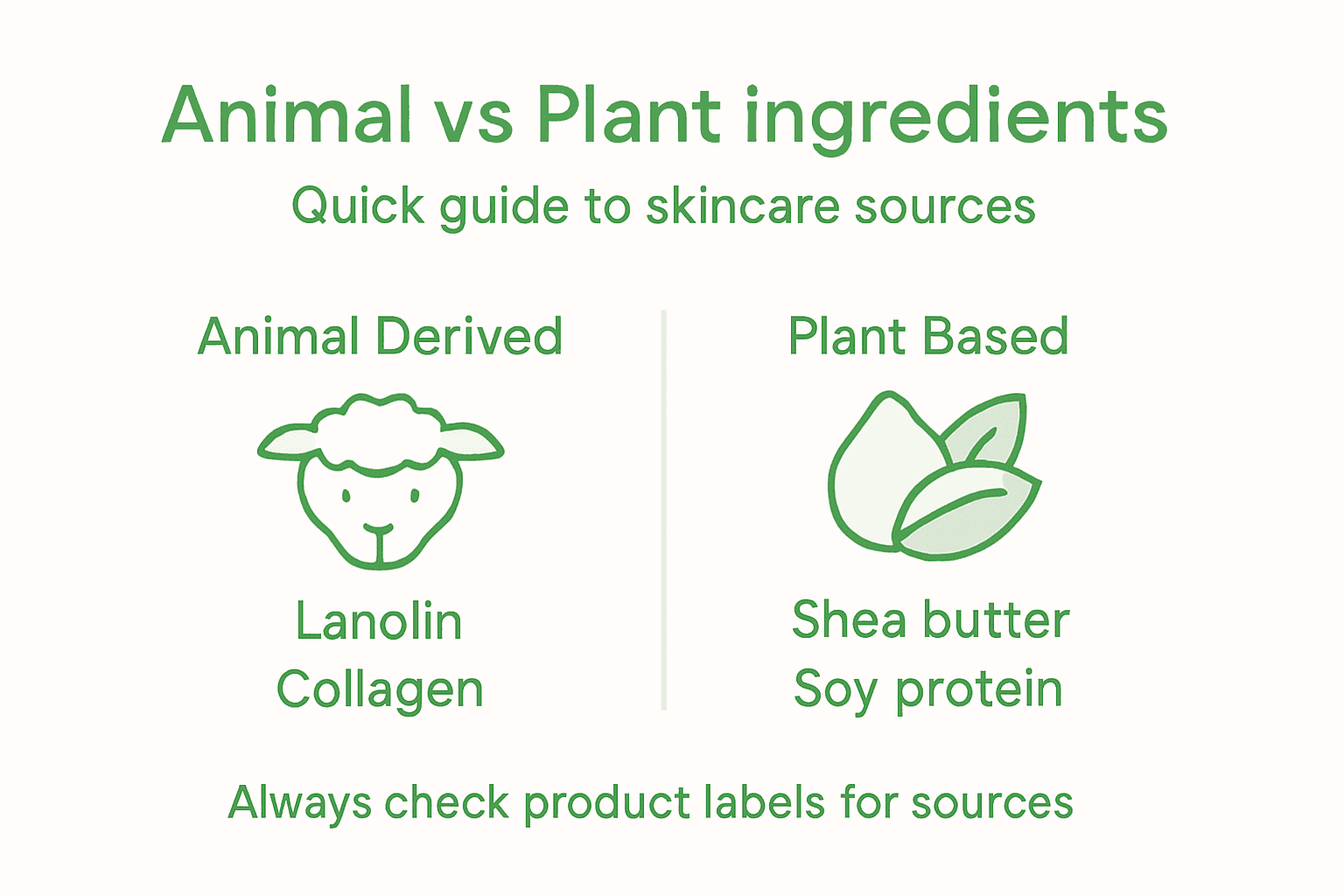
- Lanolin: A waxy substance extracted from sheep’s wool
- Collagen: Protein derived from animal connective tissues
- Keratin: Protein sourced from animal hair and nails
- Carmine: Red pigment created from crushed insects
- Beeswax: Produced by honeybees for hive construction
These ingredients are often chosen for their unique molecular structures and potential benefits like moisturizing, structural support, or preservation. The FDA addresses how manufacturers substantiate product safety when incorporating such components, emphasizing transparency and ethical sourcing practices.
Understanding animal derived ingredients requires examining their origin, extraction methods, and potential ethical implications. Consumers increasingly demand clarity about ingredient sourcing, pushing brands toward more transparent labeling and cruelty-free alternatives.
Pro tip: Always carefully review ingredient lists and look for certifications indicating cruelty-free or vegan product status to make informed skincare choices.
Common Types Found in Skincare Products
Skincare products frequently incorporate various animal-derived ingredients that provide unique functional properties. Cosmetic ingredient safety reports highlight multiple animal-sourced components used extensively in beauty formulations, each serving specific purposes in product development.
Common animal-derived ingredients in skincare include:
- Lanolin: A moisturizing wax extracted from sheep’s wool
- Collagen: Protein derived from animal connective tissues
- Keratin: Structural protein sourced from animal hair and nails
- Squalene: Hydrating oil traditionally extracted from shark liver
- Carmine: Red pigment created from crushed cochineal insects
- Beeswax: Natural emulsifier produced by honeybees
These ingredients are valued for their unique molecular structures and beneficial properties. FDA guidelines emphasize that manufacturers must ensure ingredient safety and provide transparent labeling about animal-sourced components.
Consumers increasingly seek alternatives due to ethical concerns, driving innovation in synthetic and plant-based ingredient development. Understanding the origin and function of these ingredients helps make more informed skincare choices.
Pro tip: Always check ingredient lists and look for certifications that indicate cruelty-free or vegan product formulations to align with your personal ethical standards.
How to Spot Animal Ingredients on Labels
FDA cosmetic labeling requirements mandate clear ingredient disclosure, making it possible for consumers to identify animal-derived ingredients with careful label reading. Understanding these ingredients requires knowledge of both scientific and common names used in product packaging.
Common animal-derived ingredient names to watch for include:
- Lanolin: Extracted from sheep’s wool
- Carmine: Red pigment from crushed insects
- Collagen: Protein from animal connective tissues
- Keratin: Protein sourced from animal hair and nails
- Squalene: Oil traditionally extracted from shark liver
- Albumin: Protein derived from egg whites
- Elastin: Protein from animal connective tissues
INCI Naming Conventions help decode complex ingredient labels. Ingredient name regulations require manufacturers to list components in descending order of predominance, allowing consumers to quickly identify animal-sourced materials.
Some ingredients have scientific names that might not immediately reveal their animal origins. Terms like hydrolyzed proteins, peptides, and certain glycerin variations can potentially indicate animal-derived sources. Cross-referencing ingredient lists with trusted resources or contacting manufacturers directly can provide additional clarity.
Pro tip: Download a smartphone app that helps decode complex ingredient lists and scan product labels quickly to identify animal-derived components.
Ethical, Health, and Legal Concerns
Animal testing regulations reveal complex ethical challenges surrounding the use of animal-derived ingredients in skincare. These concerns span multiple dimensions, including animal welfare, consumer health, and legal compliance.
Key ethical considerations include:
- Animal Welfare: Preventing unnecessary suffering
- Consumer Health: Ensuring safe, non-toxic ingredients
- Environmental Impact: Reducing ecological disruption
- Transparency: Demanding clear ingredient sourcing
- Sustainability: Promoting cruelty-free alternatives
The health implications of animal-derived ingredients are significant. Some ingredients may trigger allergic reactions, skin sensitivities, or potential long-term health risks. Research on cosmetic animal testing highlights the scientific limitations of using animal models to predict human responses.
Legal frameworks provide minimal protection, with most regulations focusing on product safety rather than ethical sourcing. Consumers are increasingly driving change by demanding cruelty-free certifications and supporting brands that prioritize ethical ingredient sourcing and production methods.
This table compares ethical and health impacts between animal-derived and plant-based ingredients:
| Criteria | Animal-Derived Ingredients | Plant-Based Ingredients |
|---|---|---|
| Allergy Risk | Higher, potential sensitivities | Generally lower, fewer issues |
| Sustainability | Often less sustainable | Typically more eco-friendly |
| Transparency | May lack clear sourcing | Increasingly transparent |
| Ethical Concerns | Frequent animal welfare debates | Fewer ethical dilemmas |
Pro tip: Research brands’ ethical certifications and prioritize companies that are transparent about their ingredient sourcing and testing practices.
Vegan and Plant-Based Alternatives Explained
Sustainable cosmetics research demonstrates the remarkable potential of plant-based ingredients in modern skincare. These alternatives not only provide ethical solutions but also deliver comparable performance to traditional animal-derived components.
Popular plant-based alternatives include:
- Coconut Oil: Replaces animal-based moisturizers
- Jojoba Oil: Natural alternative to sebum and lanolin
- Soy Protein: Substitutes for animal collagen
- Aloe Vera: Provides hydration instead of animal glycerin
- Shea Butter: Mimics animal-based conditioning agents
- Grape Seed Oil: Alternative to animal-derived facial oils
The vegan beauty movement emphasizes transparency and ethical ingredient sourcing. These plant-based ingredients are not just substitutes but often superior alternatives, offering enhanced nutritional profiles and fewer potential allergens compared to animal-derived components.
Here is a concise summary comparing commonly used animal-derived skincare ingredients with plant-based alternatives:
| Ingredient Source | Primary Function | Common Animal-Derived | Plant-Based Alternative |
|---|---|---|---|
| Moisturizing Agent | Hydrates and softens skin | Lanolin | Jojoba Oil, Shea Butter |
| Structural Support | Firms and repairs tissue | Collagen, Keratin | Soy Protein, Pea Protein |
| Pigment | Adds color to cosmetics | Carmine | Beet Extract, Annatto |
| Emulsifier/Preserver | Stabilizes formulations | Beeswax, Squalene | Carnauba Wax, Olive Oil |
Advanced biotechnology and sustainable extraction methods continue to expand the range of effective, cruelty-free skincare ingredients. Consumers now have access to scientifically formulated products that align with ethical standards without compromising performance.
Pro tip: Look for third-party vegan certifications and research brands committed to transparent, plant-based ingredient sourcing.
Choose Ethical Skincare Without Compromise
The article highlights the challenges many skincare lovers face when trying to avoid animal derived ingredients while still wanting effective, safe, and natural products. Concerns about unclear labeling, potential allergens, and ethical sourcing make it difficult to trust many brands. If you seek clean formulations that exclude lanolin, collagen, carmine, beeswax, and other animal sourced components but still deliver powerful moisturizing and nourishing benefits, Claribel Skincare offers precisely that solution.
Our small-batch, organic, vegan, and cruelty-free range is specifically designed to meet the needs of conscious consumers. By eliminating synthetic chemicals and animal ingredients, we provide skin products that prioritize health, sustainability, and transparency. Explore our full selection of clean beauty essentials on Claribel Skincare and discover the difference plant-based ingredients can make.
Ready to switch to ethical skincare that truly cares for your skin and the planet? Visit Claribel Skincare today and experience free shipping across the US. Your skin deserves a gentle, effective, and cruelty-free routine that aligns with your values.
Frequently Asked Questions
What are animal-derived ingredients in skincare?
Animal-derived ingredients are components sourced directly from animals or their byproducts, used for their beneficial properties in beauty and skincare formulations. Examples include lanolin, collagen, keratin, and beeswax.
Why are animal-derived ingredients important in skincare products?
These ingredients often provide unique functional and aesthetic properties, such as moisturizing, structural support, and preservation, which can enhance the effectiveness and quality of skincare products.
How can I identify animal-derived ingredients on product labels?
You can identify animal-derived ingredients by looking for specific terms like lanolin, collagen, keratin, and carmine on labels. Understanding both common names and their INCI (International Nomenclature of Cosmetic Ingredients) names can also help clarify the origins of components.
What are the ethical concerns regarding animal-derived ingredients?
Ethical concerns include animal welfare, potential allergic reactions, environmental impact, and the lack of transparency in ingredient sourcing. Many consumers are seeking cruelty-free alternatives and brands that prioritize ethical practices.