


Answering the question "What is certified organic" skincare can feel like a challenge for American women committed to wellness and vegan living. Over 30 percent of product labels in the United States are misleading or lack clear organic certification, leaving health-conscious shoppers at risk of ingredients they want to avoid. By understanding what is certified organic actually means and how global standards compare, you can make informed choices that support your lifestyle and values.
Table of Contents
- Certified Organic Defined And Misunderstood
- Types Of Certified Organic Skincare Products
- Usda Organic Standards And Legal Framework
- Certification Process And Compliance Requirements
- Risks, Costs, And Mistakes To Avoid With Organic Labels
Key Takeaways
| Point | Details |
|---|---|
| Understanding Certification | Not all organic claims are equal; consumers should look for certification seals like COSMOS or USDA to verify authenticity. |
| Types of Products | Various organic skincare types exist, including face creams and serums, each with specific certification standards for quality. |
| Regulatory Framework | The USDA National Organic Program sets strict guidelines for organic products in the U.S., including ingredient sourcing and production practices. |
| Cost and Compliance Risks | Certification and compliance costs can vary significantly, and failure to meet standards may lead to penalties or decertification. |
Certified organic defined and misunderstood
Understanding certified organic in skincare requires more than a simple glance at product labels. Many consumers mistakenly believe that “organic” automatically means completely natural or entirely safe, when the reality is far more nuanced. Organic certification standards have specific requirements that go beyond basic ingredient sourcing.
The COSMOS standard, an internationally recognized certification, provides a comprehensive framework for evaluating organic skincare products. This rigorous process examines multiple aspects of product development, including raw material sourcing, manufacturing processes, and environmental sustainability. Independent certification protocols help protect consumers from misleading marketing claims and ensure genuine commitment to organic principles.
To qualify for organic certification, skincare products must meet strict criteria. These typically include:
- Minimum percentage of organic ingredients
- Restricted use of synthetic chemicals
- Environmentally responsible production methods
- Transparent supply chain documentation
- Verifiable traceability of ingredient origins
Consumers seeking authentic organic skincare should look beyond marketing language and examine official certification seals. Not all “organic” claims are created equal, and understanding the specific standards can help you make more informed purchasing decisions.
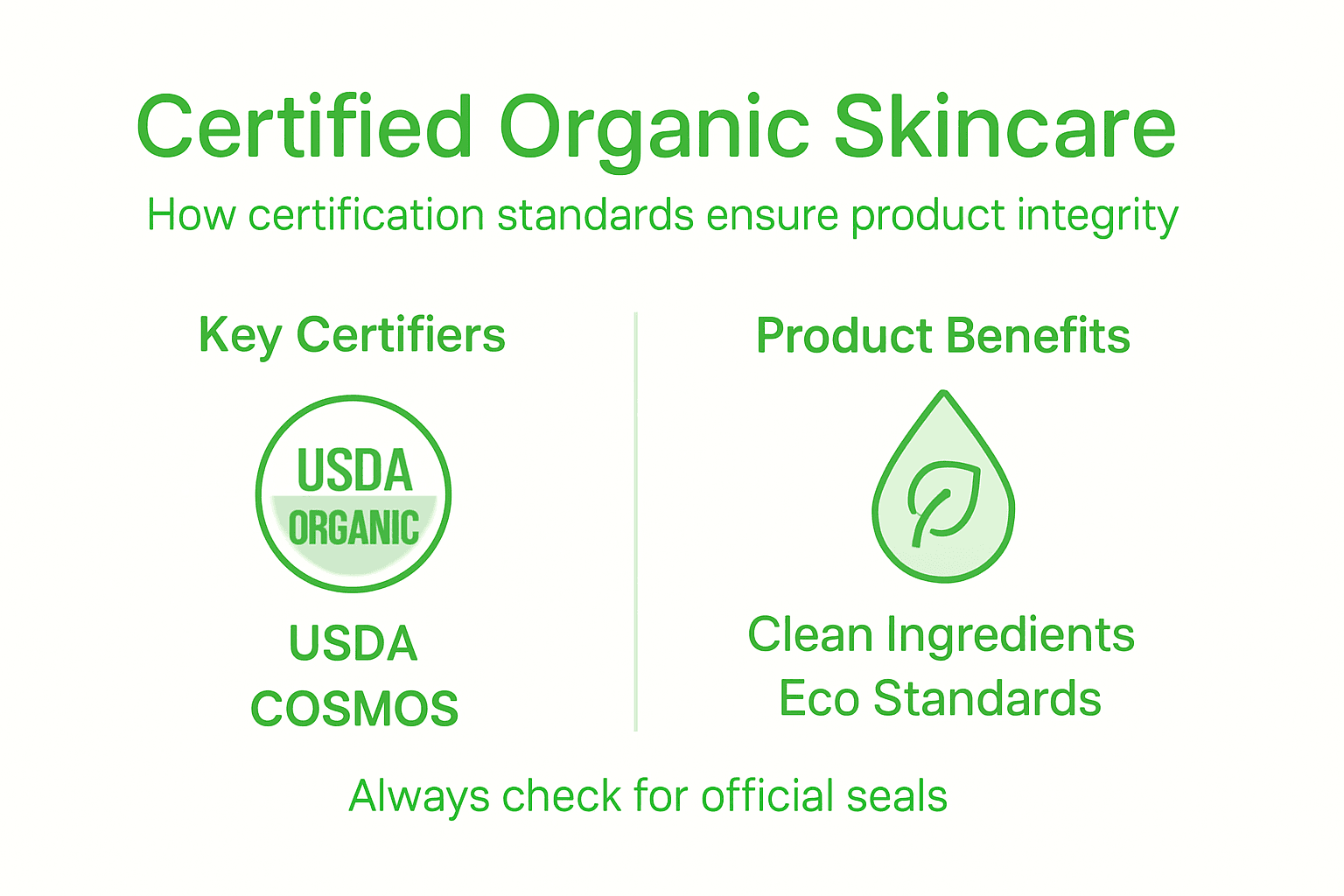
Here’s a comparison of leading international organic skincare certifications and their main focus areas:
| Certification Standard | Primary Focus | Geographic Reach | Key Distinctions |
|---|---|---|---|
| COSMOS | Sustainability and purity | Europe, global | Evaluates full supply chain |
| USDA Organic | Ingredient sourcing and legal compliance | United States | Federal law enforced |
| NATRUE | Natural and organic integrity | Europe, global | Restricts synthetic ingredients |
| Cosmebio | Environmental impact and transparency | France, global | Requires regular audits |
Pro tip: Always check for specific certification logos from recognized international organizations like COSMOS or NATRUE when purchasing organic skincare products.
Types of certified organic skincare products
Organic skincare products encompass a diverse range of formulations, each adhering to specific certification standards that ensure quality, sustainability, and ingredient integrity. International certification organizations recognize multiple categories of organic skincare, ranging from fully organic to naturally derived products.
The most common types of certified organic skincare products include:
- Face Creams: Moisturizers with minimum 95% organic ingredients
- Serums: Concentrated treatments with high organic content
- Cleansers: Gentle formulations using organic botanical extracts
- Body Lotions: Hydrating products with sustainable organic ingredients
- Sunscreens: Mineral-based protection using organic components
Cosmetic certification labels like COSMOS and Cosmebio provide rigorous frameworks for categorizing these products. They distinguish between fully organic products (containing over 95% organic ingredients) and natural products with significant organic components. This classification helps consumers understand the exact organic composition and manufacturing standards of their skincare selections.

Beyond ingredient sourcing, certified organic skincare products must meet comprehensive environmental and ethical standards. This includes responsible manufacturing practices, minimal chemical processing, and transparent supply chain documentation. Brands committed to these principles demonstrate a holistic approach to skincare that extends far beyond simple product formulation.
Pro tip: Always review the specific certification percentage and look for official organic logos when selecting skincare products to ensure authentic organic quality.
USDA organic standards and legal framework
The USDA National Organic Program represents the cornerstone of organic product regulation in the United States, establishing comprehensive guidelines that protect consumers and maintain product integrity. Organic certification standards emerged from the Organic Foods Production Act of 1990, creating a federal framework that defines what truly qualifies as an organic product.
Key components of the USDA organic legal framework include:
- Minimum 95% organic ingredient requirement
- Strict production and handling criteria
- Comprehensive ingredient sourcing documentation
- Prohibition of synthetic pesticides and chemicals
- Regular third-party certification inspections
- Transparent supply chain tracking
Organic enforcement regulations continue evolving to address emerging challenges in the organic marketplace. The Strengthening Organic Enforcement rule represents a significant step in combating potential fraud, implementing more rigorous compliance protocols that ensure manufacturers maintain the highest standards of organic production.
Understanding these legal standards is crucial for consumers seeking genuine organic skincare. The USDA organic seal represents more than just ingredient purity - it signifies a comprehensive commitment to environmental sustainability, ethical production practices, and transparent manufacturing processes that extend far beyond simple product labeling.
Pro tip: Always verify the USDA organic certification seal and request detailed ingredient documentation when purchasing organic skincare products to ensure authentic organic compliance.
Certification process and compliance requirements
The journey to organic certification is a comprehensive and rigorous process that demands meticulous attention to detail and unwavering commitment to sustainable practices. Organic certification guidelines require manufacturers to submit an exhaustive Organic System Plan that documents every aspect of production, from ingredient sourcing to manufacturing protocols.
Key steps in the organic certification process include:
- Initial application submission
- Detailed documentation of ingredient origins
- Comprehensive ingredient tracking systems
- On-site facility inspections
- Annual compliance reviews
- Verification of prohibited substance exclusion
The certification process is not a one-time event but an ongoing commitment. Manufacturers must demonstrate continuous compliance through:
- Detailed recordkeeping
- Regular internal audits
- Transparent supply chain management
- Immediate reporting of any potential contamination
- Consistent adherence to organic production standards
Failure to meet these stringent requirements can result in significant consequences, including potential decertification and loss of the valuable organic label. This multi-layered approach ensures that consumers receive products that genuinely meet the highest standards of organic production, protecting both consumer interests and the integrity of the organic certification system.
Pro tip: Request a copy of a brand’s organic certification documentation to verify their compliance and understand the depth of their organic commitment.
Risks, costs, and mistakes to avoid with organic labels
Navigating the organic skincare landscape requires careful attention to detail and understanding of potential pitfalls. Organic certification risks extend far beyond simple product selection, encompassing complex legal and financial considerations that can significantly impact both consumers and manufacturers.
Common mistakes in organic labeling include:
- Misusing the USDA organic seal
- Incorrectly stating organic ingredient percentages
- Failing to disclose certifying agents
- Inadequate documentation of ingredient sources
- Using prohibited processing methods
- Incomplete Organic System Plans
Organic labeling regulations impose strict requirements to prevent fraudulent claims and protect consumer interests. Certification costs can vary widely, ranging from several hundred to thousands of dollars depending on the scale of production and complexity of the manufacturing process. These expenses include initial application fees, annual inspection costs, and ongoing compliance documentation.
Manufacturers face significant risks for non-compliance, including potential decertification, legal penalties, and irreparable damage to brand reputation. Consumers must remain vigilant, carefully examining product labels, certification seals, and understanding the nuanced language of organic claims to make truly informed purchasing decisions.
This table summarizes factors influencing organic skincare product costs and associated risks:
| Factor | Impact on Costs | Consumer Risk |
|---|---|---|
| Certification Fees | Can be several thousand dollars | May inflate retail prices |
| Inspection Expenses | Recurring annual costs | Incomplete audits risk noncompliance |
| Documentation Requirements | Administrative overhead | Lack of transparency hampers trust |
| Legal Penalties | Fines, possible decertification | Loss of access to genuine organic products |
Pro tip: Always request detailed certification documentation and verify the specific organic percentage before purchasing skincare products to ensure you’re getting an authentic organic product.
Discover Truly Clean and Certified Organic Skincare with Claribel Skincare
Navigating the complex world of certified organic skincare can be overwhelming, especially when unclear labels and hidden fillers stand between you and real results. If you are looking to avoid toxins, synthetic chemicals, and misleading organic claims, Claribel Skincare offers a transparent solution that aligns perfectly with the high standards outlined in the article. Our carefully curated products contain only vegan, cruelty free, and clean ingredients without any fillers—so you know exactly what goes on your skin.

Experience the confidence that comes from choosing skincare that meets the rigorous expectations of certified organic standards while embracing the purity and active ingredient potency you deserve. Visit Claribel Skincare to explore our range of clean and effective products. By acting today, you access free shipping within the US and join a community committed to true organic integrity and responsible beauty. Start your journey to healthier skin now by learning more about our philosophy on Clean Ingredients and why authenticity matters so much in skincare.
Frequently Asked Questions
What does certified organic mean for skincare products?
Certified organic means that skincare products meet strict criteria set by certification bodies to ensure a minimum percentage of organic ingredients, environmentally responsible production methods, and transparency in the supply chain.
How can I determine if a skincare product is genuinely organic?
Look for official certification logos from recognized organizations like COSMOS or USDA. Verify the percentage of organic ingredients indicated on the label to ensure authenticity.
What are the main types of certified organic skincare products?
Common types include face creams, serums, cleansers, body lotions, and sunscreens. Each type adheres to specific certification standards regarding organic content and ingredient sourcing.
What steps are involved in the organic certification process for skincare products?
The organic certification process includes submitting an Organic System Plan, documenting ingredient sources, undergoing on-site facility inspections, and maintaining ongoing compliance through regular audits and transparent recordkeeping.
Recommended
- Why Choose Organic Skincare: Everything You Need to Know
- Embrace Health: Switch to Organic Face Care Products
- Natural Skin Care Ingredients: 33 You Can’t Live Without – Claribelskincare.com
- Complete Guide to Plant Based Skincare Benefits
- Organic Hair Conditioner: Everything You Need to Know | MyHair