

Finding sun protection that feels gentle and reliable can be a real challenge when your skin reacts to almost everything. For women in Atlanta who value clean, vegan skincare, understanding how mineral sunscreens work as a physical barrier to reflect and scatter UV rays is a game changer. Unlike chemical sunscreens, these formulas begin protecting sensitive skin instantly, making them a smart choice for daily outdoor routines and last-minute adventures.
Table of Contents
- What Are Mineral Sunscreens And How They Work
- Main Active Ingredients And Their Benefits
- Mineral Sunscreens Vs. Chemical Formulations
- Choosing The Best Mineral Sunscreen For Sensitive Skin
- Potential Drawbacks And Application Tips
Key Takeaways
| Point | Details |
|---|---|
| Immediate Protection | Mineral sunscreens reflect UV rays immediately upon application, making them ideal for last-minute outdoor activities. |
| Gentler on Sensitive Skin | They create a physical barrier on the skin, minimizing irritation compared to chemical alternatives. |
| Core Ingredients | The primary active ingredients, Zinc Oxide and Titanium Dioxide, offer broad-spectrum UVA and UVB protection without needing absorption into the skin. |
| Reapplication Necessity | Regular reapplication every two hours, especially after swimming or sweating, is crucial for maintaining effective sun protection. |
What Are Mineral Sunscreens and How They Work
Mineral sunscreens work differently than the chemical formulas you might be used to. Instead of absorbing UV rays, mineral sunscreens reflect and scatter UV light away from your skin using a physical barrier approach.
Think of mineral sunscreens like a shield sitting on your skin’s surface. When UV rays hit this barrier, they bounce away before penetrating deeper into your skin.
The Active Ingredients That Protect Your Skin
Mineral sunscreens rely on two main active ingredients:
- Zinc oxide - reflects and scatters UV rays, offering broad-spectrum protection
- Titanium dioxide - works similarly to zinc oxide, blocking both UVA and UVB radiation
These inorganic compounds create that protective barrier immediately upon application. You don’t need to wait 15 minutes like you would with chemical sunscreens.
Why Immediate Protection Matters
If you’re heading out the door for a quick walk or running errands around Atlanta, immediate protection is genuinely valuable. Chemical sunscreens require time to absorb into your skin before they become effective. Mineral formulas start working the moment you apply them.
Mineral sunscreens provide instant UV protection upon application, making them ideal for last-minute outdoor activities and sensitive skin types.
This immediate action comes from the physical blocking mechanism. Your skin stays protected from the moment you apply the formula.
How Mineral Protection Stacks Up
The protection works through a straightforward process:
- Apply the mineral sunscreen to clean, dry skin
- The zinc oxide and titanium dioxide particles sit on your skin’s surface
- UV rays hit these particles and scatter or reflect away
- Your skin stays protected from UVA and UVB damage
This broad-spectrum approach shields against both types of harmful radiation that age skin and cause sun damage. For women managing sensitive skin in the Georgia heat, this dual protection matters significantly.
Why This Works for Sensitive Skin
Mineral sunscreens tend to irritate skin less than chemical alternatives. They don’t absorb into your skin, which means fewer ingredients penetrating deeper layers where irritation can occur. The physical barrier sits on top, protecting without triggering reactions.
If you’ve struggled with chemical sunscreen ingredients causing redness, stinging, or breakouts, mineral formulas often feel gentler on your complexion. This matters especially for women with reactive or easily irritated skin types.
Pro tip: Apply your mineral sunscreen to damp skin rather than completely dry skin—this helps it spread more evenly and reduces the chance of a visible white cast while maintaining full UV protection.
Main Active Ingredients and Their Benefits
Mineral sunscreens get their protective power from two primary active ingredients: zinc oxide and titanium dioxide. These minerals work by reflecting and scattering UV radiation rather than absorbing it into your skin. Understanding how each ingredient functions helps you choose the right formula for your sensitive complexion.
Zinc Oxide: The Comprehensive Protector
Zinc oxide stands out because it provides broad-spectrum protection against both UVA and UVB rays. This means it shields your skin from the full spectrum of harmful UV radiation.

For women in Atlanta dealing with intense sun exposure year-round, this comprehensive coverage matters. Zinc oxide blocks the rays that cause premature aging and sun damage without requiring your skin to absorb chemical compounds.
Benefits of zinc oxide include:
- Protects against both UVA and UVB radiation
- Provides immediate protection upon application
- Generally well-tolerated by sensitive skin types
- Works well in mineral formulas designed for daily use
Titanium Dioxide: The UVB Specialist
Titanium dioxide primarily focuses on protecting against UVB rays and short-wave UVA rays. While it doesn’t cover the entire UV spectrum like zinc oxide, it still offers solid protection when used in mineral sunscreen formulations.
Many formulas combine both ingredients to maximize protection. This dual-ingredient approach gives you broader coverage than either mineral alone could provide.
Use this quick reference to understand how the two main mineral sunscreen ingredients differ:
| Property | Zinc Oxide | Titanium Dioxide |
|---|---|---|
| UV Coverage | Both UVA & UVB | UVB & short-wave UVA |
| Sensitivity Suitability | Very gentle for all skin | Gentle, but less comprehensive |
| Cosmetic Appearance | May leave more white cast | Finer, less visible cast |
| Common Formulation Use | Often higher concentration | Added for additional UVB block |
Combining zinc oxide and titanium dioxide creates broad-spectrum mineral sunscreens that protect against the full range of harmful UV radiation your skin encounters daily.
How Nano-Sized Particles Improve Your Experience
Modern mineral sunscreens use nano-sized particles of these minerals, which offer real advantages for your skin. These smaller particles still provide effective UV protection while reducing the visible white cast that older mineral formulas left behind.
Nano-sized mineral particles mean:
- Better blending into your skin tone
- Smoother application and easier spreading
- Maintained UV protection effectiveness
- More elegant finish for daily wear
If you’ve avoided mineral sunscreen because of the white cast concern, newer formulations address this while keeping your skin safe. The protection remains just as effective.
Why These Minerals Matter for Sensitive Skin
Both zinc oxide and titanium dioxide sit on your skin’s surface rather than penetrating deeper layers. This physical barrier approach means fewer irritating ingredients touching your skin’s deeper structures. For women with reactive skin, this matters significantly.
Unlike chemical sunscreen actives that your skin must absorb to work, these minerals start protecting immediately. They don’t trigger the reactions that sensitive skin types often experience with absorbed ingredients.
These natural skin care ingredients align perfectly with clean beauty principles while delivering real, measurable sun protection.
Pro tip: Look for mineral sunscreens listing zinc oxide and titanium dioxide in equal or near-equal concentrations—this balance provides the most complete UV spectrum coverage for your sensitive skin throughout the day.
Mineral Sunscreens vs. Chemical Formulations
Choosing between mineral and chemical sunscreens means understanding how each type protects your skin. The fundamental difference lies in their mechanisms: mineral sunscreens create a physical barrier, while chemical sunscreens absorb into your skin. For sensitive skin, this distinction matters significantly.
How Protection Works: The Core Difference
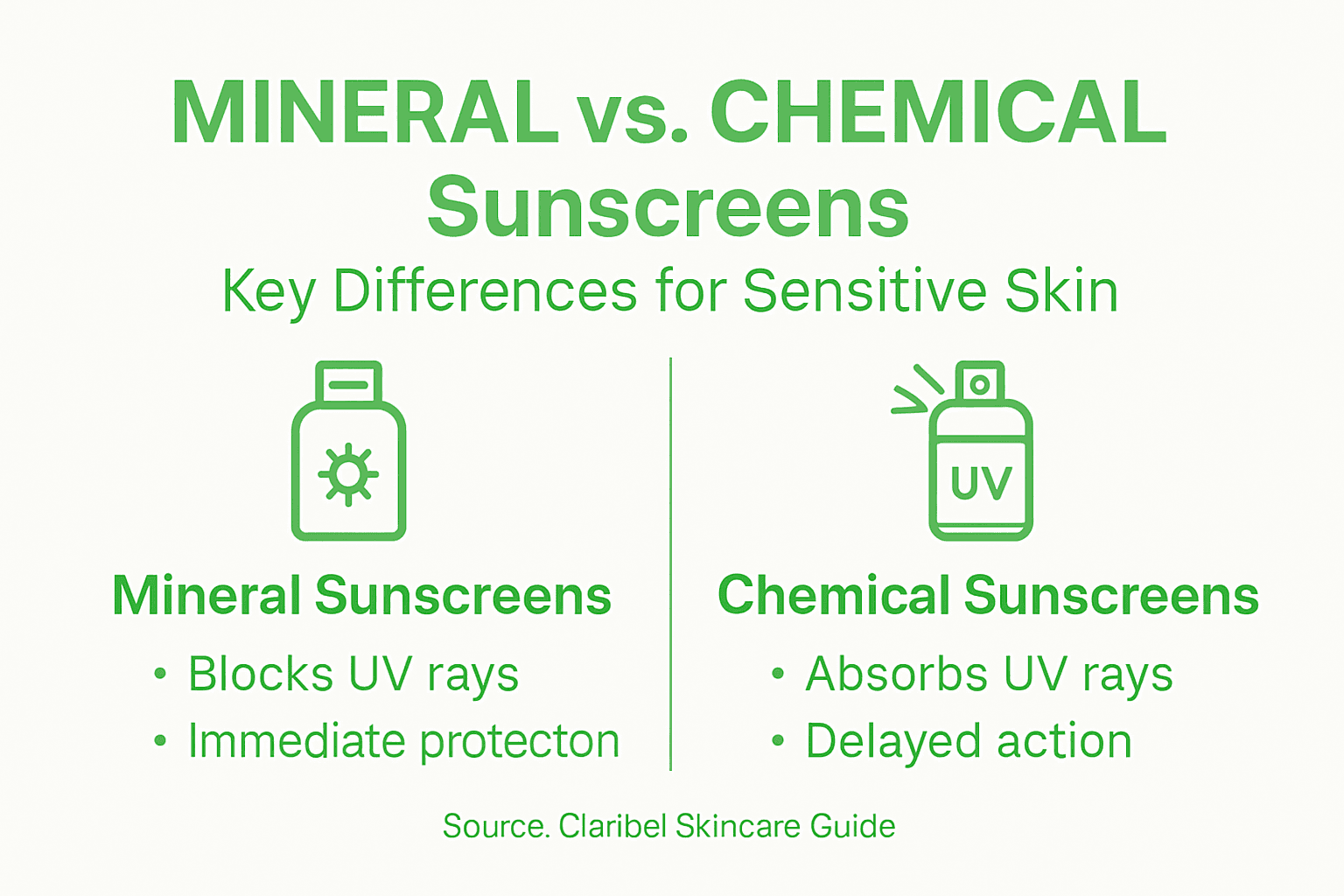
Mineral sunscreens reflect UV rays immediately upon application, while chemical sunscreens require time to absorb before becoming effective. This means mineral formulas start protecting you the moment you apply them—no waiting period required.
Chemical sunscreens absorb UV rays and convert them into heat your skin releases. This process takes 15 to 20 minutes to fully activate, which matters if you’re heading outside quickly.
Key Differences at a Glance
Understanding these distinctions helps you pick what works best for your skin:
Here’s how mineral and chemical sunscreens compare across essential criteria:
| Criteria | Mineral Sunscreens | Chemical Sunscreens |
|---|---|---|
| Activation Time | Immediate upon application | Requires 15-20 minutes to activate |
| UV Protection Method | Reflects and scatters UV rays | Absorbs UV rays into skin |
| Irritation Potential | Low, suitable for sensitive skin | Higher, can cause reactions |
| Appearance on Skin | May leave slight white cast | Typically invisible, blends in |
| Water Resistance | Moderate, washes off easier | Often more water resistant |
| Reapplication Frequency | Every two hours or after water | More frequent, especially outdoors |
Mineral Sunscreens:
- Provide immediate protection upon application
- Create a physical barrier on skin’s surface
- Less likely to cause irritation
- Better for sensitive and reactive skin types
- May leave a slight white cast
Chemical Sunscreens:
- Require 15-20 minutes to become effective
- Absorb into your skin
- Can trigger reactions in sensitive skin
- Better cosmetic appearance in most formulas
- May need more frequent reapplication
Why Sensitive Skin Prefers Mineral
Mineral sunscreens sit on your skin rather than sinking in. This surface-level protection means fewer ingredients penetrating deeper skin layers where irritation occurs. For women with reactive complexions, this matters tremendously.
Chemical sunscreens must be absorbed to work, meaning their active ingredients travel into your skin. This absorption can trigger redness, stinging, or breakouts in people with sensitivity. If you’ve experienced these reactions, mineral formulas likely feel gentler on your skin.
Mineral sunscreens offer non-absorbent protection ideal for sensitive skin, while chemical sunscreens require absorption and may cause irritation for reactive complexions.
Application Timing and Reapplication
Mineral formulas protect immediately, so you can apply and head outside without delay. Chemical sunscreens need that absorption window, which means planning ahead for outdoor activities.
Reapplication frequency also differs. Chemical sunscreens generally require more frequent reapplication compared to mineral options, especially if you’re swimming or sweating in Atlanta’s humidity.
The White Cast Question
Mineral sunscreens can leave a visible white cast on application, though modern formulations have improved significantly. Chemical sunscreens blend more seamlessly into most skin tones. If appearance matters for your daily routine, this distinction influences your choice.
Nano-sized mineral particles reduce the white cast while maintaining full UV protection, making modern mineral sunscreens far more cosmetically elegant than older versions.
Making Your Choice
If you have sensitive skin, mineral sunscreens typically align better with your needs. They protect immediately, don’t absorb into your skin, and rarely trigger reactions. For clean beauty enthusiasts seeking mineral sunscreen with zinc oxide benefits, mineral formulas offer the security of knowing exactly what’s protecting your complexion.
Pro tip: Test any new sunscreen on a small area of your face first, but if you’re switching from chemical to mineral, expect mineral formulas to feel slightly different on application—this doesn’t mean they’re not working effectively.
Choosing the Best Mineral Sunscreen for Sensitive Skin
Selecting the right mineral sunscreen for sensitive skin requires paying attention to specific ingredients and formulation details. The wrong choice can leave your skin irritated or uncomfortable, while the right formula becomes a reliable part of your daily routine. Here’s what to prioritize when shopping.
Look for These Core Active Ingredients
The foundation of any good mineral sunscreen starts with zinc oxide and titanium dioxide. When selecting mineral sunscreen for sensitive skin, these two ingredients provide broad-spectrum protection while remaining gentle on reactive complexions.
Both ingredients create a physical barrier rather than absorbing into your skin. This means less irritation potential compared to chemical alternatives. Look for products listing these as primary active ingredients on the label.
Avoid Common Irritants
Even with mineral formulas, certain additives can trigger sensitivity. Skip products containing:
- Added fragrances - Often cause redness and stinging in sensitive skin
- Parabens - Linked to allergic reactions in reactive individuals
- Dyes and colorants - Can accumulate in sensitive skin and trigger irritation
- Essential oils - Despite being “natural,” these commonly irritate sensitive complexions
- Alcohol denat - Strips skin and compromises your barrier
Check ingredient lists carefully. Brands committed to clean beauty skip these entirely, focusing on pure protection instead.
Fragrance-Free and Hypoallergenic Matter
Choosing broad-spectrum formulations that are hypoallergenic and fragrance-free significantly reduces adverse reactions. Fragrance adds nothing to sun protection—it only increases irritation risk in sensitive skin.
Hypoallergenic formulations minimize common irritants and potential allergens. For women in Atlanta with reactive skin, this distinction makes real difference in daily comfort.
Consider Tinted Versions
Mineral sunscreens can leave a white cast on application, which bothers many people. Tinted mineral sunscreens solve this while maintaining full UV protection. The tint blends with your skin tone, providing better cosmetic appeal without sacrificing safety.
Tinted formulas work especially well for women who wear minimal makeup but want seamless sun protection. You get the benefits of mineral protection with a more polished appearance.
The best mineral sunscreen for sensitive skin combines zinc oxide and titanium dioxide in a fragrance-free, paraben-free formula that feels gentle during daily application.
Application and Compatibility
Test any new sunscreen on a small face area first, even mineral formulas. Everyone’s skin reacts differently, and patch testing prevents full-face reactions.
Consider how the sunscreen works with your existing routine. If you use sunscreen before or after moisturizer, ensure your mineral formula layers well. Clean beauty mineral sunscreens designed to work with natural skincare routines typically layer beautifully without pilling.
Daily Use Expectations
Apply sunscreen every morning on clean, dry skin. Reapply every two hours if you’re outdoors, and immediately after swimming or heavy sweating. Consistent application protects your skin more effectively than occasional heavy application.
Mineral sunscreens with moisturizing ingredients reduce the dry feeling that sometimes accompanies mineral formulas. Look for added hyaluronic acid, plant-derived peptides, or nourishing oils that support your skin barrier.
Pro tip: Keep your mineral sunscreen in a cool spot and apply it to slightly damp skin—this helps it spread evenly, reduces white cast visibility, and ensures complete coverage across your face and neck.
Potential Drawbacks and Application Tips
Mineral sunscreens offer excellent protection for sensitive skin, but they’re not perfect. Understanding their limitations helps you manage expectations and apply them effectively. With the right approach, these drawbacks become manageable rather than deal-breakers.
The White Cast Reality
Mineral sunscreens can leave a white or bluish tint on your skin, especially if you apply too much or don’t blend it thoroughly. This visible residue frustrates many users, particularly those with deeper skin tones where the cast becomes more noticeable.
The white cast happens because zinc oxide and titanium dioxide sit on your skin’s surface. Older formulations had thicker textures that made blending difficult. Modern mineral sunscreens have improved significantly, but some white cast remains a possibility depending on the formula.
Water Resistance Limitations
Mineral sunscreens are not as water-resistant as chemical sunscreens and wash off more easily during swimming or sweating. If you’re spending time at the pool or doing outdoor activities in Atlanta’s humidity, plan for frequent reapplication.
This isn’t a dealbreaker—it’s just a reality requiring adjustments to your routine. Women who swim regularly need to reapply mineral sunscreen more often than they might with chemical alternatives.
Texture and Consistency Challenges
Mineral sunscreens tend toward thicker, greasier textures compared to chemical formulas. They can feel heavy on your skin and take longer to blend in smoothly. This texture issue particularly bothers women who prefer lightweight, fast-absorbing products.
The thickness serves a purpose: it helps the mineral particles stay on your skin. However, modern formulations with lighter bases reduce this problem significantly without sacrificing protection.
Proper Application for Best Results
Apply sufficient amount evenly 15 minutes before sun exposure to allow proper settling on your skin. This brief wait time lets the formula set, reducing the white cast and improving blending.
Application steps that work best:
- Start with clean, slightly damp skin
- Dispense enough product (about a quarter-teaspoon for your face)
- Warm it between your fingers or palms
- Apply using gentle pressing motions, not rubbing
- Wait 15 minutes before heading outside
- Blend any visible white patches with a damp beauty sponge
Reapplication Frequency Matters
Reapply mineral sunscreen every two hours, or immediately after swimming or heavy sweating. In Atlanta’s heat and humidity, you’ll likely need to reapply more frequently than the minimum recommendation.
Keep a travel-size bottle in your bag for midday touch-ups. This habit ensures consistent protection throughout the day rather than relying on morning application alone.
Proper mineral sunscreen application requires sufficient quantity, adequate waiting time before sun exposure, and regular reapplication every two hours or after water exposure.
Using Tinted Formulas as a Solution
Tinted mineral sunscreens address the white cast issue while maintaining full UV protection. The added pigment matches various skin tones, blending seamlessly and looking more like a foundation than a sunscreen.
Tinted versions work wonderfully for women seeking a polished appearance without sacrificing sun safety. They eliminate the white cast problem while delivering the same broad-spectrum protection.
Pro tip: Apply mineral sunscreen to damp skin and use a damp beauty sponge to blend out any white residue within the first five minutes of application—this technique reduces visibility while maintaining complete UV coverage.
Discover Gentle Mineral Sunscreens Designed for Sensitive Skin
If you struggle with redness, irritation, or that uncomfortable feeling caused by chemical sunscreens, you are not alone. This article explains how mineral sunscreens with zinc oxide and titanium dioxide provide immediate, broad-spectrum protection by creating a physical barrier without absorbing into your skin. For sensitive skin types, especially in challenging climates like Atlanta’s heat and humidity, finding a clean, effective mineral sunscreen is essential.
At Claribel Skincare, we offer small-batch, natural, and cruelty-free products that prioritize your skin’s health. Our mineral sunscreens are formulated without parabens, synthetic fragrances, or harsh fillers that often cause reactions. Experience the benefits of zinc oxide and titanium dioxide in formulas that blend smoothly, reduce white cast, and keep your skin calm and protected. Visit us now to explore how clean beauty can transform your sun protection routine with trusted, sensitive-friendly options. Don’t wait to protect your skin the right way by choosing Claribel Skincare’s mineral sunscreen today.
Frequently Asked Questions
What are mineral sunscreens?
Mineral sunscreens use physical blockers like zinc oxide and titanium dioxide to reflect and scatter UV rays rather than absorbing them, creating a protective barrier on the skin’s surface.
How do I apply mineral sunscreen effectively?
For best results, apply a sufficient amount to clean, slightly damp skin about 15 minutes before sun exposure. Use gentle pressing motions for even distribution, and reapply every two hours or after swimming or sweating.
Why are mineral sunscreens often recommended for sensitive skin?
Mineral sunscreens are less likely to irritate sensitive skin because they do not absorb into deeper skin layers. They provide immediate protection without triggering reactions associated with chemical sunscreens.
What should I look for when choosing a mineral sunscreen?
Select mineral sunscreens that prominently feature zinc oxide and titanium dioxide, and avoid those with added fragrances, parabens, or other common irritants. Tinted formulations can help reduce the visible white cast while providing sun protection.