What Is an Emollient? 73% Better Sensitive Skin

Many people confuse emollients with general moisturizers, underestimating their unique barrier repair role. Understanding emollients helps women with sensitive skin choose effective natural, vegan skincare products. This guide explains what emollients are, their types, benefits, myths, and how to select the right ones tailored for sensitive skin needs.
Table of Contents
- Understanding Emollients: Definition and Skin Function
- Types of Emollients: Natural, Synthetic, and Their Benefits
- How Emollients Improve Sensitive Skin and Common Conditions
- Common Misconceptions About Emollients
- Choosing the Right Natural and Vegan Emollients for Sensitive Skin
- Practical Tips and Application Advice for Using Emollients
- Summary and Next Steps: Emollients for Healthy, Resilient Sensitive Skin
- Discover Natural Vegan Emollient Skincare with Claribel
- Frequently Asked Questions About Emollients
Key Takeaways
| Point | Details |
|---|---|
| Emollients repair and smooth the skin barrier by filling lipid gaps. | They create a protective layer that locks moisture inside and reduces irritation. |
| Natural and vegan emollients vary widely; choice impacts sensitive skin health. | Plant oils and butters differ in texture, absorption, and comedogenic ratings. |
| Cold-pressed, linoleic acid-rich oils are best for acne-prone sensitive skin. | These oils are lighter, non-comedogenic, and less likely to clog pores. |
| Misconceptions can lead to using harmful or pore-clogging oils. | Not all natural oils are safe; some can worsen breakouts and irritation. |
| Proper application and patch testing enhance emollient benefits. | Apply after bathing and test new products to ensure skin tolerance. |
Understanding Emollients: Definition and Skin Function
Emollients are ingredients that fill lipid gaps between skin cells, smoothing and protecting skin. They work by forming a thin hydrophobic barrier that locks moisture inside your skin, which is fundamentally different from humectants that attract water or occlusives that seal it. Understanding this distinction helps you understand emollients and natural emulsifiers when selecting skincare products.
Emollients reduce water loss by forming a thin hydrophobic film on the skin surface, which differs from humectants that attract water by osmotic pull. This barrier function is vital for repairing dry, sensitive, and compromised skin barriers. When your skin barrier is damaged, moisture escapes more easily, leading to dryness, irritation, and increased sensitivity to environmental stressors.
The benefits of emollients extend beyond simple moisture retention:
- They reduce irritation by protecting nerve endings in the skin from external irritants
- They enhance skin softness and resilience by supporting the lipid matrix structure
- They improve the appearance of rough, flaky skin by filling surface irregularities
- They support the skin’s natural healing processes after damage or inflammation
For women with sensitive skin seeking natural solutions, emollients provide essential emollient skin benefits without harsh synthetic chemicals. Your skin’s barrier is like a brick wall where skin cells are the bricks and lipids are the mortar. Emollients replenish that mortar, keeping the wall strong and intact.
Pro Tip: Look for products that combine emollients with other moisturizing ingredients for comprehensive hydration support.
Types of Emollients: Natural, Synthetic, and Their Benefits
Emollients come in various forms, each offering distinct advantages for sensitive skin care. Natural emollients such as shea butter, avocado oil, coconut oil, almond oil, castor oil, and squalane mimic skin’s natural lipids and provide deep nourishment without synthetic chemicals. These plant-based options are often ideal for women seeking vegan emollient options for sensitive skin.
Synthetic emollients can also mimic skin lipids while offering stability and hypoallergenic benefits. Some synthetic options like synthetic squalane are vegan and provide consistent performance without the variability of natural ingredients. However, many consumers prefer natural alternatives due to concerns about long-term synthetic chemical exposure.
Emollients differ significantly in texture, absorption rates, fatty acid profiles, and comedogenicity. These differences impact their suitability for various skin types, especially sensitive and acne-prone skin.
| Feature | Natural Emollients | Synthetic Emollients |
|---|---|---|
| Nutrient Content | Rich in vitamins, antioxidants, fatty acids | Minimal to none |
| Absorption Rate | Varies (light to heavy) | Consistent and predictable |
| Skin Compatibility | High when matched properly | Often hypoallergenic |
| Comedogenic Risk | Varies by oil type | Generally lower |
| Sustainability | Renewable plant sources | Petroleum-based or lab-created |
Common natural vegan emollients include:
- Jojoba oil: lightweight, similar to skin sebum, non-comedogenic
- Shea butter: rich, deeply moisturizing, ideal for very dry skin
- Avocado oil: nourishing, high in vitamins A and E
- Squalane: derived from olives or sugarcane, absorbs quickly
- Rosehip oil: lightweight, high in essential fatty acids
When exploring natural vs synthetic emollients, consider your specific skin needs and ethical preferences. Natural options often provide additional phytonutrients that support overall skin health beyond simple moisturization.
Pro Tip: Choose plant-based emollients that are cold-pressed and organic to maximize nutrient retention and skin benefits.
How Emollients Improve Sensitive Skin and Common Conditions
Emollients play a crucial role in protecting and repairing sensitive skin by replenishing lipids and smoothing the skin barrier. When your skin barrier is compromised by dryness, eczema, or environmental stress, emollients help restore its integrity. They reduce transepidermal water loss (TEWL), helping maintain skin hydration and calm irritation that sensitive skin experiences regularly.
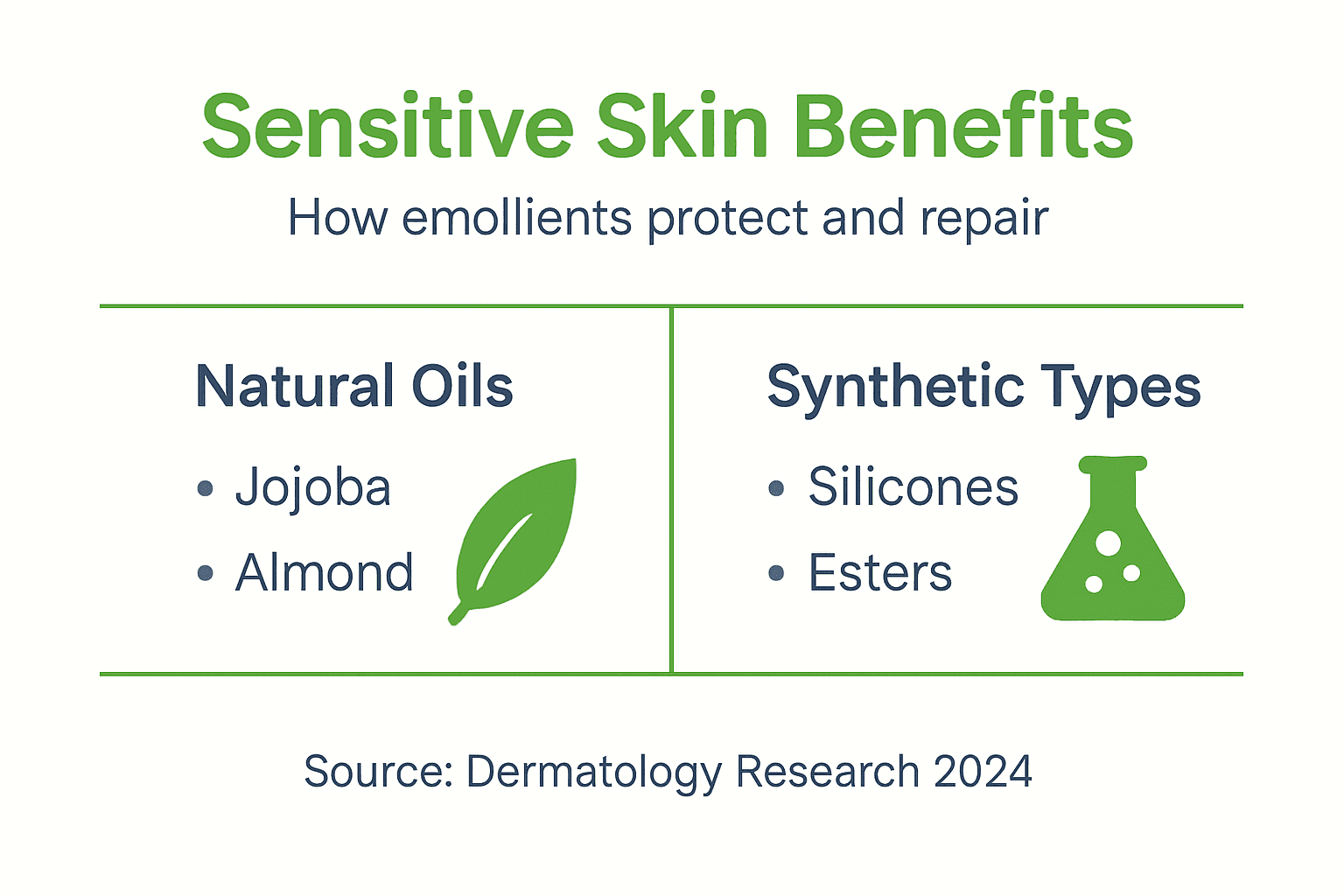
For sensitive skin, vegan skincare brands often use gentle, fragrance-free, and hypoallergenic emollients like jojoba oil, rosehip oil, and squalane to reduce irritation and support barrier repair. These natural options provide the benefits of emollients for sensitive skin without introducing common irritants found in conventional products.
Emollients support recovery in various skin conditions:
- Eczema and atopic dermatitis: Emollients reduce inflammation and itching by reinforcing barrier integrity and preventing irritant penetration
- Psoriasis: They help soften scales and reduce flaking while supporting the skin’s natural healing processes
- Contact dermatitis: Protective emollient layers shield skin from environmental triggers and allergens
- General dryness: They restore moisture balance and prevent the tight, uncomfortable feeling associated with dry skin
The key to success with sensitive skin is choosing emollients that avoid synthetic fragrances, parabens, sulfates, and other known irritants. Vegan formulations often excel in this area because they focus on pure plant ingredients without animal-derived additives that can trigger reactions. When you apply appropriate emollients consistently, you strengthen your skin’s natural defenses against daily stressors.
For women dealing with chronic sensitive skin issues, incorporating sensitive skin emollient support into your routine can significantly improve comfort and appearance. The right emollients transform compromised skin into resilient, healthy skin over time.
Our Intense Hydration Cream is the perfect choice for emolliency and hydration:

Common Misconceptions About Emollients
Many myths about emollients lead to poor product choices and disappointing results. Clearing up these misunderstandings helps you make informed decisions about your sensitive skin care.
Myth 1: All emollients are equal and safe. In reality, not all emollients are equally beneficial or safe for sensitive skin; some natural oils like coconut oil can clog pores and worsen acne-prone skin. Just because an ingredient is natural does not guarantee it will work for your unique skin type.
Myth 2: Emollients and moisturizers are interchangeable terms. Emollients are specific ingredients that smooth and soften skin, while moisturizers are complete products that combine emollients, humectants, and occlusives. Understanding this difference helps you read ingredient lists more effectively and choose products that meet your needs.
Myth 3: Natural oils are always safe and beneficial. Some natural oils high in oleic acid, like olive or coconut oil, can disrupt the skin barrier in acne-prone individuals or clog pores. The fatty acid profile matters significantly for sensitive and breakout-prone skin.
To avoid common misconceptions about emollients and make smart choices, follow these steps:
- Verify the comedogenic rating of any oil-based emollient before trying it
- Read complete ingredient lists, not just marketing claims on packaging
- Patch test every new product on a small skin area for 48 hours
- Research the fatty acid profile of plant oils to match your skin type
- Avoid products with synthetic fragrances even if other ingredients are natural
Understanding emollient myths and truths protects you from wasting money on products that could irritate your sensitive skin. Knowledge empowers you to distinguish between effective natural emollients and those that might cause problems despite their clean ingredient origins.
Choosing the Right Natural and Vegan Emollients for Sensitive Skin
Selecting effective, safe natural and vegan emollients requires understanding specific criteria that impact sensitive skin health. Cold-pressed, organic, and pure natural emollients retain the most nutrients and antioxidants, making them more effective and less irritating for sensitive skin. Processing methods significantly affect the quality and benefits of plant-based emollients.
The fatty acid composition of oils determines their suitability for different skin types. Oils high in linoleic acid (e.g., safflower, sunflower, hemp seed oil) tend to be lighter, non-comedogenic, and better suited for acne-prone and sensitive skin than oils high in oleic acid like olive or coconut oil. This distinction is crucial for women seeking to choose right emollients for sensitive skin without triggering breakouts.
| Oil Type | Linoleic Acid % | Oleic Acid % | Comedogenic Rating | Best For |
|---|---|---|---|---|
| Safflower | 70-75% | 10-15% | 0 | Acne-prone, oily |
| Sunflower | 60-70% | 20-25% | 0 | All skin types |
| Hemp Seed | 50-60% | 10-15% | 0 | Sensitive, acne-prone |
| Jojoba | 5-10% | 10-15% | 2 | All skin types |
| Coconut | 1-2% | 5-8% | 4 | Very dry (not acne-prone) |
| Olive | 8-12% | 70-80% | 2 | Mature, dry skin |
When selecting natural vegan emollients, prioritize these qualities:
- Cold-pressed extraction to preserve beneficial compounds
- Organic certification to avoid pesticide residues
- Pure formulations without synthetic fragrances or fillers
- Appropriate fatty acid profiles matching your skin type
- Low comedogenic ratings if you are prone to breakouts
Avoid synthetic irritants and fragrances by choosing fragrance-free vegan products that list all ingredients transparently. Even natural essential oils can irritate very sensitive skin, so proceed cautiously with scented products.
Pro Tip: Always patch test new emollients on your inner forearm before applying to your face to ensure your skin tolerates them.
Practical Tips and Application Advice for Using Emollients
Integrating natural vegan emollients into your skincare routine requires strategic timing and application methods for optimal results. Apply emollients immediately after bathing or cleansing while your skin is still slightly damp. This locks in moisture more effectively than applying to completely dry skin.
Patch testing is non-negotiable for sensitive skin. Test every new product on a small area of your inner arm or behind your ear for 48 hours before full facial application. This simple step prevents widespread reactions that could take weeks to heal.
Combine emollients with humectants and occlusives for comprehensive hydration and barrier support. Humectants like hyaluronic acid draw water into skin, emollients smooth and soften, and occlusives like plant waxes seal everything in. This layered approach provides superior moisture retention compared to using emollients alone.
Follow these steps to successfully integrate emollients into your routine:
- Identify your skin type and specific concerns (dryness, sensitivity, acne tendency)
- Choose appropriate linoleic-rich emollients based on your needs and the selection guidance above
- Patch test the new product for 48 hours on a small, inconspicuous area
- Apply emollient to damp, freshly cleansed skin using gentle upward motions
- Monitor your skin’s reaction over the first week, adjusting frequency if needed
- Combine with other moisturizing ingredients for complete hydration support
Use gentle, fragrance-free, and hypoallergenic formulations to reduce irritation risk. Read ingredient lists carefully, looking for potential allergens or comedogenic ingredients that could cause problems. Even natural products can contain ingredients that do not work for everyone.
For detailed guidance on using emollients in your vegan skincare routine, consider following a structured workflow that integrates cleansing, toning, treatment, and moisturizing steps. You can also reference a comprehensive skincare checklist with emollients to ensure you are not missing critical steps.
Pro Tip: Layering emollients over hydrating serums can maximize moisture retention without clogging pores, especially when you use lightweight, linoleic-rich oils.
Summary and Next Steps: Emollients for Healthy, Resilient Sensitive Skin
Emollients are fundamental to moisturizing, protecting, and repairing sensitive skin barriers. They work by filling lipid gaps between skin cells, creating a protective film that locks moisture inside while shielding against environmental stressors. This barrier function is especially critical for women with sensitive skin who experience chronic dryness, irritation, or inflammatory conditions.
Choosing natural, cold-pressed, linoleic acid-rich vegan emollients enhances skin hydration and reduces irritation significantly. These plant-based ingredients provide nourishment without synthetic chemicals, parabens, sulfates, or other common irritants found in conventional products. The right emollients transform compromised skin into soft, resilient, healthy skin when used consistently.
Key takeaways for success:
- Avoid comedogenic and synthetic irritants to maintain healthy skin function
- Match emollient fatty acid profiles to your specific skin type and concerns
- Apply emollients to damp skin immediately after cleansing for maximum benefit
- Patch test every new product to prevent adverse reactions
- Combine emollients with humectants and occlusives for complete moisture support
Informed selection and proper use lead to softer, more resilient sensitive skin that can better withstand daily stressors. Claribel Skincare’s natural vegan emollient products offer carefully curated formulations designed specifically for sensitive skin needs, free from irritants and synthetic additives.
Discover Natural Vegan Emollient Skincare with Claribel
Claribel Skincare specializes in natural, cold-pressed, vegan emollient products tailored for sensitive skin. Our small-batch formulations prioritize cold-pressed oils rich in antioxidants and low comedogenic risk for healthier, more resilient skin. Every product is free from parabens, sulfates, synthetic fragrances, and other common irritants that compromise sensitive skin.
Try our personalized skincare quiz to find the ideal emollients and routines matched to your unique skin concerns and goals. This customized approach ensures you select products that truly work for your sensitive skin rather than guessing which ingredients might help.
Explore natural skin care ingredients designed to hydrate, protect, and soothe without synthetic irritants. Our ingredient-focused collections help you understand exactly what you are putting on your skin and why each component benefits sensitive skin health.
Take the next step toward radiant, resilient sensitive skin with Claribel’s clean beauty solutions. Everything ships free in the US, making it easy to start your journey toward healthier skin today.
Frequently Asked Questions About Emollients
What is the difference between an emollient and a moisturizer?
Emollients are specific ingredients that smooth and soften skin by filling gaps between skin cells, while moisturizers are complete products that combine multiple ingredient types including emollients, humectants, and occlusives. A moisturizer uses emollients as one component to achieve overall hydration.
Can emollients cause breakouts on sensitive skin?
Yes, some emollients can cause breakouts if they have high comedogenic ratings or fatty acid profiles that do not match your skin type. Oils high in oleic acid like coconut or olive oil are more likely to clog pores than linoleic-rich oils like safflower or hemp seed oil.
How often should I apply emollients to sensitive skin?
Apply emollients twice daily after cleansing, once in the morning and once before bed, to maintain consistent barrier support and moisture retention. Increase frequency if you experience excessive dryness or live in harsh climate conditions.
Are all natural emollients vegan and cruelty-free?
Not all natural emollients are vegan; some come from animal sources like lanolin from sheep’s wool or beeswax from bees. Always check product labels and certifications to confirm vegan and cruelty-free status if these values matter to you.
What should I do if an emollient irritates my skin?
Discontinue use immediately and cleanse the area gently with lukewarm water. Apply a simple, fragrance-free moisturizer to calm irritation, and consider consulting a dermatologist if the reaction persists or worsens. Patch testing prevents most adverse reactions.
Can I use multiple emollients together in my routine?
Yes, you can layer multiple emollients as long as you consider their combined weight and absorption rates. Start with lighter, faster-absorbing oils and follow with richer butters or creams for comprehensive moisture support without heaviness.
