What Is Fragrance Free? Key Facts For Sensitive Skin
Finding reliable skincare can feel like an endless search when even so-called gentle products leave your skin red or irritated. For many in Atlanta, the desire for clean beauty means scrutinizing every label, but the difference between “fragrance free” and “unscented” can make all the difference. Discovering how fragrance-free means no added synthetic or natural scent substances gives you confidence to protect sensitive skin and make choices that align with your health and values.
Table of Contents
- Defining Fragrance Free In Skincare
- Fragrance Free Vs Unscented Products
- How Fragrance Impacts Sensitive Skin
- Labeling Rules And U.S. Regulations
- Risks, Allergens, And Common Pitfalls
Key Takeaways
| Point | Details |
|---|---|
| Fragrance-Free Products | Fragrance-free skincare products contain no added synthetic or natural scent substances, reducing the risk of skin irritation for sensitive individuals. |
| Difference Between Terms | “Fragrance free” means no added scents, while “unscented” may include masking agents, which can still trigger reactions in sensitive individuals. |
| Impact on Sensitive Skin | Fragrances can cause allergic reactions, persistent inflammation, and disrupt skin’s protective barrier, making them harmful for those with reactive skin. |
| Regulatory Limitations | In the U.S., fragrance ingredients are not required to undergo safety testing, leading to challenges in identifying potential allergens for consumers with sensitivities. |
Defining Fragrance Free In Skincare
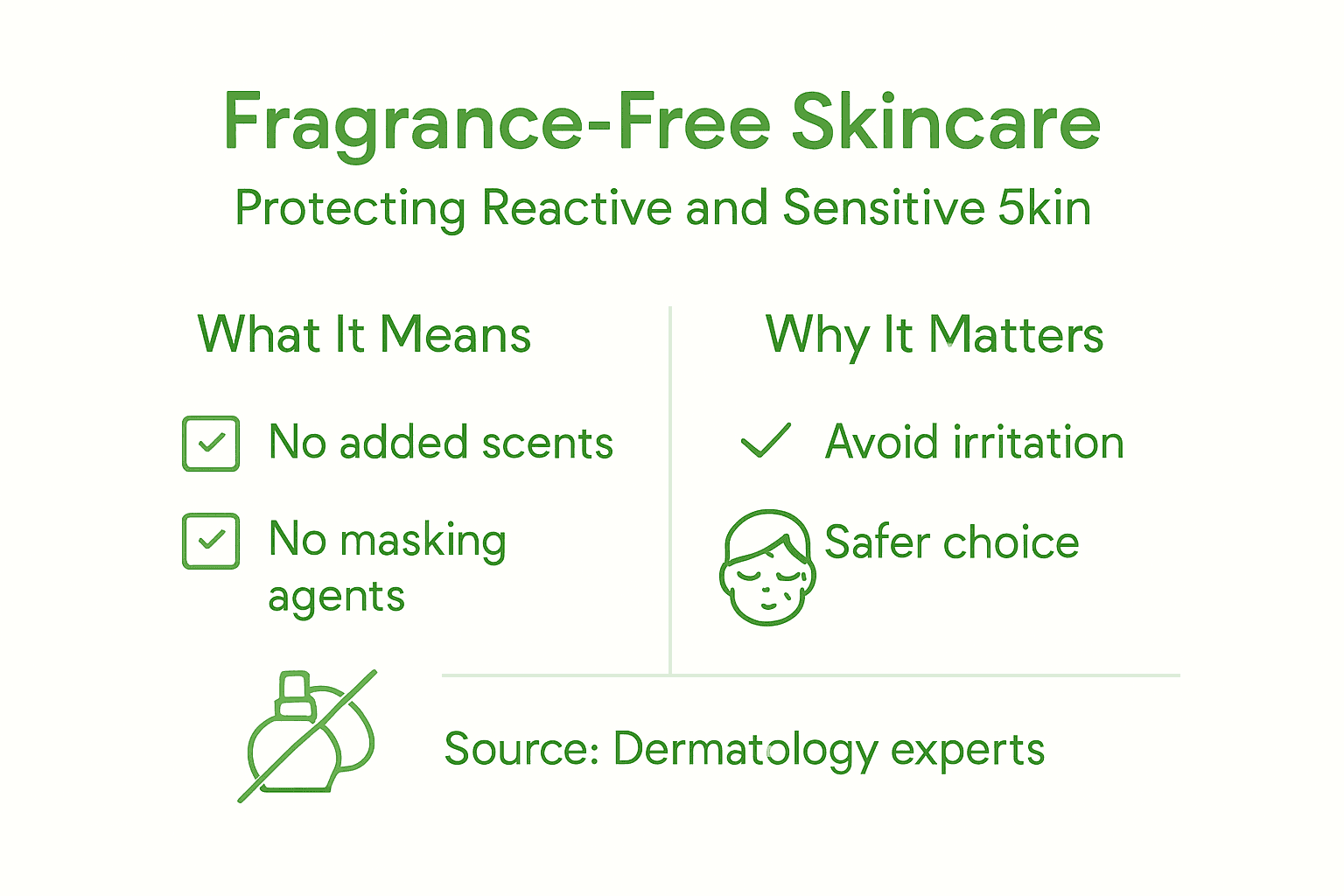
Fragrance-free skincare represents a specialized approach designed to protect individuals with sensitive skin and chemical sensitivities. Fragrance free means a product contains absolutely zero added synthetic or natural scent substances that could potentially trigger allergic reactions or skin irritation.
According to FDA cosmetic regulations, fragrance ingredients are not specifically regulated for safety testing and are considered trade secrets. This lack of oversight means manufacturers are not required to fully disclose the complex chemical combinations used to create product fragrances.
Key characteristics of fragrance-free products include:
- No added perfumes or scent enhancers
- Elimination of synthetic fragrance compounds
- Reduced risk of skin irritation
- Suitable for individuals with chemical sensitivities
- Typically developed with hypoallergenic formulations
The primary goal of fragrance-free skincare is protecting those with reactive skin from potential inflammatory responses. Chemical sensitivity research indicates that many synthetic fragrance ingredients contain compounds that have not been thoroughly tested for long-term health impacts.
Pro Tip: Always check product labels carefully, as “unscented” and “fragrance-free” are not the same legal designation - true fragrance-free products will list zero fragrance ingredients.
Fragrance Free Vs Unscented Products
Navigating the world of skincare labels requires understanding the critical distinction between fragrance free and unscented products. Product labeling research reveals these terms are not interchangeable and can significantly impact individuals with chemical sensitivities.
Key differences between fragrance-free and unscented products include:
-
Fragrance Free:
- Contains zero added fragrances
- No synthetic or natural scent ingredients
- Safest option for highly sensitive skin
-
Unscented:
- May contain masking fragrances
- Chemically neutralizes existing product odors
- Potentially includes hidden fragrance compounds
The nuanced terminology stems from manufacturers’ ability to use chemical masking agents that technically do not create a noticeable scent. Chemical sensitivity guidelines emphasize that unscented products can still trigger reactions for individuals with severe sensitivities.
For people with reactive skin or respiratory challenges, selecting truly fragrance-free products becomes crucial. Carefully reading ingredient lists and understanding these subtle distinctions can help prevent potential allergic responses and skin irritations.
Here’s a concise comparison of fragrance labeling terms and their implications:
| Label Term | Typical Ingredients | Risk Level for Sensitive Skin | Consumer Transparency |
|---|---|---|---|
| Fragrance Free | No fragrance ingredients | Very low | High |
| Unscented | May use masking agents | Moderate to high | Moderate |
| Fragranced | Synthetic or natural scents | High | Low |
Pro Tip: When shopping for sensitive skin products, always read the full ingredient list and look for products explicitly labeled “fragrance free” rather than just “unscented” to minimize potential chemical exposure.
How Fragrance Impacts Sensitive Skin
Sensitive skin is particularly vulnerable to the complex chemical compositions found in fragrances. Dermatological research reveals that fragrance chemicals are potent allergens capable of triggering significant skin reactions and inflammatory responses.
The primary ways fragrances impact sensitive skin include:
- Causing immediate allergic contact dermatitis
- Producing persistent skin inflammation
- Generating itchy, red rash formations
- Disrupting the skin’s natural protective barrier
- Creating long-term sensitization to chemical compounds
Volatile organic compounds in fragrances can provoke complex physiological responses beyond surface-level irritation. These chemicals penetrate the skin’s protective layers, potentially causing respiratory challenges, migraines, and chronic dermatological conditions for individuals with heightened sensitivities.
For people with reactive skin, understanding these intricate chemical interactions becomes crucial. Fragrances contain numerous synthetic compounds that can overwhelm the skin’s natural defense mechanisms, leading to persistent inflammation and compromised skin health.
Pro Tip: Always patch test new skincare products on a small area of skin and wait 24-48 hours to monitor potential allergic reactions, especially when dealing with fragrance-containing formulations.
Labeling Rules And U.S. Regulations
Fragrance labeling in the United States operates in a complex regulatory landscape with significant limitations. FDA cosmetic regulations reveal that while manufacturers must ensure product safety, fragrances remain largely unregulated due to trade secret protections.
Key aspects of U.S. fragrance labeling regulations include:
- No mandatory pre-market safety testing
- Fragrances protected as trade secrets
- Limited ingredient disclosure requirements
- General cosmetic safety standards apply
- No specific rules for “fragrance free” claims
The Modernization of Cosmetics Regulation Act introduced enhanced oversight, but significant transparency gaps remain. Manufacturers can still list “fragrance” as a generic ingredient without detailing specific chemical compounds, making it challenging for consumers with sensitivities to identify potential irritants.
This regulatory approach creates a significant challenge for individuals seeking to understand exact product compositions. Despite growing consumer demand for transparency, current laws allow manufacturers considerable latitude in fragrance ingredient reporting.
Pro Tip: Always contact manufacturers directly to request a comprehensive ingredient list if you have specific sensitivities, as labeling may not provide complete chemical composition details.
Risks, Allergens, And Common Pitfalls
Fragrance sensitivity can trigger complex and wide-ranging health complications that extend far beyond surface-level skin irritation. Fragrance chemical research indicates that many undisclosed ingredients can produce significant physiological responses, potentially impacting multiple body systems.
Common risks and allergens associated with fragranced products include:
- Respiratory distress and asthma-like symptoms
- Neurological reactions such as headaches and dizziness
- Skin inflammation and contact dermatitis
- Potential hormonal disruption
- Chronic fatigue and cognitive impairment
- Immune system hypersensitivity
Fragrance sensitivity studies reveal that volatile organic compounds frequently hide in products labeled as ‘unscented’, creating significant challenges for individuals with chemical sensitivities. These masking agents can provoke reactions even when no obvious fragrance is detected.
The most prevalent pitfalls include misunderstanding product labels, assuming ‘unscented’ means absence of chemicals, and underestimating the cumulative impact of repeated exposure to synthetic fragrance compounds. Consumers must develop a critical approach to understanding product ingredients beyond marketing claims.
To help identify potential triggers, review common health effects linked to fragranced products:
| Symptom | Possible Cause | Affected System |
|---|---|---|
| Skin inflammation | Fragrance compounds | Skin |
| Headaches | Volatile chemicals | Neurological |
| Respiratory issues | Airborne scent molecules | Respiratory |
| Hormonal effects | Synthetic ingredients | Endocrine |
Pro Tip: Maintain a detailed personal log of product ingredients that trigger reactions, including specific symptoms and their onset, to help identify your unique sensitivity patterns.
Discover Gentle Care With Claribel Skincare for Sensitive Skin
If you struggle with sensitivities triggered by fragrances in your skincare, you are not alone. This article highlights the challenge many face from hidden synthetic scents and masking agents that cause irritation or allergic reactions. Finding truly fragrance-free products that respect your skin’s delicate nature can bring relief and protect your skin’s natural barrier. Claribel Skincare specializes in clean, organic, and cruelty-free formulations without synthetic fragrances or harsh irritants to keep your skin calm and healthy.
Explore our Sensitive collection designed specifically for delicate and reactive skin. Each product is crafted in small batches with transparency and quality to avoid the common pitfalls described here. You deserve skincare that puts your health first. Visit Claribel Skincare today and experience soothing solutions that respect your skin’s uniqueness. Take control of your skin’s wellbeing now by choosing truly fragrance-free care that works.
Start your journey to happier skin by browsing our Sensitive products and learn more about how clean skincare can transform your routine.
Frequently Asked Questions
What does ‘fragrance free’ mean in skincare products?
‘Fragrance free’ means the product contains absolutely no added synthetic or natural scent substances that could potentially trigger allergic reactions or irritations.
How is ‘fragrance free’ different from ‘unscented’?
‘Fragrance free’ contains no added fragrances or scent ingredients, while ‘unscented’ may use masking fragrances to neutralize odors. Unscented products can still contain hidden fragrance compounds that may affect sensitive skin.
Why should I choose fragrance-free products for sensitive skin?
Fragrance-free products are safer for sensitive skin as they eliminate the risk of allergic reactions and skin irritation caused by fragrance chemicals, which can disrupt the skin’s protective barrier and lead to inflammation.
Are fragrance-free products completely free from all chemicals?
While fragrance-free products do not contain added scents, they may still include other chemical ingredients. It’s essential to read product labels carefully to check for any potential allergens or irritants specific to your sensitivities.
