

Finding truly certified organic and cruelty-free beauty products can feel overwhelming for many American women today. With over 50 percent of beauty items containing ingredients flagged for potential health risks, choosing safer options matters more than ever. Understanding what organic certification really means sets you up to avoid toxic chemicals and misleading labels. This guide unpacks the myths and standards so you can shop confidently and protect your skin without compromise.
Table of Contents
- Defining Certified Organic And Common Myths
- Types Of Certified Organic Products Available
- Usda Standards For Organic Certification
- How Certification And Labeling Work Today
- Consumer Protections And Common Pitfalls
- Organic Vs. Natural And Other Alternatives
Key Takeaways
| Point | Details |
|---|---|
| USDA Organic Certification | Represents a rigorous agricultural standard focused on sustainability, health, and ecological balance, ensuring products are grown without synthetic pesticides or GMOs. |
| Types of Organic Designations | Products can be classified as 100% organic, organic, or ‘made with organic ingredients,’ enabling consumers to make informed choices based on their preferences. |
| Consumer Vigilance Required | While organic products have strict standards, consumers should read labels carefully, as organic does not guarantee absolute purity or absence of residues. |
| Understanding Label Differences | Terms like “natural” are not regulated, whereas USDA Organic has defined standards, making comprehension of labels essential for informed purchasing. |
Defining Certified Organic and Common Myths
The USDA Organic certification represents far more than a simple label on packaging. It signifies a comprehensive agricultural approach that prioritizes environmental sustainability, consumer health, and rigorous production standards. Organic farming practices focus on renewable resources, soil conservation, and maintaining ecological balance through strict regulatory guidelines.
At its core, organic certification means agricultural products are grown without synthetic pesticides, genetically engineered materials, or harmful chemical interventions. Producers must undergo extensive government-approved inspections to verify compliance with these stringent standards. Contrary to popular misconceptions, organic does not mean completely pesticide-free, but rather limits pesticide use to naturally derived substances that meet specific safety criteria.
Many consumers misunderstand organic standards, believing they represent an absolute prohibition on all pest management techniques. In reality, organic farming allows limited natural pesticides that are carefully evaluated for ecological impact and human safety. These natural alternatives are typically less harmful and used more sparingly than synthetic chemicals employed in conventional agriculture.
Pro tip: When shopping for organic products, always look for the official green and white USDA Organic seal to ensure genuine certification and avoid misleading marketing claims.
Types of Certified Organic Products Available
The USDA Organic certification covers an extensive range of products, extending far beyond fresh produce to encompass a comprehensive array of agricultural and processed goods. Organic product categories are meticulously classified based on their organic ingredient content, providing consumers with clear transparency about the products they purchase.
Under USDA guidelines, organic products are categorized into three primary designations: 100% organic, organic, and “made with organic ingredients.” The 100% organic designation means every single ingredient meets the strictest organic standards. Products labeled simply “organic” must contain at least 95% organic ingredients, while “made with organic ingredients” products must contain a minimum of 70% organic components. This tiered system allows consumers to make informed choices based on their specific preferences and budget constraints.
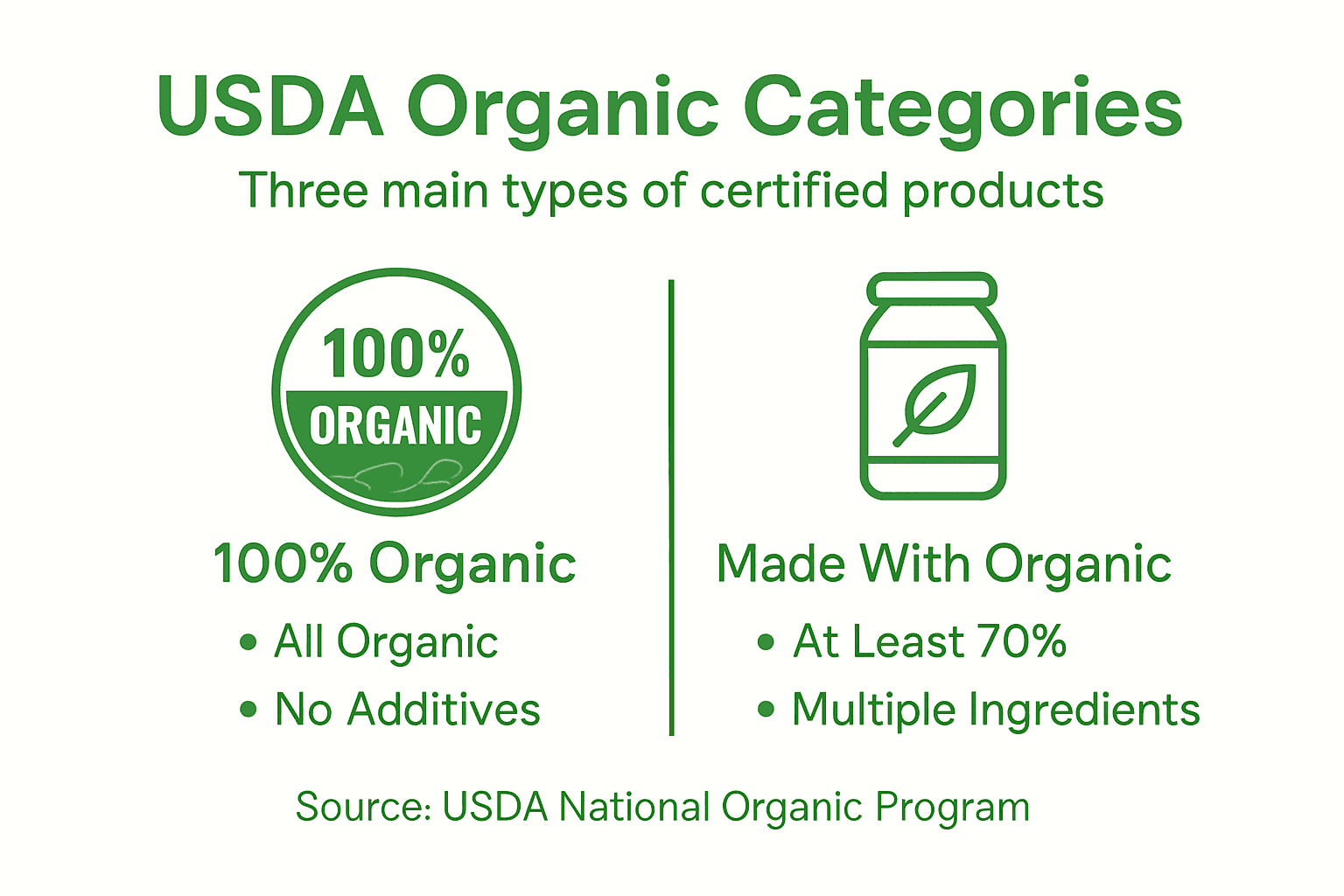
The scope of certified organic products is remarkably diverse, spanning fresh agricultural commodities like fruits and vegetables, processed foods, dairy, meats, and even beauty and personal care products. Organic certification standards apply rigorously across these categories, ensuring that each product meets comprehensive environmental and production requirements. From packaged snacks to skincare items, consumers can find certified organic options that align with their health and sustainability goals.
Pro tip: Always check the specific percentage of organic ingredients on product labels to understand the exact organic content and make the most informed purchasing decisions.
USDA Standards for Organic Certification
The USDA National Organic Program (NOP) represents the gold standard for organic certification in the United States, establishing comprehensive federal guidelines that govern organic production from farm to table. Organic production regulations encompass a rigorous framework that addresses every aspect of agricultural practices, ensuring consumers receive products that meet exceptional environmental and health standards.

To obtain organic certification, producers must navigate an intricate process of compliance and verification. The standards prohibit the use of synthetic pesticides, genetically modified organisms, and require strict soil and water conservation practices. USDA-accredited certification agents conduct thorough documentation reviews and onsite inspections, meticulously examining farming practices, input materials, and record-keeping to guarantee full compliance with organic principles.
The National Organic Standards Board plays a critical role in maintaining the integrity of organic certification by advising on approved inputs and materials. Organic farming standards are designed to promote ecological balance, preserve biodiversity, and maintain soil and water quality. Producers who fail to meet these stringent requirements face potential decertification, underscoring the program’s commitment to maintaining the highest possible standards for organic agricultural production.
Pro tip: Request detailed documentation and certification information from producers to verify the authenticity of organic claims and understand the specific standards applied to your favorite organic products.
This table highlights the key pillars of USDA organic certification:
| Certification Aspect | Purpose | Impact on Consumers |
|---|---|---|
| Soil Health | Preserve long-term fertility | Supports sustainable farming |
| Pest Management | Reduce harmful interventions | Limits chemical exposure |
| Water Conservation | Promote efficient use | Protects natural resources |
| Ecological Balance | Maintain biodiversity | Encourages healthier ecosystem |
How Certification and Labeling Work Today
The organic certification process is a complex and rigorous system designed to ensure transparency and consumer trust. Organic labeling requirements create a multilayered framework that carefully distinguishes products based on their organic ingredient content, providing consumers with clear and precise information about what they are purchasing.
Certification involves a comprehensive evaluation process where USDA-accredited agencies thoroughly inspect and verify producers’ organic system plans. These agencies conduct annual on-site inspections and meticulously review documentation to ensure strict compliance with organic standards. The labeling system is strategically tiered: products can be labeled as 100% organic, organic (containing 95% or more organic ingredients), or “made with organic ingredients” (containing at least 70% organic components).
The USDA Organic seal serves as a powerful mark of credibility, but its use is strictly regulated. Organic certification processes determine whether a product can display the official seal, with only fully certified operations granted this privilege. Products that do not meet the full certification criteria can still list organic ingredients, but cannot use the recognizable green and white USDA Organic seal that consumers have come to trust as a symbol of comprehensive organic integrity.
Pro tip: When shopping, carefully examine product labels and look for the official USDA Organic seal to ensure you’re getting a truly certified organic product.
Consumer Protections and Common Pitfalls
The USDA Organic certification offers substantial consumer protections, creating a robust framework designed to ensure product integrity and transparency. Consumer protection standards mandate rigorous requirements that significantly reduce exposure to synthetic chemicals, prohibit genetically modified organisms, and restrict the use of antibiotics and hormones in agricultural production.
While the organic certification provides comprehensive safeguards, consumers must remain vigilant about potential limitations. Organic product regulations allow for trace amounts of non-organic substances and natural pesticide residues, which means “organic” does not automatically translate to completely pure or chemical-free products. Products labeled “100% organic” have the strictest standards, while those simply marked “organic” can contain up to 5% non-organic ingredients, and “made with organic ingredients” products may have even more variability.
Navigation of organic labeling requires careful attention to detail. Consumers should understand that organic certification focuses primarily on production methods rather than guaranteeing absolute purity. Residue testing and regular inspections help maintain standards, but inadvertent contamination can still occur. The certification process emphasizes ecological practices, soil health, and reduced chemical interventions, providing a meaningful alternative to conventional agricultural methods without promising absolute perfection.
Pro tip: Always read the entire product label, not just the organic seal, to fully understand the specific organic content and potential ingredient variations.
Organic vs. Natural and Other Alternatives
Consumers frequently encounter a maze of confusing product labels, with terms like “organic” and “natural” often used interchangeably despite their profound differences. Label claim distinctions reveal that the USDA Organic certification represents a rigorous, legally defined standard, while “natural” remains an essentially unregulated marketing term with no consistent federal oversight.
The critical difference lies in regulatory framework and verification. Organic certification requires comprehensive documentation, annual inspections, and strict adherence to production standards that prohibit synthetic pesticides, genetic modifications, and harmful agricultural practices. In contrast, alternative labeling claims like “natural” lack meaningful definition, allowing manufacturers significant latitude in product representation without substantive third-party verification.
Other alternative labels such as “non-GMO” or “sustainable” provide additional information but do not match the holistic approach of organic certification. These claims may address specific aspects of production like genetic engineering or environmental impact, but they do not encompass the comprehensive ecological and health considerations embedded in the USDA Organic standards. Consumers seeking genuine product transparency must look beyond marketing language and understand the substantive differences between these competing claims.
Here’s a summary of how common product label terms differ:
| Label Term | Official Definition | Federal Oversight | Verification Process |
|---|---|---|---|
| USDA Organic | Strict, standardized | Comprehensive USDA | Annual inspections, documentation |
| Natural | Not standardized | None | No verification required |
| Non-GMO | Limited definition | Some third-party | Ingredient-specific testing |
| Sustainable | Varies widely | Minimal | Difficult to verify consistently |
Pro tip: When shopping, prioritize products with clear, official certifications over vague marketing terms, and always read the full ingredient list to make informed choices.
Choose Truly Clean and Certified Skincare for Your Health and the Planet
The article highlights the challenge of navigating confusing labels and understanding what “certified organic” really means for your health and the environment. You want skincare that honors USDA standards with no hidden synthetic chemicals or toxic fillers. At ClariBe Skincare, we share your commitment to pure, ethical ingredients that support ecological balance and protect your skin without compromise.

Explore our clean list of vegan and cruelty-free products that deliver the most sought-after active ingredients free from any fillers or toxins. Don’t settle for vague marketing claims. Visit ClariBe Skincare now to shop with confidence and enjoy free shipping across the US. Take control of what you put on your skin with products you can truly trust.
Frequently Asked Questions
What does the USDA Organic label signify?
The USDA Organic label indicates that agricultural products have been produced following strict federal guidelines that prioritize environmental sustainability, consumer health, and rigorous production standards, including limitations on synthetic pesticides and genetically engineered materials.
Are organic products completely free of pesticides?
No, organic products are not completely pesticide-free. They can use naturally derived pesticides that meet specific safety criteria. The focus is on minimizing chemical exposure and using safer alternatives compared to conventional farming methods.
What are the different categories of USDA Organic products?
USDA Organic products fall into three main categories: 100% organic (all ingredients are organic), organic (at least 95% of ingredients are organic), and “made with organic ingredients” (at least 70% organic components). Each classification helps consumers make informed choices based on their preferences.
How can consumers verify the authenticity of organic claims?
Consumers can verify organic claims by looking for the official USDA Organic seal on products. Additionally, checking product labels for specific percentages of organic ingredients and requesting certification documentation from producers can provide further assurance of authenticity.