

Over half of American beauty shoppers say animal welfare influences their purchasing decisions, yet misleading labels and confusing standards make truly cruelty free choices far from simple. With cosmetic brands using terms like ‘cruelty free’ without strict regulation, the path to ethical shopping can seem clouded. This guide cuts through the confusion and gives you clear, actionable steps to help define your cruelty free values and make informed beauty decisions.
Table of Contents
- Step 1: Define Your Cruelty Free Beauty Values
- Step 2: Research Cruelty Free Product Certifications
- Step 3: Identify Trusted Cruelty Free Brands
- Step 4: Check Product Ingredients And Labels
- Step 5: Verify Cruelty Free Claims Before Purchase
Quick Summary
| Key Point | Explanation |
|---|---|
| 1. Define Your Values Clearly | Establish what cruelty free means to you, including your stance on parent companies and testing practices before buying cosmetics. |
| 2. Research Certifications Thoroughly | Validate brands’ cruelty free claims by understanding reputable certification programs and their specific requirements for ethical practices. |
| 3. Identify Reliable Brands | Use databases and lists from trusted organizations to find brands that maintain ethical standards and avoid animal testing. |
| 4. Analyze Ingredients Diligently | Scrutinize product ingredients for animal-derived components and ensure proper labeling to support your cruelty free goals. |
| 5. Verify Claims Before Purchase | Always cross-check multiple sources to confirm brands’ cruelty free status and understand their parent companies’ testing policies for informed shopping decisions. |
Guide to Cruelty Free Beauty
Step 1: Define your cruelty free beauty values
Defining your cruelty free beauty values is about understanding exactly what animal welfare means to you and establishing personal standards for your cosmetic purchases. This crucial first step transforms ethical shopping from a vague concept into a clear personal commitment.
Start by researching what “cruelty free” genuinely means. The FDA highlights significant complexities in cosmetic labeling claims, revealing that terms like “cruelty free” lack strict legal definitions. This means you must dig deeper than surface level marketing. Ask yourself key questions: Do you want products that never test on animals during any stage of production? Are you comfortable with parent companies that might conduct animal testing? Will you accept brands that sell in markets requiring animal testing?
Create a personal checklist of non negotiable standards. This might include avoiding brands owned by parent companies that test on animals, prioritizing certifications from organizations like PETA or Leaping Bunny, and researching a brand’s global testing practices. Your values might range from completely avoiding any animal derived ingredients to supporting smaller independent brands committed to ethical production.
Pro Tip: Start a dedicated notes section on your phone or in a journal to track brands that align with your specific cruelty free standards, making future shopping decisions easier and more intentional.
Step 2: Research cruelty free product certifications
Researching cruelty free product certifications helps you validate brands’ ethical claims and ensure your beauty purchases align with your animal welfare standards. This step transforms good intentions into concrete, verifiable choices.
Start by understanding the most reputable certification programs. PETA’s Ultimate Cruelty-Free List provides a comprehensive verification process that confirms companies and their suppliers do not conduct or commission animal tests. Additionally, look for independent certification programs like NSF’s Cruelty-Free Certification, which offers third party validation of ethical production standards.
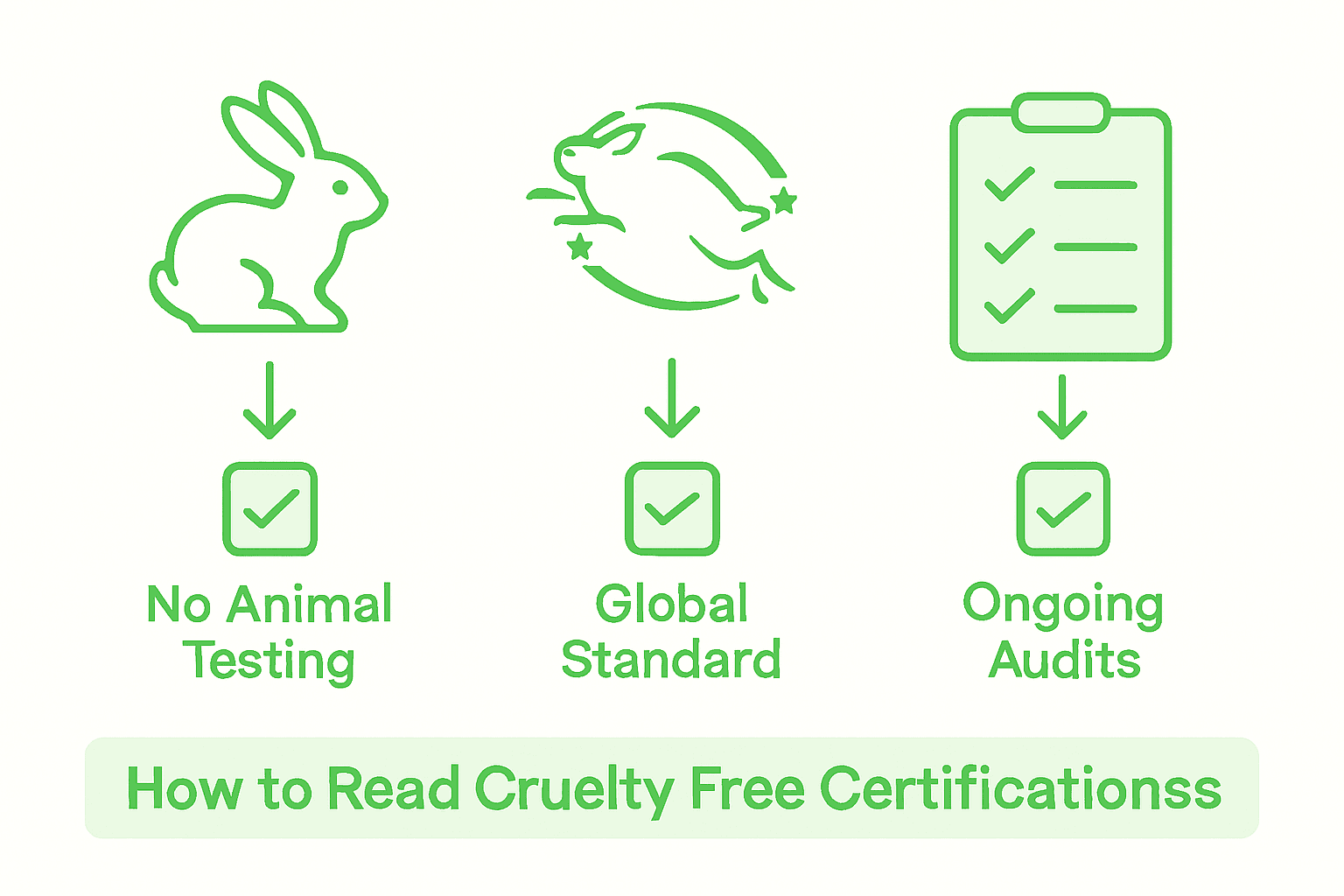
When evaluating certifications, consider multiple factors beyond a simple logo. Research whether the certification requires complete supply chain transparency, prohibits testing at any production stage, and maintains ongoing compliance monitoring. Some key organizations to explore include Leaping Bunny, Choose Cruelty Free, and PETA’s Beauty Without Bunnies program. Create a spreadsheet or digital document to track which certifications each brand holds, comparing their specific standards and verification processes.
Pro Tip: Create digital alerts or follow social media accounts of cruelty free certification organizations to stay updated on the latest ethical beauty standards and newly certified brands.
Here’s a quick comparison of leading cruelty free certification organizations and their approach:
| Organization | Verification Process | Global Recognition | Ongoing Audits |
|---|---|---|---|
| PETA | Brand self-assessment plus documentation review | High | Occasional reviews |
| Leaping Bunny | Supplier monitoring and annual recommitment | Moderate | Required yearly |
| Choose Cruelty Free | Independent assessment and product listing | Australia-specific | Not always mandatory |
| NSF Cruelty-Free | Third-party audit of processes and supply chain | Emerging | Required |
Step 3: Identify trusted cruelty free brands
Identifying trusted cruelty free brands requires careful research and strategic investigation to ensure your beauty purchases align with ethical standards. This step transforms your commitment into actionable shopping choices that support compassionate companies.

PETA’s comprehensive Cruelty-Free List offers an extensive database of brands that have explicitly banned animal testing throughout their entire production process. Beyond checking certification logos, research the brand’s parent company and their global testing policies. Some brands might appear cruelty free locally but still test on animals in markets like China, where animal testing is legally mandated. The Humane Society provides additional guidance on recognizing authentic cruelty free brands, recommending consumers look beyond surface level marketing claims and investigate a company’s comprehensive ethical practices.
Develop a systematic approach to brand verification. Create a digital tracking system where you document brands’ certifications, parent company information, and testing policies. Focus on multiple certification sources like Leaping Bunny, Choose Cruelty Free, and PETA’s Beauty Without Bunnies program. Check for consistent verification across different platforms, and prioritize brands with transparent supply chain information and long term commitment to animal welfare.
Pro Tip: Download mobile apps specifically designed to scan product barcodes and instantly verify cruelty free status, making ethical shopping faster and more convenient.
Step 4: Check product ingredients and labels
Checking product ingredients and labels is a critical step in this guide to cruelty free beauty, requiring careful scrutiny and informed decision making. This process helps you identify truly ethical products that align with your animal welfare standards.
The FDA emphasizes the complexity of cosmetic labeling claims, highlighting that terms like ‘cruelty free’ are not legally defined. Learn to read beyond marketing language and investigate ingredient lists thoroughly. Look for specific indicators such as clear statements about animal testing, comprehensive ingredient transparency, and verifiable certification logos from recognized organizations like Leaping Bunny or PETA. Pay special attention to potentially problematic ingredients derived from animal sources, including carmine, lanolin, collagen, and certain fatty acids.
Develop a systematic approach to label investigation. Create a personal reference guide of animal derived ingredients and testing red flags. Research each brand’s parent company and their global testing policies, as some companies might appear cruelty free locally while conducting tests in other markets. The MSPCA recommends consumers look beyond surface level claims and investigate the actual practices of cosmetic companies regarding animal welfare.
Pro Tip: Use smartphone apps that scan product barcodes and instantly provide detailed ingredient analysis and cruelty free certification status, streamlining your ethical shopping process.
The following table highlights common animal-derived cosmetic ingredients to be aware of:
| Ingredient | Source | Common Use |
|---|---|---|
| Carmine | Beetles | Red pigment in makeup |
| Lanolin | Sheep wool | Skin moisturizers |
| Collagen | Animal tissue | Anti-aging creams |
| Stearic Acid | Animal/Plant fat | Soap, cleansers |
Step 5: Verify cruelty free claims before purchase
Verifying cruelty free claims requires a strategic and thorough approach to ensure your beauty purchases genuinely support ethical practices. This step transforms your commitment from intention to informed action.
PETA’s Ultimate Cruelty-Free List provides a comprehensive database enabling consumers to validate a brand’s ethical standards before making a purchase. Do not rely solely on packaging claims or marketing language. Investigate multiple verification sources such as certification logos from Leaping Bunny, Choose Cruelty Free, and PETA’s Beauty Without Bunnies program. Check whether a brand’s parent company conducts animal testing, as some brands might appear cruelty free while their corporate owners maintain different practices.
Develop a systematic verification process that goes beyond surface level claims. The MSPCA recommends thoroughly researching company policies and understanding the nuanced landscape of animal testing. Create a digital checklist that includes researching global testing policies, supply chain transparency, and third party certifications. Look for brands that provide detailed information about their testing practices, ingredient sourcing, and commitment to animal welfare.
Pro Tip: Create a dedicated digital folder or spreadsheet to track verified cruelty free brands, making future shopping decisions faster and more confident.
Make Your Cruelty Free Beauty Journey Simple and Effective
Choosing truly cruelty free beauty products can feel overwhelming with so many certifications and hidden testing practices to consider. This guide highlights the challenges of verifying brands’ claims and decoding labels to protect animal welfare. If you want to shop with confidence and align your routine with your values, having access to reliably ethical and transparent products is essential.
Discover our carefully curated collections that feature clean, vegan, and cruelty free skincare formulated without any fillers or toxic chemicals. Whether you need solutions for oily skin or gentle care for sensitive areas, our range supports your commitment to ethical beauty with powerful active ingredients and full ingredient transparency. Explore our Sensitive products or find targeted care with Eye and Lip Care Products designed for conscious shoppers.

Start shopping now at Claribelskincare.com where every purchase ships free within the US. Take the stress out of verification and trust that your cruelty free values are respected in every step. Elevate your beauty routine today with products that match your animal welfare standards and deliver visible results.
Frequently Asked Questions
What does it mean for beauty products to be cruelty free?
Cruelty free beauty products are those that are not tested on animals at any stage of production. To ensure your beauty choices align with this standard, research certifications and brands that explicitly state their commitment to animal welfare.
How can I define my personal cruelty free beauty values?
Start by determining what animal welfare means to you. Create a checklist of non-negotiable standards, such as avoiding brands owned by companies that test on animals and prioritizing certified cruelty free labels.
What are some key cruelty free certification programs to look for?
Look for reputable certification programs such as PETA’s Beauty Without Bunnies, Leaping Bunny, and Choose Cruelty Free. Research each program’s verification process to understand their requirements for cruelty free certification.
How do I identify trusted cruelty free brands?
Utilize resources like comprehensive cruelty free lists from trusted organizations to find brands that truly engage in ethical practices. Document the certifications and parent companies of these brands to ensure their animal testing policies align with your values.
What should I check on product labels to confirm they’re cruelty free?
Read ingredient lists carefully to identify any misleading claims, and look for clear cruelty free certification logos. Familiarize yourself with animal-derived ingredients and ensure the brand’s testing policies are consistent with your cruelty free values.
How can I verify a brand’s cruelty free claims before making a purchase?
Conduct thorough research on the brand’s testing policies and certifications using multiple verified sources. Create a digital checklist to track each brand’s cruelty free status, ensuring you make informed purchases that support ethical beauty practices.