Vegan Retinol: The Skin Care Game Changer

Most American beauty consumers are now searching for plant-based alternatives to traditional skincare products, and vegan retinol is leading the way.
With over 65 percent of people listing ethical concerns as a top reason for switching to vegan ingredients, the rise of botanical solutions offers more than just peace of mind.
Discover how this innovative approach delivers real results for your skin while supporting cruelty-free choices and why it is transforming the American beauty landscape.
Table of Contents
- Defining Vegan Retinol And Its Origins
- How Vegan Retinol Works For Skin
- Plant-Based Alternatives To Traditional Retinol
- Safety, Efficacy, And Potential Side Effects
- Comparing Vegan Retinol To Synthetic Versions
Key Takeaways
| Point | Details |
|---|---|
| Vegan Retinol is Plant-Based | Unlike traditional retinol, vegan retinol is derived from botanical sources, offering ethical skincare without animal products. |
| Bakuchiol is a Key Ingredient | Bakuchiol, extracted from Psoralea corylifolia, mimics traditional retinol’s effects in stimulating collagen and reducing signs of aging. |
| Gentler on the Skin | Vegan alternatives typically have a lower risk of irritation compared to synthetic retinoids, making them suitable for sensitive skin. |
| Gradual Transition Recommended | When switching to vegan retinol, introduce products slowly to allow the skin to adapt. |
Defining Vegan Retinol and Its Origins
Vegan retinol represents a groundbreaking plant-based alternative to traditional animal-derived skincare ingredients, offering transformative skin renewal without compromising ethical standards. Unlike conventional retinol sourced from animal products, vegan retinol derives its potent regenerative properties from botanical sources that mimic traditional vitamin A derivatives.
One remarkable plant-based alternative is bakuchiol, extracted from the Psoralea corylifolia plant, which scientific research has shown can produce similar gene expression patterns as traditional retinol. This innovative ingredient demonstrates significant potential in addressing skin aging concerns while providing a cruelty-free solution for conscientious skincare enthusiasts. Research indicates that plant-based products containing bakuchiol can effectively resist skin aging, improving hydration and elasticity without the harsh side effects sometimes associated with synthetic retinoids.
The origins of vegan retinol trace back to advanced botanical research, where scientists discovered plant compounds capable of stimulating collagen production and cellular turnover. These natural ingredients offer a gentler approach to skincare, making them particularly appealing for individuals with sensitive skin or those committed to vegan skincare practices.
By harnessing the power of plant-derived extracts, vegan retinol provides a compassionate and effective alternative to traditional vitamin A derivatives.
Pro Tip: When exploring vegan retinol products, always check ingredient lists carefully and look for clinically validated botanical alternatives that offer scientifically proven skin renewal benefits.
You can enjoy the impressive benefits of a vegan retinol formulation with our Bio-Retinol Non-irritating Regenerating Serum:

How Vegan Retinol Works for Skin
Vegan retinol operates through sophisticated cellular mechanisms that stimulate skin renewal and regeneration, mimicking traditional retinol’s transformative effects while utilizing completely plant-derived ingredients. By targeting specific cellular pathways, these innovative botanical compounds trigger collagen production, accelerate skin cell turnover, and promote a more youthful, radiant complexion without relying on animal-based ingredients.
Scientific research reveals that plant-based alternatives like bakuchiol interact with skin receptors similarly to traditional retinol. Studies demonstrate that combining natural retinol analogs can enhance anti-photoaging potential without increasing skin irritation. The molecular structure of these botanical extracts allows them to penetrate the epidermis, stimulating cellular regeneration and reducing signs of aging through targeted biochemical interactions.
The skin transformation process involves multiple mechanisms. Topical application of plant-based products significantly improves skin hydration and elasticity, reducing melanin production and minimizing skin redness.
These natural compounds work by activating key cellular pathways responsible for collagen synthesis, promoting a smoother, more even skin tone while providing antioxidant protection against environmental stressors.
Plant-Based Alternatives to Traditional Retinol
Plant-based retinol alternatives represent a revolutionary approach to skincare, offering powerful skin renewal options for those seeking natural and ethical solutions. Research has identified several botanical ingredients that can effectively mimic traditional retinol’s transformative properties, providing a compassionate and scientifically backed alternative for skincare enthusiasts.
The most prominent plant-based alternatives include bakuchiol, senna seeds, Betula alba, Empetrum nigrum, and willow bark extract. When combined strategically, these natural retinol analogs can potentiate anti-photoaging effects without increasing skin irritation, making them particularly appealing for individuals with sensitive skin. Bakuchiol, for instance, has gained significant attention for its ability to stimulate collagen production and cellular regeneration while offering a gentler approach to skin transformation.
These botanical extracts work through complex molecular mechanisms that closely resemble traditional retinol’s action. By interacting with similar cellular receptors, plant-based alternatives can trigger skin renewal processes, reduce fine lines, improve skin texture, and provide antioxidant protection.
The key advantage lies in their ability to deliver comprehensive skin benefits while minimizing potential side effects associated with synthetic derivatives, making them an increasingly popular choice among conscious skincare consumers who prioritize plant-based skincare solutions.
Top 8 Plant Derived Retinol Ingredients You Should Know About
1. Bakuchi Oil: Derived from the seeds of the Psoralea corylifolia plant, bakuchi oil is rich in antioxidants and known for its ability to promote skin regeneration and reduce signs of aging.
2. Carrot Seed Oil: Packed with beta-carotene and vitamins A and E, carrot seed oil helps improve skin tone while providing gentle exfoliation and antioxidant protection.
3. Rosehip Seed Oil: Extracted from the seeds of wild rose bushes, this oil is a potent source of vitamin A derivatives that support cell turnover and fade pigmentation.
4. Azelaic Acid: Naturally found in grains like barley and wheat, azelaic acid offers anti-inflammatory and antimicrobial benefits alongside its capacity to gently promote skin renewal.
5. Chia Seed Oil: Rich in omega-3 fatty acids, chia seed oil supports hydration while encouraging healthy collagen production for firmer skin.
6. Evening Primrose Oil: Known for its gamma-linolenic acid content, evening primrose oil helps soothe irritated skin and aids in maintaining elasticity.
7. Buriti Fruit Oil: Sourced from the fruit of the Mauritia flexuosa palm tree, buriti fruit oil contains high levels of beta-carotene that protect against environmental damage while enhancing radiance.
8. Sea Buckthorn: This vibrant orange berry is a powerhouse ingredient loaded with vitamins C and E as well as carotenoids that assist in repairing damaged tissue and promoting youthful skin appearance.
Incorporating these vegan retinol alternatives into your skincare routine can help you achieve smoother, more radiant skin while adhering to ethical beauty practices rooted in sustainability and compassion towards animals.
You can enjoy the benefits of all of these ingredients and many more, with our Bio-Retinol Non-irritating Regenerating Serum:

Safety, Efficacy, and Potential Side Effects
Vegan retinol alternatives offer a promising approach to skincare with a significantly improved safety profile compared to traditional synthetic retinoids.
Topical plant-based products demonstrate remarkable improvements in skin health with minimal adverse reactions, providing a gentler and more holistic solution for individuals seeking effective skin renewal without compromising skin integrity.
The efficacy of these botanical compounds is rooted in their sophisticated molecular structures, which interact with skin receptors in ways that minimize potential irritation.
Strategic combinations of natural retinol analogs have shown enhanced anti-photoaging effects without triggering the typical side effects associated with traditional retinoids, such as redness, dryness, and increased skin sensitivity. This makes plant-based alternatives particularly appealing for individuals with sensitive skin or those prone to adverse reactions from synthetic skincare ingredients.
While vegan retinol alternatives are generally considered safe, potential side effects can still occur, albeit rarely.
Some individuals might experience mild skin reactions, including slight redness, temporary tingling, or minimal breakouts during initial use. These reactions are typically transient and often indicate the skin’s adaptive process. Factors such as individual skin sensitivity, concentration of active ingredients, and personal skin microbiome can influence how one responds to these botanical extracts.
Consulting with a dermatologist and conducting thorough patch tests remain important steps when trying new plant-based skincare solutions into your routine.
Comparing Vegan Retinol to Synthetic Versions
Vegan retinol alternatives represent a groundbreaking approach to skincare that challenges traditional synthetic retinol formulations by offering comparable efficacy with significantly reduced potential for adverse reactions.
Botanical ingredients like bakuchiol have demonstrated remarkably similar gene expression patterns and improvements in photodamaged skin, presenting a compelling alternative for individuals seeking effective skin renewal without compromising their ethical standards.
The molecular mechanisms of vegan retinol differ fundamentally from synthetic versions. While traditional retinoids work by directly binding to specific skin receptors, plant-based alternatives interact more gently with cellular pathways.
Research indicates that combining natural retinol analogs can enhance anti-photoaging potential without increasing skin irritation, a significant advantage over synthetic counterparts that often trigger inflammation, redness, and sensitivity.
This nuanced approach allows for more consistent and sustainable skin transformation, making vegan alternatives particularly attractive for those with sensitive or reactive skin types.
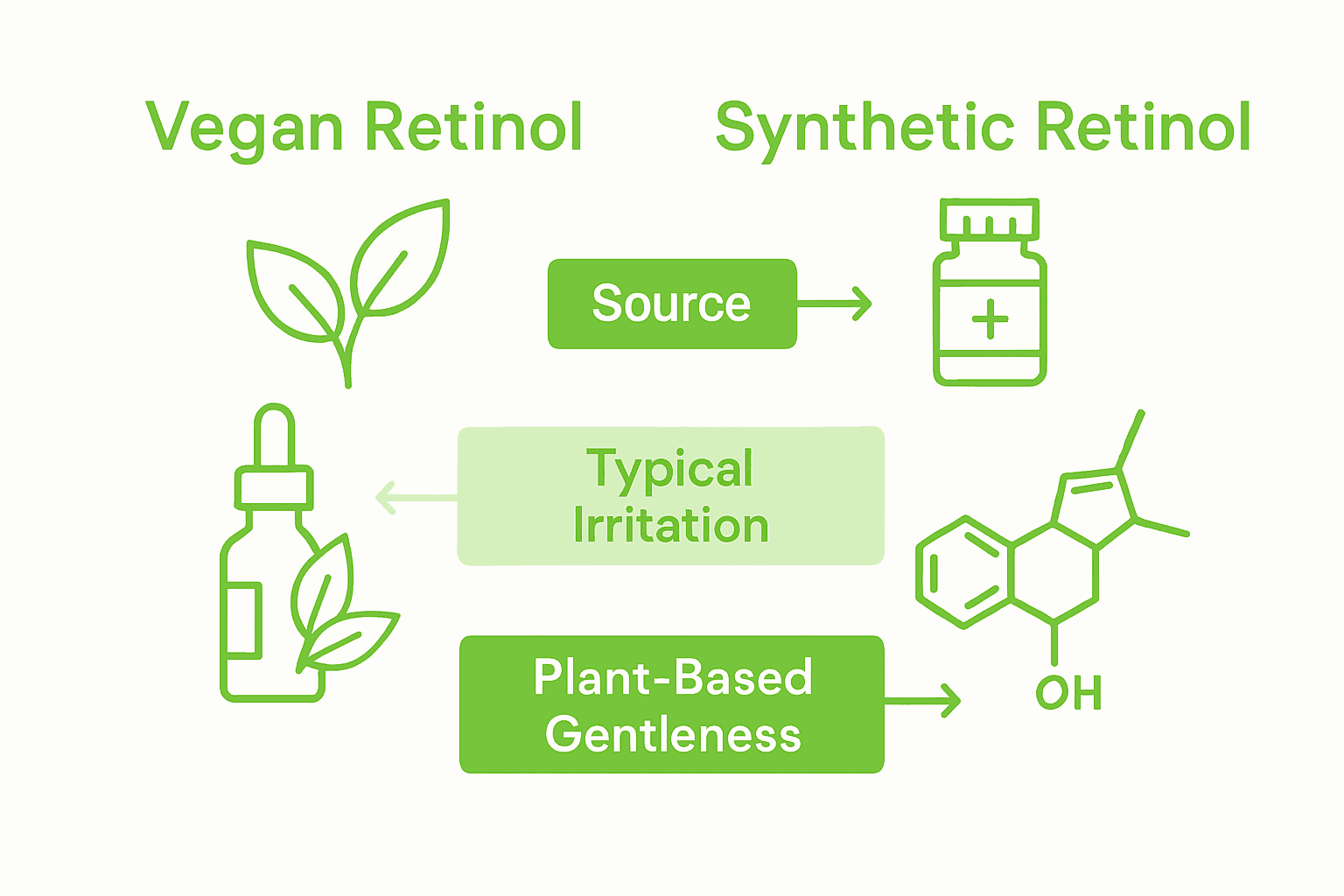
Key differences between synthetic and vegan retinol extend beyond their chemical compositions. Synthetic retinoids typically deliver faster, more aggressive results but come with higher risks of side effects, including peeling, dryness, and increased sun sensitivity.
In contrast, plant-based skincare solutions offer a more holistic approach, providing gradual yet consistent improvements while supporting overall skin health.
The botanical ingredients not only target specific aging concerns but also deliver additional benefits like antioxidant protection, improved hydration, and enhanced skin resilience.
The table below summarizes key distinctions between vegan and synthetic retinol:
| Aspect | Vegan Retinol | Synthetic Retinol |
|---|---|---|
| Source | Plant-derived botanicals | Laboratory synthesis |
| Side Effect Potential | Low, rare irritation | High, increased redness |
| Suitability | Sensitive, ethical users | Most skin types |
| Additional Benefits | Antioxidants, hydration | Fast wrinkle reduction |
Pro Tip: Transition to vegan retinol gradually by alternating between your current synthetic product and plant-based alternatives, allowing your skin to adapt and minimize potential adjustment reactions.
Discover the Power of Vegan Retinol for Your Skin
If you are searching for effective, cruelty-free ways to rejuvenate your skin without harsh side effects, our collection of Retinol for Skin Care: So Many Amazing Benefits products is your perfect starting point. These carefully formulated vegan retinol alternatives harness the benefits of plant-based ingredients like bakuchiol to deliver gentle yet powerful skin renewal while respecting your ethical values.
Experience clean, vegan skincare that transforms your skin with zero fillers or toxic chemicals. Everything ships for free in the US from Claribel Skincare. Make the switch today and enjoy safer, effective anti-aging solutions designed for sensitive skin and conscious consumers.
Frequently Asked Questions
What is vegan retinol?
Vegan retinol is a plant-based alternative to traditional retinol derived from animal products. It utilizes botanical ingredients, such as bakuchiol, to provide skin renewal benefits without compromising ethical standards.
How does vegan retinol work for skin?
Vegan retinol works by stimulating collagen production and accelerating skin cell turnover through botanical compounds that mimic the effects of traditional retinol, resulting in improved hydration, elasticity, and a more youthful complexion.
What are some plant-based alternatives to traditional retinol?
Popular plant-based alternatives to traditional retinol include bakuchiol, senna seed extract, Betula alba, Empetrum nigrum, and willow bark extract, each offering unique skin benefits while minimizing irritation.
Are there any side effects associated with vegan retinol?
Vegan retinol alternatives are generally considered safe with a low incidence of side effects. However, some individuals may experience mild reactions like redness or tingling during initial use, which usually subsides as the skin adapts.