What Is Clean Label and Why It Matters

Finding skincare that truly matches your values can feel confusing when every label in Atlanta now promises to be “clean” or “natural.” For women who care about what goes on their skin, this lack of clear standards leaves more questions than answers. Understanding the difference between ingredient transparency and marketing terms helps you identify products that prioritize safety so you can confidently build a routine that supports both your beauty goals and well-being.
Table of Contents
- Defining Clean Label In Skincare
- Clean Label Vs. Natural And Organic
- Key Features Of Clean Label Products
- Claribel Skincare’s Clean Label Standards
- Risks, Misconceptions, And Alternatives
Key Takeaways
| Point | Details |
|---|---|
| Understanding Clean Label | Clean label skincare emphasizes transparency, safety, and simplicity, but lacks an official FDA definition, leading to varying interpretations among brands. |
| Ingredient Awareness | Consumers should research unfamiliar ingredients and prioritize products that exclude controversial chemicals for better skin suitability. |
| Clean vs. Natural vs. Organic | Each term carries distinct meanings: clean focuses on safety, natural on sourcing, and organic on certification—understanding these helps inform better choices. |
| Critical Evaluation | Avoid marketing pitfalls by seeking third-party certifications and relying on dermatological evidence, ensuring products meet genuine clean criteria. |
Defining Clean Label in Skincare
Clean label in skincare refers to products formulated with transparency, safety, and ingredient consciousness as core principles. Unlike regulated terms in the food industry, the definition of “clean” in skincare lacks an official FDA standard, which means brands interpret it differently. What one company considers clean might differ from another’s approach, creating a landscape where the term functions more as a marketing philosophy than a legally defined standard. For women like you navigating the beauty aisle in Atlanta, this ambiguity can feel frustrating. You want to know exactly what you’re putting on your skin, and “clean” should give you that clarity.
At its heart, clean label skincare emphasizes three core elements: ingredient transparency, the exclusion of controversial chemicals, and formulation simplicity. Transparency means brands clearly disclose every ingredient, its purpose, and its sourcing. The exclusion component typically focuses on removing synthetic chemicals like parabens, sulfates, phthalates, petroleum-derived ingredients, and synthetic fragrances that some consumers and dermatologists argue can irritate sensitive skin or carry unknown long-term effects. Formulation simplicity involves stripping away unnecessary fillers and synthetic additives, focusing instead on active ingredients that actually deliver results. Clean beauty movements increasingly demand clear information about product ingredients and sourcing, reflecting a broader consumer shift toward accountability in the skincare industry.
However, the clean label movement creates complexity that deserves your attention. Some ingredients that clean brands exclude actually have strong scientific backing and are considered safe by dermatologists. Parabens, for instance, have been used for decades with a robust safety profile, yet many clean brands remove them to meet consumer expectations rather than necessity. This reality means “clean” sometimes means “fewer effective preservatives,” which can paradoxically make products less stable. What matters most is understanding which ingredients specifically concern you and why, rather than assuming all excluded chemicals are inherently harmful. The goal is making informed choices about your skincare based on your skin type, sensitivities, and personal values rather than marketing language alone.
Clean label skincare has evolved into a strategic priority for brands reformulating products to maintain efficacy while excluding controversial ingredients. Leading companies now combine natural and biotech-derived actives to deliver visible results without synthetic chemicals. Understanding this definition positions you to evaluate skincare products more critically and confidently select formulations aligned with your beauty goals and values.
Pro tip: Read product ingredient lists from bottom to top and research unfamiliar terms using dermatology databases rather than relying on marketing claims alone to determine whether a product truly aligns with your clean beauty standards.
Clean Label vs. Natural and Organic
These three terms get thrown around interchangeably in skincare marketing, but they actually mean very different things. Many women assume that clean, natural, and organic are essentially the same category, which leads to purchasing decisions based on incomplete understanding. The reality is that each term addresses different concerns and operates under different standards. Knowing the distinctions helps you make informed choices about what you are actually putting on your face.
Clean label focuses specifically on safety through exclusion. A clean skincare product removes ingredients considered potentially harmful or irritating, such as parabens, sulfates, phthalates, and synthetic fragrances. The philosophy is straightforward: if an ingredient raises concerns, it gets eliminated. The downside? There is no official certification or regulatory oversight for “clean.” Any brand can use the term without verification. Natural skincare, by contrast, emphasizes sourcing from nature rather than excluding specific chemicals. A product labeled natural might contain ingredients derived from plants, minerals, or other natural sources. However, natural does not automatically mean safe or effective. The term lacks formal FDA definition, so brands have significant leeway in what they call natural. Meanwhile, organic skincare requires certification verifying farming and processing standards, making it the most regulated of the three categories. USDA certification confirms that ingredients were grown without synthetic pesticides, herbicides, or genetically modified organisms.
Here is the practical breakdown. A product can be natural but not clean if it contains natural ingredients that trigger sensitivities in your skin. A product can be clean but not organic if it uses synthetically produced ingredients that are considered safe but not naturally sourced. A product can be organic but expensive and inaccessible. Your skin does not care about marketing language. It responds to what actually works for your specific skin type and concerns. If you have sensitive skin prone to redness or irritation, clean label products excluding common irritants might serve you better than something simply labeled natural. If you prioritize environmental impact and sustainable farming practices, organic certification matters more. If you want the most rigorous standards and third-party verification, organic with clean label practices offers the strongest foundation. The goal is aligning product claims with your actual priorities rather than assuming one category is universally superior.
Here’s how clean, natural, and organic skincare approaches compare:
| Attribute | Clean Label | Natural | Organic |
|---|---|---|---|
| Main Focus | Safety through exclusion | Sourcing from nature | Certified organic inputs |
| Certification | No official standard | No legal oversight | Requires USDA or similar |
| Ingredient Source | Can include lab-derived actives | Strictly plant/mineral-based | Non-GMO, pesticide-free farming |
| Common Limitation | May lack proven preservatives | Not always effective or safe | Often higher price, less accessible |
| Ideal For | Sensitive skin, ingredient transparency | Fans of botanicals | Eco-conscious, value third-party proof |
Pro tip: Check product labels for third-party certifications like USDA Organic or cruelty-free stamps rather than relying on unregulated marketing claims, since these certifications carry legal accountability that unverified “clean” or “natural” labels do not.
Key Features of Clean Label Products
When you pick up a clean label skincare product, you should expect to find specific characteristics that set it apart from conventional formulations. These features work together to create products that prioritize your safety while delivering visible results. Understanding what to look for helps you evaluate products critically and avoid falling for marketing claims that sound good but lack substance.
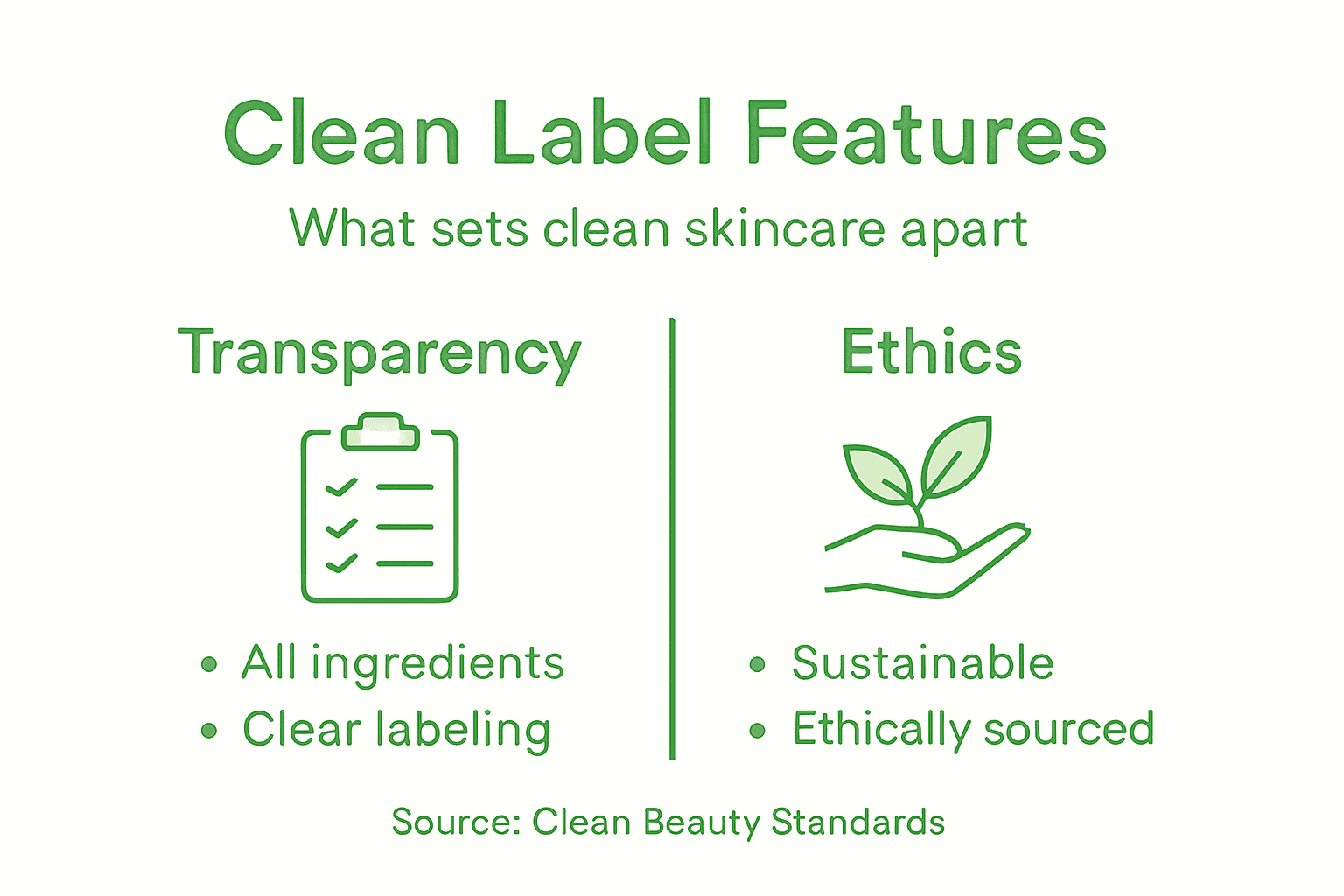
The foundation of clean label products rests on full ingredient transparency. Every single ingredient must be clearly listed, and ideally, brands explain what each ingredient does and where it comes from. This transparency builds trust because you can research any component that concerns you. Beyond disclosure, clean label products feature minimal and recognizable ingredients. Instead of lengthy ingredient lists filled with chemical names you cannot pronounce, clean formulations strip away unnecessary fillers and focus on active components that actually address your skin concerns. You should be able to recognize most ingredients or at least understand their purpose. Another core feature involves the exclusion of flagged or controversial compounds like parabens, sulfates, phthalates, synthetic fragrances, and petroleum-derived ingredients. The removal of these substances reflects the philosophy that simplicity and safety go hand in hand. However, clean label skincare also leverages biotech-derived actives with clinical backing to maintain performance while simplifying formulations, meaning brands do not sacrifice efficacy for safety.
Beyond ingredient composition, clean label products embody ethical sourcing and sustainability practices. Many clean brands prioritize responsibly sourced ingredients, fair trade relationships with suppliers, and environmentally conscious packaging. This holistic approach reflects the understanding that clean beauty extends beyond what touches your skin to how products are created and delivered. Regulatory compliance and third-party certifications also characterize quality clean label products. Brands that stand behind their claims often pursue certifications like cruelty-free status, vegan verification, or organic accreditation. These certifications provide accountability and verification that marketing language alone cannot deliver. When shopping, look for products that combine these features rather than relying on a single characteristic. A product might be natural but not clean if it lacks transparency. A formula might be simple but ineffective if it excludes all active ingredients. The strongest clean label products integrate transparency, safety, ethical practices, and proven efficacy into one thoughtful package.
Pro tip: Scan the ingredient list from top to bottom and count how many components you recognize, aiming for at least 70 percent recognizable ingredients as a baseline indicator of genuine clean label formulation.
Claribel Skincare’s Clean Label Standards
Claribel Skincare operates from a foundational commitment to clean label principles that go beyond marketing language. Based in Atlanta, Georgia, the brand approaches skincare formulation with a philosophy that your skin deserves transparency, safety, and genuine efficacy without compromise. Every product is crafted as small-batch formulations designed to eliminate the guesswork from your skincare routine. Rather than following industry trends that prioritize profit over product integrity, Claribel maintains rigorous standards that reflect what the brand actually believes about clean beauty.
The brand’s clean label commitment centers on removing what does not belong. Claribel products are formulated free from synthetic chemicals and common irritants including parabens, sulfates, petroleum, SLS (sodium lauryl sulfate), phthalates, pesticides, synthetic fragrances, and toxic fillers. This is not a partial approach where some products meet standards while others do not. It is a comprehensive elimination of controversial ingredients across the entire product line. Additionally, every Claribel formulation is vegan and cruelty-free, reflecting ethical standards that extend beyond ingredient selection to sourcing and testing practices. The brand prioritizes organic, natural, and biotech-derived active ingredients with clinically proven benefits, meaning you get visible results without toxic trade-offs. When you choose Claribel products, you are selecting formulations that combine transparency with proven efficacy in clean skincare, making it easier to build a skincare routine aligned with your values.
What distinguishes Claribel from generic clean beauty claims is the attention to what actually works for your skin. The brand does not simply exclude ingredients for marketing purposes. Instead, formulations carefully select the most sought-after active ingredients that deliver measurable improvements for common skin concerns. Whether addressing acne, sensitivity, aging, or hydration, each product is designed with specific skin goals in mind. The small-batch approach means Claribel maintains quality control that larger manufacturers cannot achieve. Free shipping throughout the United States makes clean skincare accessible without the price premium many women expect when shopping for non-toxic products. This accessibility matters because clean beauty should not be a luxury reserved for those with unlimited budgets. Claribel’s standards reflect the understanding that clean label skincare is both a personal health choice and an investment in values you can feel good about.
Pro tip: When evaluating any clean beauty brand, cross-reference their ingredient exclusions against Claribel’s standards as a baseline, since meeting comprehensive criteria like vegan formulation, cruelty-free certification, and toxic-free ingredients simultaneously indicates genuine commitment beyond surface-level marketing.
Risks, Misconceptions, and Alternatives
The clean label movement, while well-intentioned, carries real risks when it morphs into ideology rather than informed decision-making. A pervasive misconception suggests that anything labeled clean or natural is inherently safer than conventional skincare. This assumption ignores a basic reality: natural ingredients can absolutely cause irritation, allergic reactions, and adverse effects. Plant oils, botanical extracts, and essential oils trigger sensitivities in many people. Someone with sensitive skin might experience more problems using a natural product than a conventional one formulated with stabilizing preservatives. Additionally, the arbitrary exclusion of widely used, safe ingredients occurs due to marketing-driven fears, not scientific evidence. Parabens serve a legitimate purpose in preventing bacterial contamination and extending shelf life. Removing them to satisfy consumer anxiety can actually compromise product stability and safety. This creates a paradox where chasing clean beauty might inadvertently expose you to greater risks from degraded formulations or contaminated products.
Greenwashing compounds these problems significantly. Brands leverage clean label language to charge premium prices while making minimal actual changes to their formulations. Without regulatory oversight, “clean” becomes a marketing term with no enforceable meaning. A company can exclude one controversial ingredient while maintaining others that pose similar concerns. Consumer confusion runs rampant because misinformation leads consumers to avoid ingredients without scientific basis, potentially resulting in ineffective skincare routines. Someone might avoid salicylic acid due to clean beauty messaging, even though it represents gold-standard acne treatment backed by decades of dermatological research. The result is abandoning proven solutions in pursuit of a marketing concept.
A smarter alternative involves prioritizing evidence-based ingredient safety over marketing claims. Consult dermatological guidance rather than social media influencers when evaluating skincare choices. Support brands that demonstrate transparency through clear labeling, full ingredient disclosure, and credible third-party certifications like cruelty-free or vegan verification. Research specific ingredients that concern you using dermatological databases and peer-reviewed sources rather than assuming all excluded chemicals are inherently harmful. Consider your individual skin type and sensitivities instead of adopting a one-size-fits-all clean label philosophy. A truly effective skincare routine balances safety with efficacy, ethical sourcing with proven results, and personal values with dermatological evidence. Clean label skincare can fit this balanced approach when it prioritizes transparency and genuine safety rather than fear-based marketing.
This table clarifies risks associated with clean label skincare and strategies to avoid them:
| Risk or Misconception | Why It Matters | Smarter Alternative |
|---|---|---|
| Natural always means safer | Some plant extracts can irritate skin | Check for allergy-prone botanicals |
| Excluding parabens is always good | Preservative removal can cause spoilage | Research safe synthetic alternatives |
| Marketing trumps science | Can result in less effective choices | Rely on dermatological evidence |
| Greenwashing guarantees quality | Premium price, minimal formula changes | Look for third-party certifications |
Pro tip: When a brand excludes an ingredient, research why dermatologists actually use it and whether alternatives exist with equal safety profiles before assuming the exclusion benefits your skin.
Discover True Clean Label Skincare with Claribel
Navigating the confusing world of clean label skincare can feel overwhelming when marketing claims blur the lines between safe and effective ingredients. If you seek transparency, want to avoid irritants like parabens and synthetic fragrances, and care about ethical, small-batch formulations crafted with your unique skin needs in mind Claribel Skincare is ready to help. Our commitment to clean, vegan, and cruelty-free products means no toxic fillers or questionable chemicals—just powerful actives designed to deliver real results without compromise.
Explore our carefully curated collections such as Natural Cleansers for gentle yet effective daily cleansing or browse products tailored for specific concerns like Blemish Prone and Oily skin types. With free shipping across the United States and a clear promise of ingredient transparency visit Claribel Skincare today and start building a truly clean, safe skincare routine that respects both your skin and values. Take the first step now to experience skincare that meaningfully aligns with what clean label really means.
Frequently Asked Questions
What does clean label mean in skincare?
Clean label in skincare refers to products that prioritize transparency, safety, and the exclusion of controversial chemicals, although there’s no official regulatory standard for the term.
How do clean label products differ from natural and organic products?
Clean label products focus on safety through exclusion, removing potentially harmful ingredients, while natural products emphasize sourcing from nature, and organic products require certification for farming practices.
Are clean label products always safer for sensitive skin?
Not necessarily. While clean label products exclude certain irritants, some natural ingredients can also cause sensitivities. It’s essential to research specific ingredients and assess their suitability for your skin type.
What should I look for when choosing a clean label skincare product?
Look for full ingredient transparency, minimal and recognizable ingredients, the exclusion of controversial compounds, ethical sourcing practices, and relevant third-party certifications to ensure the product aligns with clean skin principles.
Recommended
- Clean Beauty: Everything You Need to Know (US Guide)
- What Is Clean Makeup? Complete Guide for 2025
- Clean Ingredient Skin Care: Why It’s the Best Choice – Claribelskincare.com
- How to Find Clean Beauty Brands: Step-by-Step Guide
- What Is Parabens-Free Shampoo and Why It Matters – LUXEVA
- Organic Hair Conditioner: Everything You Need to Know | MyHair
