What Is Exfoliation? Boost Absorption by 60% in 2026

Exfoliation transforms your skincare routine by removing dead cells that block absorption. Studies show proper exfoliation improves product absorption by up to 60%, making serums and moisturizers work harder. Many health-conscious women struggle with the right techniques and frequency. This guide reveals natural, ethical exfoliation methods that enhance your glow while honoring your values. You’ll learn safe approaches, dispel common myths, and discover clean beauty solutions tailored to your skin type.
Table of Contents
- Understanding Exfoliation: Definition and Process
- Types of Exfoliation: Physical vs. Chemical (Natural Agents)
- Common Misconceptions About Exfoliation
- Benefits of Exfoliation for Skin Health
- Risks and Side Effects of Exfoliation
- Ethical and Natural Skincare Considerations in Exfoliation
- Incorporating Exfoliation Into Your Natural Skincare Routine
- Explore Claribel Skincare’s Natural Exfoliation Solutions
- Frequently Asked Questions About Exfoliation
Key Takeaways
| Point | Details |
|---|---|
| Exfoliation removes dead skin cells | This process enhances texture, radiance, and overall skin health through natural renewal. |
| Physical and chemical methods differ | Natural options include jojoba beads or fruit enzymes, each suited to different skin types. |
| Over-exfoliation damages skin barrier | Excessive removal increases water loss by 50% and causes irritation requiring careful frequency control. |
| Ethical choices matter | Vegan, cruelty-free, biodegradable exfoliants align with clean beauty values without compromising effectiveness. |
| Personalization is essential | Your skin type dictates ideal exfoliation frequency and product selection for optimal results. |
Understanding Exfoliation: Definition and Process
Exfoliation is the deliberate removal of dead skin cells from your skin’s outermost layer. Your skin naturally sheds cells through a turnover cycle that typically lasts 28 to 30 days. As we age, this process slows, leading to dull, rough texture.
Exfoliation removes dead skin cells by promoting cell turnover, which enhances texture and appearance. This accelerated renewal reveals fresh, healthy cells beneath. The result? Brighter, smoother skin that better reflects light.
The benefits extend beyond aesthetics:
- Removes buildup that clogs pores and dulls complexion
- Stimulates cellular renewal for fresher skin appearance
- Smooths rough patches and uneven texture
- Enhances natural radiance and glow
- Prepares skin to absorb active ingredients more effectively
Think of your skin like a canvas. Dead cells create a barrier that prevents serums and moisturizers from penetrating deeply. Exfoliation clears this obstruction, allowing beneficial ingredients to reach living cells where they work best.
Pro Tip: Understanding your exfoliation frequency recommendations based on skin type prevents overdoing it while maximizing benefits.
The biological process involves breaking down desmosomes, the protein structures holding dead cells together. Once these connections weaken, cells naturally shed. This renewal cycle keeps your complexion vibrant and receptive to skincare formulations.
Types of Exfoliation: Physical vs. Chemical (Natural Agents)
Two primary exfoliation methods exist, each working through distinct mechanisms. Understanding these differences helps you choose what aligns with your skin needs and ethical preferences.
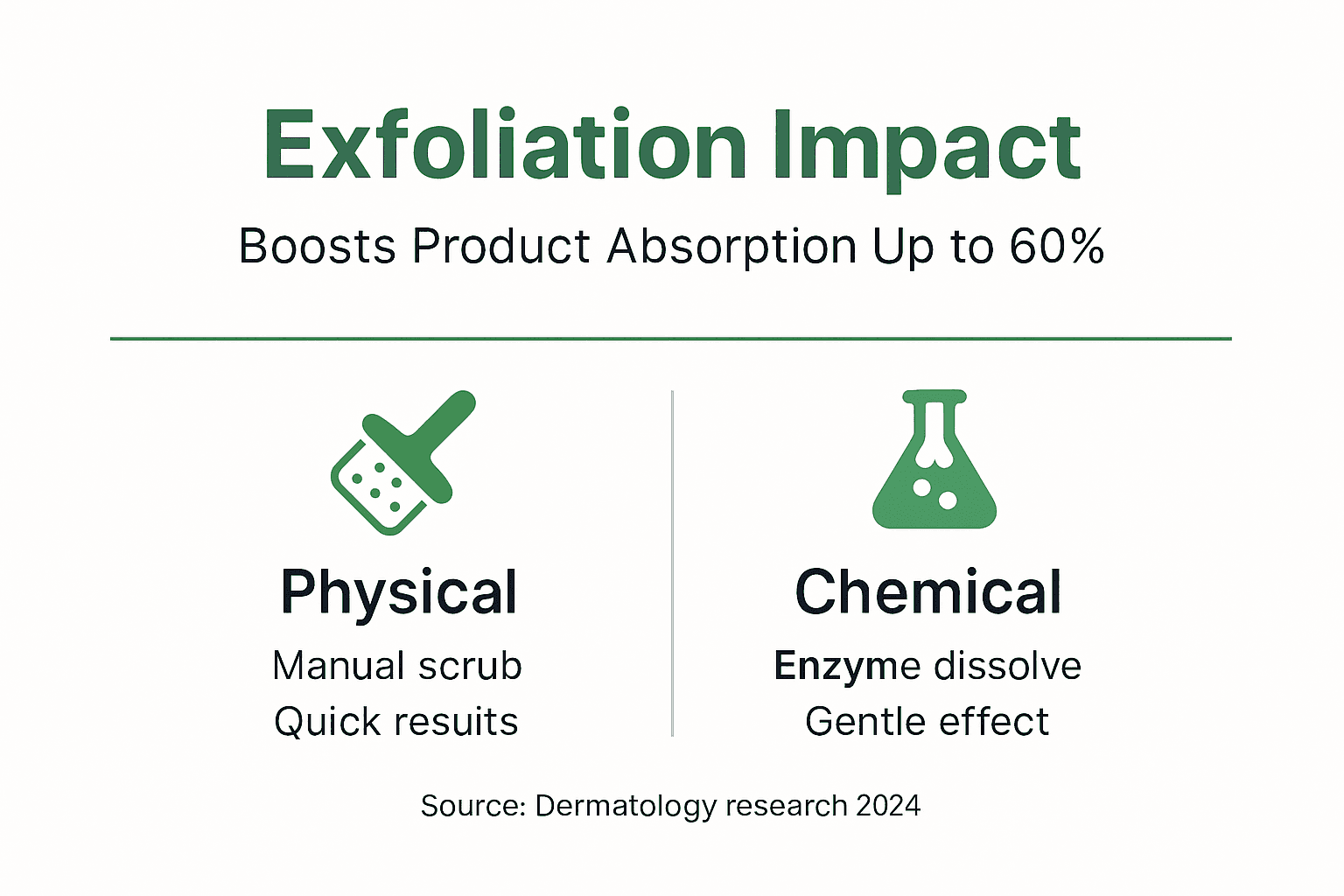
Physical exfoliation uses manual action to scrub away dead cells. Natural options include jojoba beads, finely ground oatmeal, rice powder, or bamboo particles. These biodegradable materials gently buff the skin’s surface without harsh abrasion. You apply them in circular motions, physically dislodging dead cells.
Chemical exfoliation relies on natural acids and enzymes to dissolve cellular bonds. Natural chemical exfoliants like alpha hydroxy acids (AHAs) derived from fruits break down the glue that holds dead skin cells together to promote shedding. Papain from papaya and bromelain from pineapple work similarly, digesting dead cell proteins.
| Feature | Physical Exfoliation | Chemical Exfoliation |
|---|---|---|
| Mechanism | Manual scrubbing with particles | Enzymatic or acid dissolution |
| Natural Options | Jojoba beads, oatmeal, bamboo | Fruit enzymes, glycolic acid, lactic acid |
| Best For | Normal to oily skin, visible results | Sensitive skin, targeted renewal |
| Action Speed | Immediate visible smoothing | Gradual, deeper renewal over time |
| Risk Level | Higher if scrubbing too hard | Lower when using gentle formulations |
Chemical methods often suit sensitive skin better because they don’t require friction. The acids and enzymes do the work without physical pressure. However, concentration matters. Natural formulations with lower percentages deliver results without irritation.
Physical exfoliation provides instant gratification. You feel and see smoother skin immediately. Yet harsh scrubs with jagged particles can create micro-tears, especially if you press too hard.
Pro Tip: Choose biodegradable physical exfoliants like jojoba beads over plastic microbeads to protect waterways while caring for your skin ethically.
Your exfoliating face wash benefits multiply when you select the right type for your unique skin characteristics and environmental values.
Common Misconceptions About Exfoliation
Several myths about exfoliation lead women toward ineffective or damaging practices. Let’s clear up confusion with evidence-based facts.
Myth: Exfoliation requires aggressive scrubbing to work. Many believe harder pressure equals better results. Actually, gentle chemical exfoliants provide effective renewal without physical abrasion and damage, countering the misconception that exfoliation requires harsh scrubbing. Enzyme treatments and mild acids achieve superior outcomes without friction.
Myth: Daily exfoliation produces faster improvements. More isn’t better when it comes to removing dead cells. Most skin types thrive with exfoliation one to three times weekly. Overdoing it strips protective oils and damages your barrier, causing redness and sensitivity.
Myth: Only physical scrubbing counts as true exfoliation. Chemical methods work just as effectively, often more so. Acids and enzymes penetrate deeper than surface scrubbing, targeting the bonds between cells rather than just buffing the top layer.
Myth: Natural exfoliants are less effective than synthetic ones. Clinical evidence supports numerous plant-based options. Papaya enzymes, willow bark (natural salicylic acid), and sugar cane (glycolic acid) deliver proven results without synthetic chemicals.
Common mistakes include:
- Using expired products with degraded active ingredients
- Combining multiple exfoliating products in one routine
- Exfoliating immediately after sun exposure or waxing
- Skipping moisturizer after exfoliation
- Ignoring your skin’s feedback signals
Pro Tip: Less is more with exfoliation. Gentle, consistent care prevents barrier damage while delivering the glow you want. Listen to your skin and adjust frequency if you notice tightness or irritation.
Respecting your skin’s natural protective mechanisms ensures exfoliation enhances rather than harms. The goal is renewal, not stripping.
Benefits of Exfoliation for Skin Health
Science backs multiple skin improvements from proper exfoliation. These benefits explain why this practice is foundational in natural skincare routines.
Smooth texture and enhanced radiance top the list. Removing dull, dead cells reveals the luminous layer beneath. Your complexion appears brighter and more even-toned. Light reflects better off smooth surfaces, creating that coveted natural glow.
Product absorption dramatically improves. Exfoliation improves absorption of moisturizers and serums by up to 60%. This means your expensive serums and treatments penetrate deeper, delivering active ingredients where they matter most. You get more value from every product in your routine.
Acne-prone skin benefits significantly. Enzyme exfoliants derived from pineapple and papaya reduce acne lesions by up to 35%. These natural ingredients unclog pores, remove debris, and reduce inflammation without harsh chemicals. Regular exfoliation prevents the buildup that leads to breakouts.
| Benefit | Improvement Rate | Source |
|---|---|---|
| Product Absorption | Up to 60% increase | Clinical dermatology research |
| Acne Lesion Reduction | Up to 35% decrease | Enzyme exfoliant studies |
| Skin Cell Turnover | 28-30 day acceleration | Physiological studies |
Exfoliation accelerates your natural renewal process. While cells normally turn over monthly, exfoliation speeds this cycle. Fresh cells reach the surface faster, maintaining youthful appearance and function.
Additional advantages include:
- Minimized appearance of fine lines and wrinkles
- Reduced hyperpigmentation and dark spots
- Smaller-looking pores from reduced congestion
- Improved skin tone uniformity
- Better makeup application on smooth surface
The benefits of exfoliating cleansers extend to convenient daily cleansing with gentle renewal action. These multitasking products save time while delivering results.
Consistent, appropriate exfoliation transforms your skincare effectiveness. Active ingredients work harder when they can penetrate properly, maximizing your investment in natural, ethical products.
Risks and Side Effects of Exfoliation
Understanding potential harms helps you exfoliate safely while protecting your skin barrier. Balance is key to reaping benefits without damage.
Over-exfoliation represents the primary risk. Over-exfoliation damages the skin barrier, increasing transepidermal water loss (TEWL) by up to 50% and causing irritation. This excessive moisture loss compromises your skin’s protective function. Your complexion becomes vulnerable to environmental stressors, bacteria, and allergens.
Barrier damage manifests through several warning signs. Persistent redness, burning sensations, excessive dryness, and increased sensitivity indicate you’ve gone too far. Your skin may feel tight, look inflamed, or react to products that normally cause no issues.
Common pitfalls causing side effects:
- Exfoliating too frequently for your skin type
- Using products with concentrations too strong for your tolerance
- Combining multiple exfoliating treatments simultaneously
- Applying exfoliants to compromised or sunburned skin
- Scrubbing with excessive pressure during physical exfoliation
- Neglecting sun protection after chemical exfoliation
Sensitive skin requires extra caution. If you already experience reactivity, start with the gentlest options. Enzyme exfoliants often work better than acids for delicate complexions. Always patch test new products on your inner arm before applying to your face.
Frequency adjustments prevent problems. Dry skin typically tolerates exfoliation once weekly. Oily skin may handle three times weekly. Normal skin falls between. Your sensitive skin care tips should guide product selection and usage patterns.
Understanding what is skin barrier function helps you recognize when you’ve compromised this critical protection. Signs include increased breakouts, unexplained irritation, and products stinging when they previously didn’t.
If damage occurs, stop all exfoliation immediately. Focus on barrier repair with gentle, hydrating products. Recovery typically takes two to four weeks of careful nurturing.
Ethical and Natural Skincare Considerations in Exfoliation
Aligning your exfoliation practices with clean beauty values ensures your routine benefits both your skin and the planet. Several factors guide ethical product selection.
Natural ingredient sourcing matters for purity and safety. Plant-based exfoliants like fruit enzymes, sugar, salt, and botanical beads come from renewable resources. These ingredients work effectively without synthetic chemicals that may irritate sensitive skin or harm ecosystems.
Vegan and cruelty-free certifications confirm no animal testing or animal-derived ingredients. Many traditional exfoliants contain crushed shells or beeswax. Truly ethical alternatives use plant materials exclusively. Look for Leaping Bunny or PETA certification to verify cruelty-free status.
Biodegradable physical exfoliants reduce environmental impact. Jojoba beads, bamboo powder, and rice bran break down naturally in water systems. Unlike plastic microbeads banned in many regions, these materials don’t accumulate in oceans or harm marine life.
Avoid products containing:
- Synthetic fragrances that trigger allergies and sensitivities
- Parabens and phthalates linked to hormone disruption
- Sulfates that strip natural oils excessively
- Petroleum-based ingredients from non-renewable sources
- Artificial colors and dyes serving no functional purpose
Transparency in formulation builds trust. Brands committed to clean beauty disclose full ingredient lists and sourcing practices. You should understand what touches your skin and where it comes from.
Small-batch production often indicates higher quality control and fresher formulations. Large-scale manufacturing may rely on preservatives and stabilizers that clean beauty advocates avoid. Artisanal skincare brands typically maintain stricter purity standards.
Knowing ingredients to avoid in skincare empowers you to read labels critically. This knowledge protects your health while supporting companies that prioritize ethics over profit margins.
Your purchasing decisions shape the beauty industry. Choosing natural, vegan, cruelty-free exfoliants sends a message that these values matter. This collective action drives broader change toward sustainable, ethical skincare.
Incorporating Exfoliation Into Your Natural Skincare Routine
Implementing exfoliation effectively requires a systematic approach tailored to your unique needs. Follow these steps for safe, ethical results.
-
Identify your skin type and current sensitivity level. Dry, oily, combination, sensitive, or normal skin each responds differently to exfoliation. Assess your tolerance by considering how your skin reacts to active ingredients.
-
Choose your exfoliation method based on skin characteristics. Physical exfoliation suits normal to oily skin without sensitivity. Chemical exfoliation with enzymes or mild acids works better for dry or sensitive complexions. Some women benefit from alternating methods.
-
Select natural, vegan, cruelty-free exfoliating products that match your values. Read ingredient lists carefully. Verify certifications and avoid ingredients to avoid in skincare naturally. Choose biodegradable physical exfoliants if using scrubs.
-
Establish a frequency schedule appropriate for your skin. Start conservatively with once weekly, then adjust based on response. Your exfoliation frequency guide provides skin type-specific recommendations. Never exceed three times weekly unless directed by a professional.
-
Apply exfoliant gently following product instructions. For physical scrubs, use light circular motions without pressure. For chemical exfoliants, apply evenly and leave for recommended duration. Avoid eye area and any broken skin.
-
Follow immediately with moisturizer or serum to maximize absorption. Your freshly exfoliated skin absorbs actives up to 60% better. This is prime time for hydrating and treatment products. Consider your most potent serums for post-exfoliation application.
Pro Tip: Patch test new exfoliants on your inner forearm 24 hours before facial application. If irritation occurs, that product isn’t right for you. Adjust frequency downward if you notice any sensitivity.
The benefits of using exfoliating cleansers include simplified routines with built-in gentle exfoliation. These multitasking products work well for busy schedules. Understanding exfoliating cleanser benefits helps determine if this approach suits your needs.
Consistency matters more than intensity. Gentle, regular exfoliation delivers better long-term results than aggressive occasional treatments. Your skin responds to sustained care that respects its natural rhythms.
Explore Claribelskincare’s Natural Exfoliation Solutions
Ready to transform your skincare routine with ethical, effective exfoliation? Claribel Skincare offers clean formulations designed for health-conscious women who refuse to compromise values for results.
Our personalized skincare quiz identifies your ideal exfoliation approach based on skin type, concerns, and preferences. You’ll receive tailored product recommendations that align with your natural beauty goals. This customized guidance eliminates guesswork and accelerates results.
Every Claribel product is vegan, cruelty-free, and formulated without parabens, sulfates, synthetic fragrances, or toxic fillers. We use biodegradable exfoliants and plant-based active ingredients that deliver clinical results naturally. Small-batch production ensures freshness and quality control.
Explore our natural skincare blog for ongoing education about clean beauty practices. You’ll find evidence-based guidance that empowers informed decisions about your skincare routine.
Our brightening product collection complements exfoliation beautifully. These formulations work synergistically with renewed skin to enhance radiance and even tone. Free shipping on all US orders makes trying our solutions risk-free.
Frequently Asked Questions About Exfoliation
How do I know if my skin is over-exfoliated?
Watch for persistent redness, burning sensations, excessive dryness, or increased sensitivity to products. Your skin may feel tight, look inflamed, or develop unexpected breakouts. If normal products suddenly sting or irritate, you’ve likely compromised your barrier through excessive exfoliation.
Can I exfoliate sensitive skin safely?
Yes, with appropriate products and frequency. Choose gentle enzyme exfoliants from papaya or pineapple rather than physical scrubs or strong acids. Start with once every 10 days, then gradually increase if tolerated. Always patch test and avoid exfoliating during flare-ups or reactions.
What natural exfoliants work best for acne-prone skin?
Enzyme exfoliants from pineapple and papaya reduce acne lesions up to 35% without irritation. Willow bark extract provides natural salicylic acid that unclogs pores. These gentle options prevent the inflammation harsh scrubs may trigger, making them ideal for breakout-prone complexions.
How soon can I see results from exfoliation?
Physical exfoliation provides immediate smoothing you can feel after one use. Chemical exfoliation shows visible improvements within one to two weeks of consistent application. Maximum benefits like enhanced product absorption and texture refinement develop over four to six weeks of regular, appropriate use.
Are vegan exfoliation products as effective as others?
Absolutely. Plant-based exfoliants like fruit enzymes, jojoba beads, and botanical acids deliver clinical results matching synthetic alternatives. Natural AHAs from sugar cane or fruit extracts work identically to lab-made versions. Vegan formulations often cause less irritation due to purer ingredient profiles without fillers.
Recommended
- Exfoliating Body Cream with Glycolic Acid ৹ Featuring Resveratrol, Col
- Brightening Exfoliating Cleanser ৹ Featuring Glycolic Acid, Vitamin C
- Papaya Enzyme Exfoliation Mask | Claribel Skin Care
- What is an Exfoliating Cleanser? Discover 5 Key Benefits of Using One
- DermiFlex Essential Multipack (Pk12) – UNIVERSAL CONSTRUCT
