Sulfate-Free Skincare Reduces Irritation by 40%

Over 70% of cleansers contain sulfates, yet many women don’t realize these foaming agents strip essential oils from their skin. The widespread belief that foam equals cleanliness has created a reliance on harsh surfactants like SLS and SLES. Sulfate-free products actually cleanse nearly as effectively while protecting sensitive skin from dryness, redness, and irritation that sulfates can trigger.
Table of Contents
- Understanding Sulfates: What Are They and Why Are They Used?
- Why Sulfates Can Be Harmful to Sensitive Skin
- Benefits of Switching to Sulfate-Free Skincare
- Common Misconceptions About Sulfates and Sulfate-Free Products
- How to Choose Effective Sulfate-Free Skincare Products
- Environmental Benefits of Choosing Sulfate-Free
- Making the Transition: What to Expect When Switching to Sulfate-Free
- Summary and Final Recommendations
- Discover Gentle Sulfate-Free Skincare with Claribel
Key Takeaways
| Point | Details |
|---|---|
| Sulfates Strip Natural Protection | SLS and SLES remove essential oils causing dryness and barrier damage. |
| Gentle Alternatives Work | Plant-based surfactants maintain hydration while cleaning effectively. |
| Foam Doesn’t Mean Clean | Sulfate-free cleansers remove 95% of dirt versus 98% for sulfates. |
| Proven Irritation Reduction | Switching to sulfate-free reduces skin irritation reports by 40%. |
| Better for Planet Too | Sulfates are petroleum-derived and harm aquatic ecosystems. |
Understanding Sulfates: What Are They and Why Are They Used?
Sulfates are surfactants that help products lather and remove dirt from your skin. These synthetic compounds lower water’s surface tension, allowing oil and grime to wash away easily. The most common types you’ll encounter are Sodium Lauryl Sulfate (SLS) and Sodium Laureth Sulfate (SLES), which appear in countless personal care products.
Manufacturers favor sulfates because they’re inexpensive and create the rich foam consumers associate with deep cleaning. This foaming action feels satisfying but isn’t necessary for effective cleansing. According to research on sulfates, approximately 70% of cleansing products contain these ingredients.
You’ll find sulfates in:
- Facial cleansers and body washes
- Shampoos and conditioners
- Hand soaps and bubble baths
- Makeup removers and exfoliators
The popularity of sulfates stems from their powerful degreasing properties and ability to produce abundant lather. However, this same strength that removes dirt can also strip away your skin’s natural protective oils. When shopping for products, checking ingredient labels and chemicals helps you identify common sulfates SLS and SLES before they reach your skin.
Why Sulfates Can Be Harmful to Sensitive Skin
Sulfates disrupt your skin’s protective barrier by removing the natural oils that keep moisture locked in. This stripping action damages the lipid layer between skin cells, leaving your face vulnerable to environmental irritants and bacteria. Your skin’s pH balance shifts when sulfates wash away beneficial oils, creating an environment where inflammation thrives.
The consequences show up quickly for those with sensitive skin. You might notice increased redness, persistent dryness, or uncomfortable itching after using sulfate-containing products. Some women experience allergic reactions ranging from mild irritation to severe contact dermatitis. Studies on sulfate skin irritation confirm these ingredients trigger inflammatory responses, especially in delicate facial tissue.
Research shows that switching from sulfate-containing products to sulfate-free alternatives results in 40% fewer irritation reports among sensitive skin users.
Barrier damage from sulfates can worsen existing skin conditions. When your protective layer weakens, acne-causing bacteria penetrate more easily while inflammation spreads. The skin pH imbalance sulfates create favors harmful microbes over beneficial ones.
Common symptoms of sulfate irritation include:
- Tight, uncomfortable feeling after cleansing
- Flaky patches and persistent dryness
- Red, inflamed areas across cheeks and forehead
- Increased breakouts despite regular cleansing
- Stinging sensation when applying other products
Your skin works constantly to repair sulfate damage, but repeated exposure prevents full recovery. The cumulative effect leaves sensitive skin perpetually compromised and reactive.
Benefits of Switching to Sulfate-Free Skincare
Sulfate-free cleansers work with your skin’s natural chemistry instead of against it. These formulas use gentle plant-based surfactants like cocamidopropyl betaine and decyl glucoside that lift away dirt without destroying your protective barrier. Your skin maintains its moisture balance and stays healthier throughout the day.
The improvements you’ll notice include:
- Reduced redness and inflammation within weeks
- Better moisture retention and softer texture
- Fewer allergic reactions and sensitivity episodes
- Comfortable cleansing without tight, dry feeling
- Stronger barrier function against environmental stress
Research comparing cleansing efficacy reveals sulfate-free products remove 95% of surface dirt and oil versus 98% for sulfate formulas. This tiny difference matters far less than protecting your skin’s health. The gentler lather feels different at first, but your skin responds better without harsh foam stripping away essential oils.
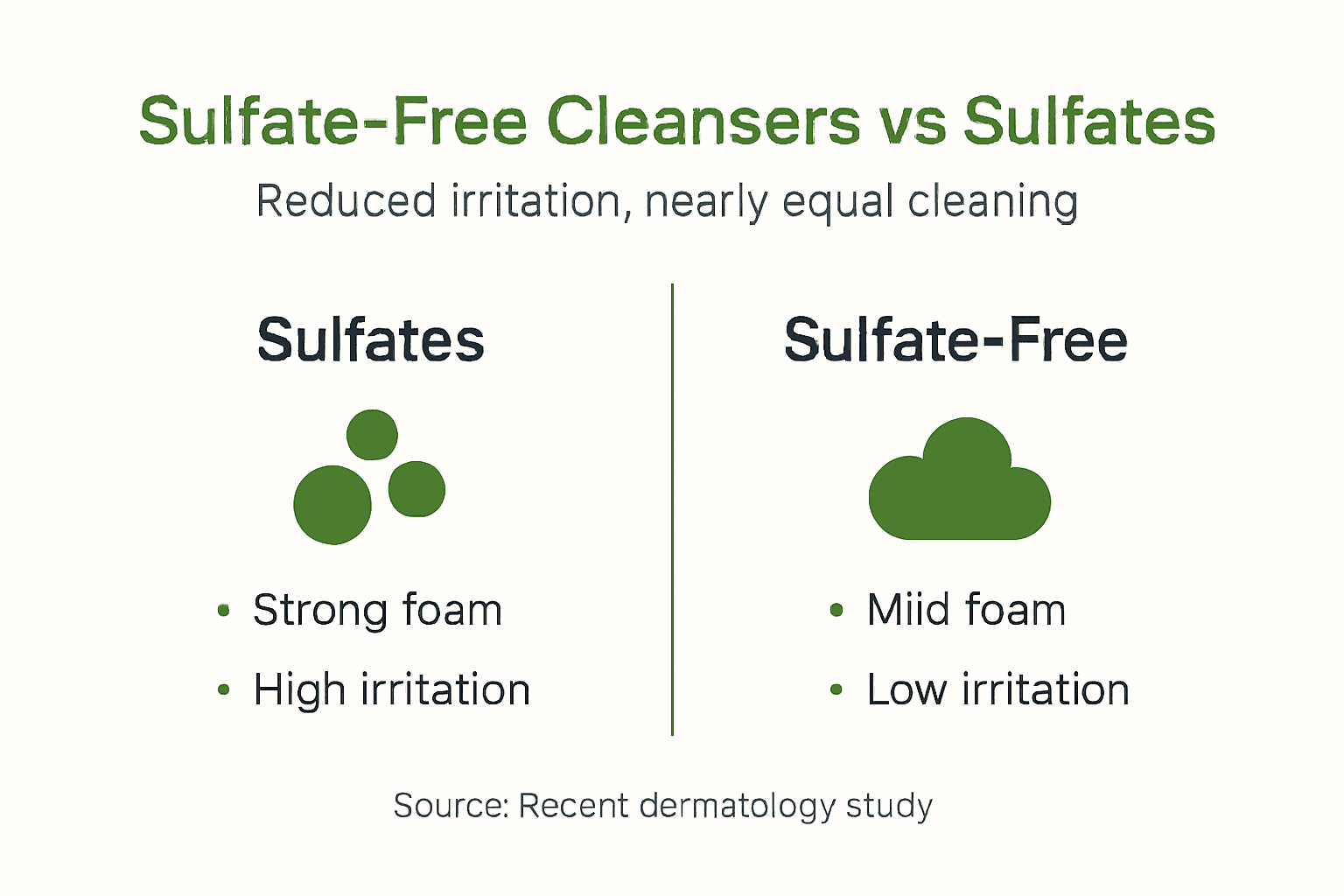
Sulfate-free cleansers rely on plant-derived surfactants that respect your skin’s natural pH. These ingredients clean effectively while supporting hydration and barrier repair. You can cleanse thoroughly without compromising the protective oils your skin needs.
Pro Tip: During your transition to sulfate-free cleansers, pair them with hydrating serums or rich moisturizers to support your skin’s adjustment period and minimize any temporary dryness.
The absence of harsh foam doesn’t mean weak cleaning power. Modern sulfate-free formulas use advanced surfactant technology that delivers excellent results without irritation. Your skin stays clean, balanced, and comfortable.
All of our cleansers are sulfate free. Come take a look at what we have to offer:

Common Misconceptions About Sulfates and Sulfate-Free Products
Confusion about sulfates leads many women to make choices that don’t serve their skin. Let’s clear up the most persistent myths with scientific evidence.
-
Myth: Sulfates are always dangerous and toxic. While sulfates are safe at regulated concentrations, they can irritate sensitive skin types. Regulatory agencies approve their use, but that doesn’t mean they’re ideal for everyone. The carcinogenic concerns you might have heard lack scientific support.
-
Myth: Sulfate-free products don’t clean properly. Testing shows sulfate-free cleansers remove nearly as much dirt and oil as their sulfate counterparts. The reduced foam confuses some users into thinking the product isn’t working, but cleaning happens even without excessive lather.
-
Myth: You need sulfates for proper foaming. Foam is a sensory preference, not a cleaning requirement. Gentle surfactants create adequate lather while protecting your skin’s integrity. Many women find the lighter foam more pleasant once they adjust.
This comparison shows how alternatives match sulfate performance:
| Surfactant Type | Foam Level | Irritation Risk | Cleansing Power |
|---|---|---|---|
| SLS/SLES | Very High | High | 98% effective |
| Cocamidopropyl Betaine | Moderate | Low | 95% effective |
The sulfate safety myths persist because foam creates a psychological association with cleanliness. Your skin doesn’t need excessive bubbles to get clean. Understanding sulfate safety regulatory review standards helps you make informed choices based on your unique skin needs rather than marketing claims or unfounded fears.
How to Choose Effective Sulfate-Free Skincare Products
Reading ingredient labels carefully is your first defense against unwanted sulfates. Look for Sodium Lauryl Sulfate and Sodium Laureth Sulfate in the first five ingredients, where they typically appear in cleansers. Products listing these compounds should stay on the shelf if you have sensitive skin.
Effective sulfate-free formulas feature gentle surfactants to look for like cocamidopropyl betaine, decyl glucoside, and coco-glucoside. These plant-derived alternatives clean thoroughly while maintaining your skin’s natural moisture. Matching cleansing power to your skin type ensures you remove makeup and impurities without overdrying.
Key criteria when selecting products:
- Fragrance-free formulas that won’t trigger reactions
- Cruelty-free and vegan certifications for ethical sourcing
- Third-party testing verification for purity claims
- pH-balanced formulations between 4.5 and 5.5
- Transparent ingredient labels and product certifications
Pro Tip: Test new sulfate-free cleansers on a small area of your jawline or neck for three days before using them on your entire face to catch potential sensitivities early.
Transitioning gradually gives your skin time to adjust to gentler cleansing. Start by replacing one sulfate product at a time rather than switching everything at once. This approach helps you identify which changes benefit your skin most. Pay attention to how your skin feels 30 minutes after cleansing rather than immediately, since that reveals true hydration levels.
Focus on avoiding irritants beyond just sulfates. Products with synthetic fragrances, drying alcohols, or harsh preservatives can still cause problems even when sulfate-free. Your ideal cleanser should leave skin feeling comfortable and clean without any tightness.
Environmental Benefits of Choosing Sulfate-Free
Sulfates originate from petroleum, a non-renewable resource that requires intensive extraction and processing. These synthetic compounds don’t break down easily in water systems, persisting in rivers and oceans where they accumulate over time. The environmental cost extends far beyond your bathroom sink.
Aquatic ecosystems suffer significantly from sulfate contamination. Studies reveal sulfates contribute to 30% of surfactant-related toxicity incidents affecting fish, algae, and microorganisms. These chemicals disrupt reproductive cycles in aquatic species and damage sensitive gill tissue in fish populations.
Sulfate-free products reduce pollution through:
- Biodegradable plant-based ingredients that decompose naturally
- Lower manufacturing carbon footprint from renewable sources
- Reduced chemical runoff harming waterways and marine life
- Support for sustainable agriculture producing surfactant crops
- Alignment with zero-waste and circular economy principles
Choosing sustainable skincare reflects values beyond personal health. When you buy sulfate-free products, you vote for companies investing in eco-friendly formulation science. The environmental impact of sulfates makes them incompatible with truly green beauty practices.
Consumer demand for cleaner alternatives drives industry innovation toward safer chemistry. More brands now formulate with coconut-derived and sugar-based surfactants that perform well without ecological harm. Your purchasing choices influence which ingredients manufacturers prioritize in future product development.
Making the Transition: What to Expect When Switching to Sulfate-Free
Your first sulfate-free cleanse will feel different from what you’re used to. The reduced foam might make you wonder if the product is working, but rest assured that cleaning happens without excessive bubbles. Your skin may need two to three weeks to adjust as its natural oil production rebalances.
Follow these steps for a smooth transition:
- Identify current sulfate products in your routine by checking ingredient lists carefully.
- Evaluate your skin type to match the right sulfate-free formula intensity to your needs.
- Choose one sulfate-free product to start with, typically your facial cleanser.
- Transition gradually by alternating between old and new products every other day initially.
- Monitor skin response by noting changes in texture, hydration, and irritation levels.
Most women notice skin hydration improvements within four to six weeks of consistent sulfate-free use. Redness decreases first, usually within two weeks. Moisture levels stabilize next as your barrier repairs itself. The full benefits emerge around the six-week mark when your skin completes its natural renewal cycle.
Pro Tip: Apply a hydrating serum or rich moisturizer immediately after cleansing during your transition period to support your skin barrier and prevent any temporary dryness while your oil production normalizes.
Avoid switching too quickly or choosing products with other irritants like synthetic fragrances or drying alcohols. These ingredients can mask the benefits of going sulfate-free by causing their own problems. Read labels thoroughly and select truly clean formulations. For specific guidance, explore sulfate-free transition tips tailored to urban environments and sensitive skin needs.
Patience matters during this adjustment. Your skin has adapted to sulfate cleansing, so give it time to recalibrate. Most temporary issues resolve as your natural balance restores.
Summary and Final Recommendations
Sulfates strip away the protective oils your skin needs while disrupting its natural pH balance. This damage triggers irritation, dryness, and inflammation, especially in sensitive skin types. The 40% reduction in irritation reports after switching to sulfate-free products demonstrates their gentler approach to cleansing.
Sulfate-free cleansers maintain your skin barrier, preserve hydration, and reduce reactive episodes without sacrificing cleaning power. The myths about safety and effectiveness don’t hold up under scientific scrutiny. Research confirms these alternatives remove 95% of dirt and oil, a negligible difference from sulfate formulas that cause significantly more harm.
Final benefits of choosing sulfate-free:
- Gentle formulas that respect sensitive skin biology
- Effective cleansing without harsh side effects
- Environmental sustainability through plant-based ingredients
- Greater comfort during and after cleansing
Confident product selection starts with reading labels and understanding which surfactants work for your skin type. Transition gradually, monitor your skin’s response, and choose products free from multiple irritants. Claribel Skincare offers sulfate-free skincare solutions formulated specifically for sensitive skin with clean, ethical ingredients that deliver results without compromise.
Discover Gentle Sulfate-Free Skincare with Claribel
Claribel Skincare’s certified sulfate-free line addresses the unique needs of sensitive skin through small-batch formulations. Our vegan and cruelty-free products eliminate sulfates along with parabens, synthetic fragrances, and toxic fillers that trigger irritation. Every formula uses active botanical ingredients without harsh chemicals.
Find your perfect match by taking our skincare quiz for personalized recommendations based on your specific concerns. Explore our natural skin care blog for education on ingredients, routines, and skin health science. Our natural sulfate-free acne products combine gentle cleansing with powerful blemish control for clear, comfortable skin. Free shipping on all US orders makes trying clean beauty easier than ever.
FAQ
Why is sulfate-free important for sensitive skin?
Sulfates strip natural oils that sensitive skin needs to maintain its protective barrier. This stripping action triggers irritation, redness, and dryness that sulfate-free alternatives avoid by using gentler plant-based surfactants.
Can sulfate-free cleansers clean as well as sulfates?
Scientific testing shows sulfate-free cleansers remove 95% of surface dirt and oil compared to 98% for sulfate formulas. The minimal difference doesn’t justify the irritation sulfates cause, especially since foaming level doesn’t determine cleaning power.
How do I identify sulfate ingredients on labels?
Look for Sodium Lauryl Sulfate (SLS) and Sodium Laureth Sulfate (SLES) in the ingredient list. Choose products featuring alternatives like cocamidopropyl betaine, decyl glucoside, or coco-glucoside instead.
What environmental impact do sulfates have?
Sulfates are petroleum-derived chemicals that resist biodegradation in water systems. They contribute to 30% of surfactant-related aquatic toxicity incidents, harming fish reproduction and damaging sensitive marine ecosystems.
