

Many believe higher SPF numbers mean longer sun exposure time, but that’s not how sun protection works. Broad spectrum SPF protects your skin from both aging UVA rays and burning UVB rays, delivering complete defense against sun damage. Understanding what broad spectrum truly means helps you choose and use sunscreen effectively for healthier, protected skin.
Table of Contents
- What Is Broad Spectrum SPF? Understanding UVA And UVB Rays
- FDA Regulations And Testing Standards For Broad Spectrum SPF
- Common Misconceptions About Broad Spectrum SPF
- Health Benefits Of Broad Spectrum SPF Protection
- Choosing Clean And Natural Broad Spectrum SPF Sunscreens
- Proper Use And Reapplication Of Broad Spectrum SPF
- Protect Your Skin With Clean, Broad Spectrum SPF Products
- Frequently Asked Questions About Broad Spectrum SPF
Key takeaways
| Point | Details |
|---|---|
| Dual protection | Broad spectrum SPF shields skin from both UVA rays that cause aging and UVB rays that cause sunburn. |
| FDA certification | Products must pass specific FDA broad spectrum testing standards to earn the label. |
| SPF limitations | SPF measures only UVB protection, not duration of safe sun exposure or UVA defense. |
| Proper application | Using about one ounce and reapplying every two hours ensures maximum effectiveness. |
| Clean options | Mineral based formulas with zinc oxide provide natural broad spectrum protection without harsh chemicals. |
What is broad spectrum SPF? Understanding UVA and UVB rays
The sun emits ultraviolet radiation in two forms that reach your skin: UVA and UVB rays. Each affects your skin differently and requires distinct protection strategies. UVB rays cause immediate sunburn by damaging the skin’s surface layers. UVA rays penetrate deeper into skin, causing long term damage like wrinkles, dark spots, and DNA mutations that can lead to cancer.
Broad spectrum SPF sunscreen protects from both UVB and UVA rays, which cause sunburn and contribute to skin aging and cancer risk respectively. The SPF number tells you how much UVB protection you’re getting. SPF measures primarily UVB protection, not UVA, which needs separate broad spectrum certification.
Broad spectrum certification means the sunscreen filters UV radiation across both UVA and UVB wavelengths effectively. Without this label, a sunscreen might have a high SPF rating but offer little defense against aging and cancer causing UVA rays. This distinction matters enormously for complete skin protection.
Key differences between UVA and UVB rays:
- UVB rays cause visible sunburn and redness within hours of exposure
- UVA rays penetrate glass and clouds, reaching skin even indoors near windows
- UVB intensity varies by season and time of day, strongest midday in summer
- UVA remains constant year round, present whenever daylight exists
- Both ray types contribute to skin cancer development over time
Choosing mineral sunscreen with zinc oxide ensures you get natural broad spectrum protection. Understanding these UV radiation differences empowers you to make informed decisions about sun safety and skincare products that truly protect your health.
FDA regulations and testing standards for broad spectrum SPF
The FDA established strict requirements for sunscreens to claim broad spectrum protection on their labels. Products must pass the broad spectrum test, ensuring UVA protection relative to UVB before earning that designation. This testing verifies that sunscreen doesn’t just prevent sunburn but also guards against deeper skin damage.

Broad spectrum protection requires achieving a critical wavelength of 370 nm or higher, filtering UV radiation across the full spectrum. The critical wavelength test measures how well a sunscreen absorbs both short and long UV wavelengths proportionally. Products failing this standard cannot use the broad spectrum label, even with high SPF numbers.
FDA testing standards ensure consistent, reliable sun protection:
| Test Component | Requirement | Purpose |
|---|---|---|
| Critical wavelength | ≥370 nm | Confirms UVA coverage across spectrum |
| UVA/UVB ratio | Proportional protection | Ensures balanced defense |
| SPF value | Minimum SPF 15 | Establishes baseline UVB protection |
| Label claims | Pass all tests | Prevents misleading consumer information |
The SPF value reflects how much UVB radiation the sunscreen blocks compared to unprotected skin. Broad spectrum certification adds the crucial second layer, confirming UVA protection meets the standard too. This dual requirement gives you confidence that labeled products deliver comprehensive defense.
Manufacturers must submit testing data proving their formulas meet these standards before marketing products as broad spectrum. The FDA reviews this evidence and can take action against companies making false or unsubstantiated claims. These regulations protect consumers from ineffective products that might leave skin vulnerable to UV damage.
Understanding mineral sunscreen benefits within this regulatory framework helps you identify truly protective formulas. Look for both the broad spectrum label and an SPF rating of at least 30 for optimal everyday protection against sun exposure.
Common misconceptions about broad spectrum SPF
Many people believe SPF relates to duration of sun exposure protection, but SPF actually measures the amount of UVB radiation blocked. This widespread confusion leads to dangerous overconfidence in sun safety practices. SPF 30 doesn’t mean you can stay in the sun 30 times longer than without sunscreen.
The SPF number tells you what percentage of UVB rays the product filters. SPF 30 blocks 97% of UVB rays while SPF 50 blocks about 98%, showing diminishing returns at higher numbers. Many consumers assume doubling the SPF doubles the protection, but the difference between SPF 30 and SPF 60 is minimal in real world application.
Broad spectrum doesn’t extend your safe sun exposure time either. It means the product protects against both UVA and UVB rays proportionally. You still need to reapply every two hours regardless of whether your sunscreen is broad spectrum SPF 15 or SPF 100. The rays keep hitting your skin at the same intensity.
Common myths that undermine sun safety:
- Waterproof sunscreen exists (only water resistant formulas are available)
- You don’t need sunscreen on cloudy days (80% of UV rays penetrate clouds)
- Dark skin doesn’t need sun protection (all skin types can develop sun damage and cancer)
- Sunscreen applied once in the morning lasts all day (effectiveness degrades within hours)
- Base tans protect against sunburn (tanned skin offers minimal UV protection)
Pro Tip: Apply sunscreen 15 minutes before sun exposure and set a phone reminder for reapplication every two hours. This simple habit ensures consistent protection throughout the day.
Addressing these mineral sunscreen misconceptions helps you use sun protection effectively. Understanding what SPF and broad spectrum actually measure prevents overconfidence that could result in painful sunburn or long term skin damage. Knowledge empowers better choices for your skin health.
Health benefits of broad spectrum SPF protection
Regular broad spectrum SPF 15 or higher use significantly reduces skin cancer risk and early skin aging when combined with other sun safety measures. This preventive step takes minimal effort but delivers substantial lifelong health benefits. Daily sun protection becomes even more important as cumulative UV exposure adds up over decades.
UV exposure causes approximately 90% of non melanoma skin cancers and 65% of melanoma cases. Protecting your skin from both UVA and UVB rays reduces these risks dramatically. UVA rays penetrate deeper into skin, damaging DNA and cellular structures that can trigger cancerous changes years after exposure occurs.
Broad spectrum sunscreens with SPF 15 or higher significantly reduce the risk of skin cancer and early skin aging when used properly along with other sun safety measures.
Beyond cancer prevention, broad spectrum SPF guards against visible signs of premature aging. UVA rays break down collagen and elastin fibers, creating wrinkles, fine lines, and sagging skin. They also trigger melanin production irregularities, causing age spots and uneven skin tone. These changes accumulate gradually, making prevention far easier than correction.
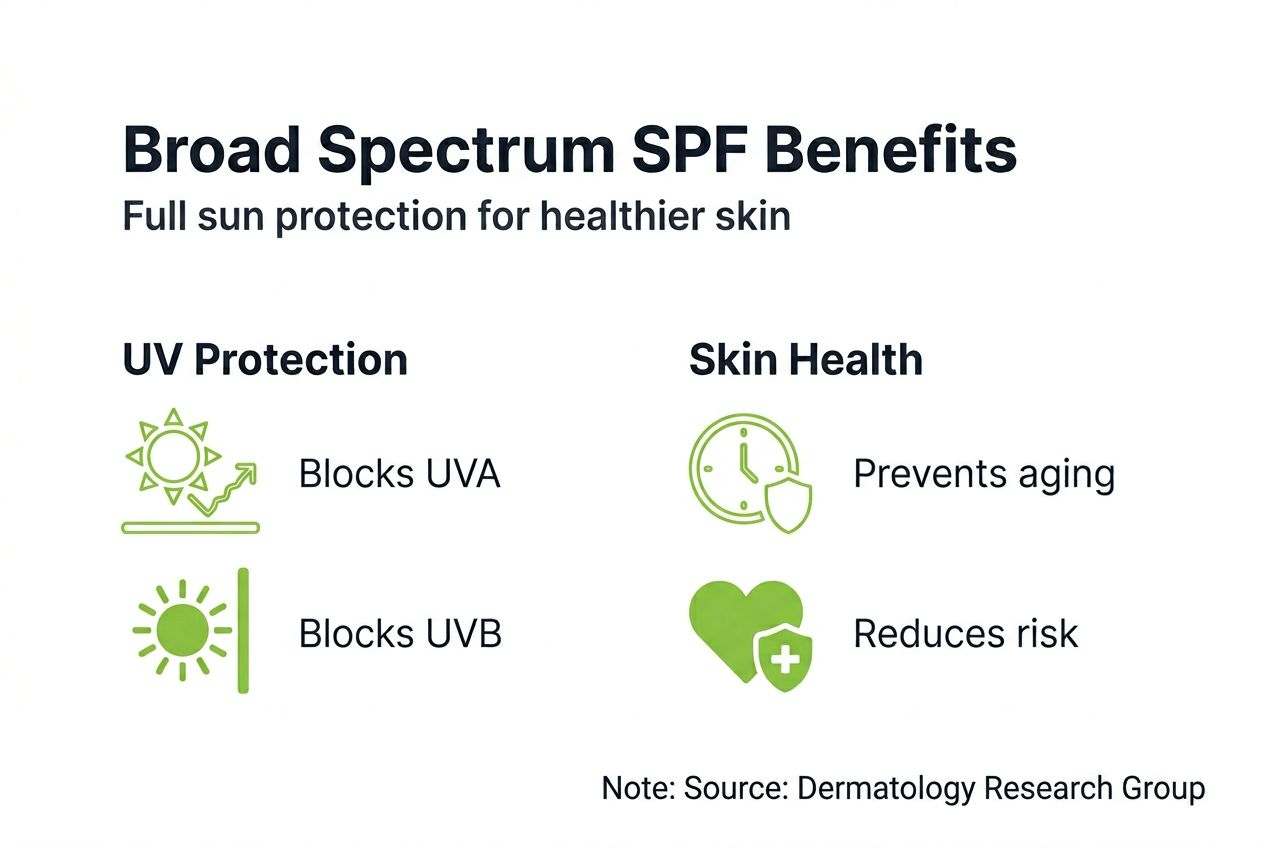
Protecting your skin now maintains its health and appearance for decades. Studies show people who use sunscreen daily experience 24% less skin aging than those who apply it sporadically. The difference becomes increasingly visible after age 40, when cumulative sun damage manifests as wrinkles, spots, and texture changes.
Combining broad spectrum sunscreen with other sun safety habits maximizes benefits. Seeking shade during peak UV hours, wearing protective clothing, and using wide brimmed hats create multiple defense layers. Sunscreen fills the gaps, protecting exposed skin that clothing can’t cover. This comprehensive approach gives you the strongest possible shield against UV damage.
The health benefits extend beyond cosmetic concerns. Preventing skin cancer saves lives and eliminates the need for potentially disfiguring surgical treatments. Starting broad spectrum SPF protection today, regardless of your age, reduces future skin cancer risk and keeps your skin healthier longer.
Choosing clean and natural broad spectrum SPF sunscreens
Mineral based broad spectrum sunscreens using zinc oxide or titanium dioxide offer natural UV defense without harsh chemicals. These minerals sit on skin’s surface, physically reflecting and scattering UV rays away from your body. Unlike chemical sunscreens that absorb into skin and convert UV radiation to heat, mineral formulas create an immediate protective barrier.
Avoid ingredients like parabens, sulfates, oxybenzone, and octinoxate that may irritate sensitive skin or disrupt hormones. Many conventional sunscreens contain these substances despite growing evidence of potential health concerns. Clean formulas skip questionable ingredients, focusing on proven safe and effective components that protect without compromise.
Reading labels carefully ensures you’re getting true broad spectrum protection with transparent ingredients. Look for the FDA mandated broad spectrum label, not just marketing claims. Check that zinc oxide or titanium dioxide appears high on the ingredient list, indicating sufficient concentration for effective UV filtering.
| Sunscreen Type | Active Ingredients | Best For | Considerations |
|---|---|---|---|
| Mineral | Zinc oxide, titanium dioxide | Sensitive skin, natural preference | May leave slight white cast initially |
| Chemical | Avobenzone, octisalate, octocrylene | Invisible finish preference | Requires 15 minute absorption time |
| Hybrid | Combination of both | Balanced protection and cosmetic appeal | Check for clean chemical filters |
Clean and natural sunscreens align better with health conscious values and sensitive skin needs. Mineral sunscreens benefits include immediate protection upon application and lower irritation risk. These formulas work especially well for people with rosacea, eczema, or reactive skin conditions.
Consider water resistance ratings based on your lifestyle and activities. Water resistant sunscreens maintain protection for 40 minutes in water, while very water resistant formulas last 80 minutes. Even water resistant products need reapplication after swimming, sweating heavily, or toweling off. No sunscreen remains fully effective after significant water exposure.
Features to prioritize when selecting clean sunscreens:
- Non nano zinc oxide particles that won’t penetrate skin
- Reef safe formulas free from harmful marine pollutants
- Fragrance free options to minimize irritation potential
- Broad spectrum SPF 30 or higher for adequate daily protection
- Transparent ingredient lists with recognizable components
Pro Tip: Zinc oxide sunscreen benefits include natural broad spectrum coverage without absorption concerns, making it ideal for daily face protection.
Finding clean beauty brands requires research but protects your health long term. Understanding clean ingredient skin care benefits helps you make informed choices that support both your skin and overall wellness. Choosing mineral based broad spectrum SPF aligns sun protection with natural skincare values.
Proper use and reapplication of broad spectrum SPF
Effective sun protection requires correct application amounts and consistent reapplication throughout sun exposure. Most people apply far too little sunscreen, reducing protection significantly. About one ounce of sunscreen covers an adult body fully, roughly the amount that fits in a shot glass.
For facial application alone, use approximately a nickel sized amount to ensure adequate coverage. This seems like a lot initially, but proper coverage requires sufficient product to create an effective UV blocking layer. Skimping on application reduces protection dramatically, potentially cutting SPF 30 effectiveness down to SPF 10 or lower.
Reapply broad spectrum sunscreen every two hours and immediately after swimming or sweating to maintain UV protection. Sunscreen effectiveness degrades over time from sun exposure, sweat, and natural skin oils breaking down the formula. Even water resistant products lose effectiveness after 40 to 80 minutes of water contact.
Follow these steps for maximum broad spectrum SPF effectiveness:
- Apply sunscreen 15 minutes before sun exposure to allow proper skin adherence
- Use enough product to cover all exposed skin thoroughly without missing spots
- Pay special attention to often forgotten areas like ears, neck, hands, and feet
- Reapply every two hours during continued outdoor activity
- Apply additional product immediately after swimming, heavy sweating, or towel drying
- Use sunscreen even on cloudy days since UV rays penetrate cloud cover
Applying too little sunscreen ranks as the most common mistake that compromises protection. Studies show people typically apply 25% to 50% of the recommended amount, drastically reducing effectiveness. When in doubt, use more product rather than less to ensure complete coverage.
Understanding the correct sunscreen application steps helps you layer products properly for maximum benefit. Apply sunscreen as the final step in your skincare routine, after moisturizer and before makeup. This placement ensures the UV filters sit on your skin’s surface where they work most effectively.
Complement sunscreen use with other sun safety practices for comprehensive protection. Seek shade during peak UV hours between 10 AM and 4 PM. Wear wide brimmed hats that shade your face, ears, and neck. Choose tightly woven clothing that blocks UV rays, or look for garments with UPF ratings. These combined strategies create multiple defense layers against sun damage.
Protect your skin with clean, broad spectrum SPF products
Claribel Skincare offers clean, natural broad spectrum SPF products formulated without harsh chemicals or synthetic ingredients. Our mineral based sunscreens use zinc oxide to provide immediate, effective UV protection that aligns with your health conscious values. Every formula excludes parabens, sulfates, and other questionable ingredients that compromise skin health.
Take our skincare quiz to discover personalized sunscreen solutions matching your specific skin type and concerns. The quiz considers your sensitivity level, lifestyle factors, and protection needs to recommend products that work best for you. Getting personalized guidance ensures you choose formulas that deliver results without irritation.
Explore our natural skincare sets featuring broad spectrum SPF products paired with complementary treatments. These curated collections simplify your routine while providing comprehensive skin protection and nourishment. Each set combines effective, non toxic options that work synergistically for healthier, protected skin.
Learn more about the natural skin care ingredients we use to enhance sun protection while addressing aging concerns. Our formulas blend mineral UV filters with antioxidants, vitamins, and botanical extracts that support skin health. Choosing Claribel means protecting your skin while staying true to clean beauty principles that prioritize your wellness.
Frequently asked questions about broad spectrum SPF
What does broad spectrum SPF mean?
Broad spectrum SPF means the sunscreen protects against both UVA rays that cause aging and UVB rays that cause sunburn. Products must pass FDA testing standards proving balanced protection across the UV spectrum to earn this label.
Is broad spectrum SPF better than regular SPF?
Yes, broad spectrum SPF provides superior protection by defending against both UVA and UVB rays, while regular SPF only measures UVB protection. UVA rays cause deep skin damage, premature aging, and contribute to cancer risk, making broad spectrum coverage essential for complete sun safety.
What SPF level should I use for broad spectrum protection?
Dermatologists recommend using broad spectrum SPF 30 or higher for daily protection. SPF 30 blocks 97% of UVB rays, providing adequate defense for most situations. Higher SPF numbers offer slightly more protection but require the same reapplication schedule every two hours.
Do I need to reapply broad spectrum sunscreen if I’m indoors?
You should reapply if you’re near windows or spending time in areas with direct sunlight exposure. UVA rays penetrate glass, reaching your skin even indoors. For typical indoor office work away from windows, morning application usually suffices, but reapply before going outside.
Can broad spectrum SPF prevent all sun damage?
Broad spectrum SPF significantly reduces sun damage but doesn’t eliminate it completely. Even SPF 50 allows about 2% of UV rays through. Combining sunscreen with protective clothing, shade seeking, and avoiding peak sun hours creates the most effective defense against UV radiation.
Are mineral or chemical broad spectrum sunscreens more effective?
Both types can provide effective broad spectrum protection when formulated properly. Mineral sunscreens using zinc oxide or titanium dioxide offer immediate protection and suit sensitive skin better. Chemical sunscreens may feel lighter but require 15 minutes to absorb before becoming effective. Choose based on your skin sensitivity and ingredient preferences.