


What is Vegan Collagen?
Over half of American adults are interested in vegan wellness products, yet many remain confused about vegan collagen. The rise of plant-based supplements is driving questions about whether they can truly replace animal-derived collagen. This article clears up the myths, explains what vegan collagen really is, and highlights surprising facts about how it supports your body’s natural processes for healthier skin and joints.
Table of Contents
- Vegan Collagen Defined And Common Myths
- How Vegan Collagen Is Produced
- Natural Sources And Key Ingredients
- Health Benefits For Skin And Joints
- Vegan Collagen Vs Animal Collagen Options
Key Takeaways
| Point | Details |
|---|---|
| Vegan Collagen is Plant-Based | Unlike traditional collagen, vegan collagen supports the body’s collagen production using plant-based nutrients rather than providing direct collagen. |
| Genetic Engineering Advances | Recent biotechnology enables the creation of bioidentical vegan collagen through microbial fermentation, setting new standards for ethical protein production. |
| Nutritional Foundation for Collagen | A balanced diet rich in amino acids, vitamins, and minerals is essential to enhance natural collagen synthesis and improve skin health. |
| Differences from Animal Collagen | Vegan collagen focuses on stimulating collagen production internally, while animal collagen provides direct protein from animal sources. |
Vegan Collagen Defined And Common Myths
Vegan collagen is not traditional collagen, but a plant-based alternative designed to support your body’s natural collagen production. Experts confirm that natural collagen remains animal-derived, making true vegan collagen a complex scientific challenge.
Contrary to popular misconceptions, what most people refer to as “vegan collagen” are actually plant-based ingredients and nutrients that stimulate the body’s own collagen synthesis. These ingredients typically include amino acids, vitamin C, zinc, and antioxidants that help trigger collagen production pathways. Currently, genetically engineered vegan collagen remains primarily experimental and expensive, with no widespread consumer supplements available.
Common myths about vegan collagen include believing it’s a direct replacement for animal-based collagen. In reality, these products work differently - they provide nutritional support to encourage your body’s internal collagen generation rather than delivering collagen protein directly. Key ingredients like silica, proline, and lysine help strengthen your skin’s natural structural proteins and support cellular regeneration.
Pro Tip for Collagen Support: Focus on consuming a balanced diet rich in plant-based proteins, vitamin C, and antioxidants to naturally enhance your body’s collagen production and skin health.
How Vegan Collagen Is Produced
Vegan collagen production represents a cutting-edge biotechnological breakthrough that challenges traditional animal-derived collagen manufacturing. Recent advancements have enabled the creation of bioidentical vegan collagen by inserting human collagen genes into microorganisms like yeast and bacteria, allowing these microbes to generate collagen peptides that are structurally identical to human collagen.

The production process involves sophisticated genetic engineering techniques where scientists carefully modify microbial DNA to produce specific protein structures. These genetically engineered microorganisms act as microscopic protein factories, synthesizing collagen peptides through precise fermentation processes. Advanced scientific techniques have also developed non-animal-derived collagen-like protein-based fibers with tailored molecular properties, demonstrating remarkable progress in creating sustainable protein alternatives.
Unlike traditional collagen extraction methods that rely on animal tissues, these biotechnological approaches offer a more ethical and potentially more consistent protein production method. The process involves multiple complex steps: gene identification, genetic modification, microbial cultivation, protein extraction, and purification. Each stage requires meticulous scientific precision to ensure the final product maintains the structural integrity and functional characteristics of human collagen.
Pro Tip for Understanding Vegan Collagen: Research ongoing biotechnology developments, as vegan collagen production techniques are rapidly evolving and becoming more sophisticated with each scientific breakthrough.
Natural Sources And Key Ingredients
Plant-based foods high in amino acids play a critical role in supporting collagen production, with specific ingredients offering remarkable nutritional benefits for skin health. Soy products, black beans, kidney beans, seeds, and nuts emerge as powerful sources of essential amino acids that help stimulate the body’s natural collagen synthesis process.
Nutritional building blocks are fundamental to collagen production, with the body requiring a precise combination of amino acids, vitamin C, zinc, copper, and other key nutrients to synthesize collagen effectively. These essential components work synergistically to support protein formation and maintain skin elasticity. Specifically, lysine, proline, and glycine are amino acids that serve as critical structural components for collagen protein, while vitamin C acts as a crucial cofactor in collagen synthesis.
Key ingredients that support vegan collagen production include protein-rich foods and specific micronutrients. Notable sources include:
- Legumes: Black beans, lentils, chickpeas
- Nuts: Almonds, walnuts, cashews
- Seeds: Chia, hemp, pumpkin seeds
- Whole grains: Quinoa, brown rice
- Vitamin C-rich foods: Citrus fruits, bell peppers, strawberries
Pro Tip for Vegan Collagen Support: Create a balanced meal plan that incorporates diverse plant-based protein sources and vitamin-rich foods to naturally enhance your body’s collagen production mechanism.
This table highlights key nutrients and their roles in supporting vegan collagen production:
| Nutrient | Natural Examples | Function in Collagen Synthesis |
|---|---|---|
| Lysine | Black beans, lentils | Structural support for collagen fibers |
| Proline | Soy, nuts | Forms collagen’s triple-helix structure |
| Vitamin C | Bell peppers, strawberries | Essential cofactor in collagen formation |
| Zinc | Pumpkin seeds, quinoa | Aids in enzymatic collagen production |
Health Benefits For Skin And Joints
Vegan collagen products contain powerful plant-based ingredients that support comprehensive skin and joint health, delivering a holistic approach to wellness through carefully selected nutrients. These innovative formulations leverage amino acids, ceramides, minerals, and antioxidants to stimulate the body’s natural regenerative processes, promoting elasticity, reducing inflammation, and supporting structural protein synthesis.
Skin health benefits extend far beyond surface-level improvements. The combination of key nutrients helps strengthen skin’s underlying structure, enhancing moisture retention, promoting cellular repair, and protecting against environmental stressors. By supporting collagen production, these plant-based ingredients help minimize fine lines, improve skin texture, and maintain a more youthful, resilient complexion. Joint support is equally significant, with specific compounds working to reduce inflammation, support connective tissue integrity, and potentially mitigate age-related degradation.
The primary mechanisms of vegan collagen support involve multiple physiological pathways:
- Stimulating internal collagen synthesis
- Providing essential amino acid building blocks
- Reducing oxidative stress through antioxidants
- Supporting cellular repair and regeneration
- Enhancing moisture retention and skin barrier function
Pro Tip for Holistic Wellness: Combine vegan collagen support with consistent hydration, balanced nutrition, and targeted supplementation to maximize your body’s natural regenerative capabilities.
Vegan Collagen Vs Animal Collagen Options
Traditional scientific understanding confirms that collagen is fundamentally an animal-derived protein, creating significant complexity in developing genuine vegan alternatives. While animal-based collagen is extracted directly from animal tissues like cow or fish bones, plant-based options focus on providing nutritional support to stimulate the body’s natural collagen production mechanisms rather than delivering collagen protein itself.
Comparative Analysis reveals key distinctions between animal and vegan collagen approaches. Animal collagen supplements provide direct protein molecules extracted from animal sources, offering immediate structural components. Vegan alternatives, by contrast, use strategic combinations of amino acids, vitamins, and minerals that trigger the body’s intrinsic collagen synthesis pathways. This metabolic approach requires the body to generate its own collagen, potentially offering more comprehensive and personalized protein formation.
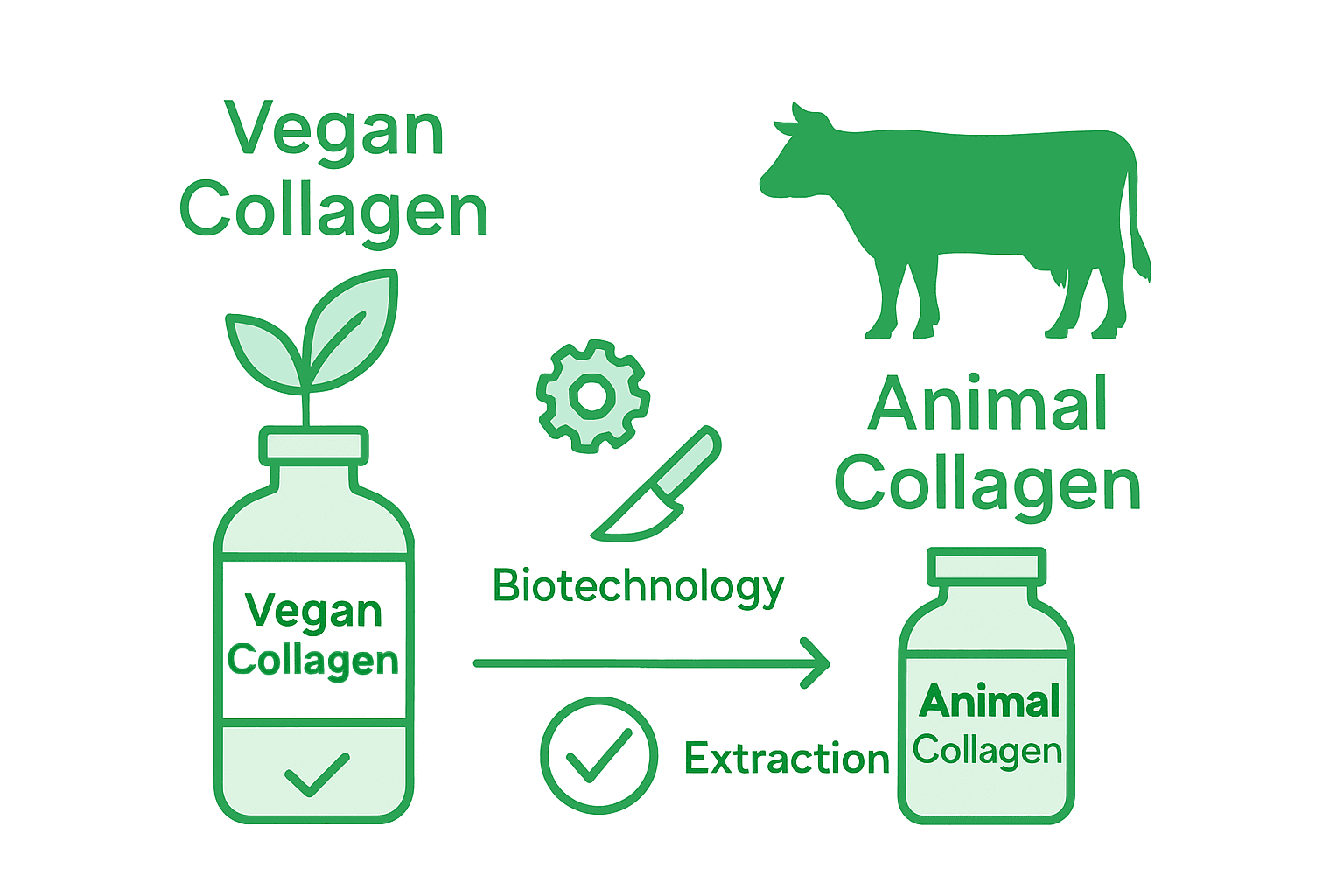
Key differences between animal and vegan collagen options include:
Here is a summary of how vegan and animal collagen options differ across key categories:
| Aspect | Vegan Collagen Approach | Animal Collagen Approach |
|---|---|---|
| Main Purpose | Supports natural collagen production | Provides direct collagen proteins |
| Source Material | Genetically engineered microbes or plant nutrients | Animal tissues such as bovine or fish |
| Consistency | Depends on diet and formulation | Consistent protein composition |
| Ethical Considerations | Plant-based and cruelty-free | Animal-derived, ethical concerns |
| Cost & Availability | Often higher, limited availability | Widely available, various price points |
- Protein Source: Animal (direct extraction) vs Plant-based (metabolic stimulation)
- Ethical Considerations: High animal welfare concerns vs Completely plant-derived
- Absorption Mechanism: Direct protein introduction vs Nutritional pathway activation
- Sustainability: Limited renewable resources vs Potentially more sustainable production
- Allergen Potential: Higher animal protein sensitivity risk vs Lower potential for allergenic reactions
Pro Tip for Smart Supplementation: Research individual ingredient profiles and consult healthcare professionals to determine the most appropriate collagen support strategy for your unique physiological needs.
Enhance Your Skin’s Natural Glow with Targeted Vegan Solutions
Struggling to support your skin’s collagen production the right way? The article highlights how vegan collagen products focus on stimulating your body’s own collagen synthesis using key nutrients like amino acids and vitamin C rather than delivering collagen directly. If your goal is to nourish your skin from within while avoiding animal-derived ingredients and toxic fillers consider exploring our clean, vegan, and cruelty-free skincare collections designed specifically to boost your skin’s vitality.

Discover the power of Vitamin C Benefits for Skin | A Top Powerful Antioxidant and elevate your daily routine with formulas that work synergistically to enhance collagen formation and skin elasticity. Pair these with advanced peptides from our Peptides for Skin Care: Fight the Signs of Aging – Claribelskincare.com collection for deeper regenerative support. All products ship for free in the US and are formulated without fillers or harmful chemicals so you can experience healthy skin confidently. Take the next step to empower your skin’s natural resilience today by visiting Claribelskincare.com.
Frequently Asked Questions
What is vegan collagen?
Vegan collagen is a plant-based alternative that supports the body’s natural collagen production but does not contain collagen itself. It typically includes nutrients that stimulate collagen synthesis, such as amino acids, vitamin C, and antioxidants.
How is vegan collagen produced?
Vegan collagen is primarily produced through biotechnological advancements, such as inserting human collagen genes into microorganisms like yeast or bacteria. These microbes generate collagen peptides that mimic human collagen, without the use of animal products.
What are the health benefits of vegan collagen for skin?
Vegan collagen supports skin health by enhancing moisture retention, reducing fine lines, and promoting cellular repair. It provides important nutrients that stimulate the body’s natural collagen synthesis, leading to improved skin elasticity and texture.
How does vegan collagen compare to animal-based collagen?
Vegan collagen focuses on providing the nutrients necessary for the body to produce its own collagen, while animal-based collagen provides direct collagen proteins extracted from animal sources. Vegan options often have ethical benefits and may be more sustainable, though they require the body to generate collagen naturally.