What Is Non Comedogenic and Why It Matters

Finding skincare that keeps pores clear can feel frustrating, especially when sensitive, acne-prone skin reacts to so many products. For women in Atlanta, the city’s humidity often makes things even trickier. The truth is, terms like non-comedogenic are not regulated by the FDA, so you must look beyond labels to protect your skin. Discover how understanding ingredients and making mindful choices helps you avoid hidden pore blockers while supporting clean, vegan, and cruelty-free beauty routines.
Table of Contents
- Non Comedogenic Explained: Definition And Misconceptions
- How Non Comedogenic Skincare Works
- Non Comedogenic Ingredients To Look For
- Risks Of Comedogenic Ingredients In Skincare
- Choosing Non Comedogenic Products For Sensitive Skin
Key Takeaways
| Point | Details |
|---|---|
| Understanding Non-Comedogenic | Non-comedogenic products are designed to avoid clogging pores, crucial for sensitive or acne-prone skin. |
| Lack of Regulation | The term ‘non-comedogenic’ is not regulated by the FDA, leading to potential inconsistencies in product claims. |
| Individual Skin Differences | Reactions to non-comedogenic products can vary greatly among individuals due to unique skin types and microbiomes. |
| Ingredient Awareness | Focus on ingredient lists to identify effective non-comedogenic components like Glycerin and Vitamin C, avoiding heavy oils and irritants. |
Non Comedogenic Explained: Definition and Misconceptions
The term “comedogenic” describes products or ingredients that clog pores and create comedones like blackheads and whiteheads. “Non-comedogenic” means the opposite: formulations designed to avoid blocking those pores. If you have acne-prone or sensitive skin, this distinction matters significantly. It’s the difference between a product that works with your skin versus one that aggravates breakouts.
Here’s what many people don’t realize: the FDA doesn’t regulate non-comedogenic claims. There’s no official testing standard, no government seal of approval, and no legal definition. A brand can label something “non-comedogenic” without following any specific guidelines. This means you’re relying on the brand’s own testing and integrity rather than federal oversight.
Individual skin varies dramatically. What remains non-comedogenic for your friend might trigger breakouts for you. Factors like your skin type, existing microbiome, humidity level, and even other products you layer together create unique reactions. Understanding pore-clogging ingredients helps you avoid common culprits, but absolute certainty doesn’t exist. A non-comedogenic label is a helpful starting point, not a guarantee.
Here’s a summary of how individual factors impact non-comedogenic product effectiveness:
| Factor | Effect on Product Performance | Typical Impact for Sensitive Skin |
|---|---|---|
| Skin Type | Alters product tolerance | Sensitive skin prone to irritation |
| Microbiome Balance | Affects ingredient interaction | Reactivity varies person to person |
| Climate/Humidity | Influences product absorption | High humidity can intensify blockages |
| Layering Other Products | Modifies combined comedogenicity | Increases chance of cumulative blockage |
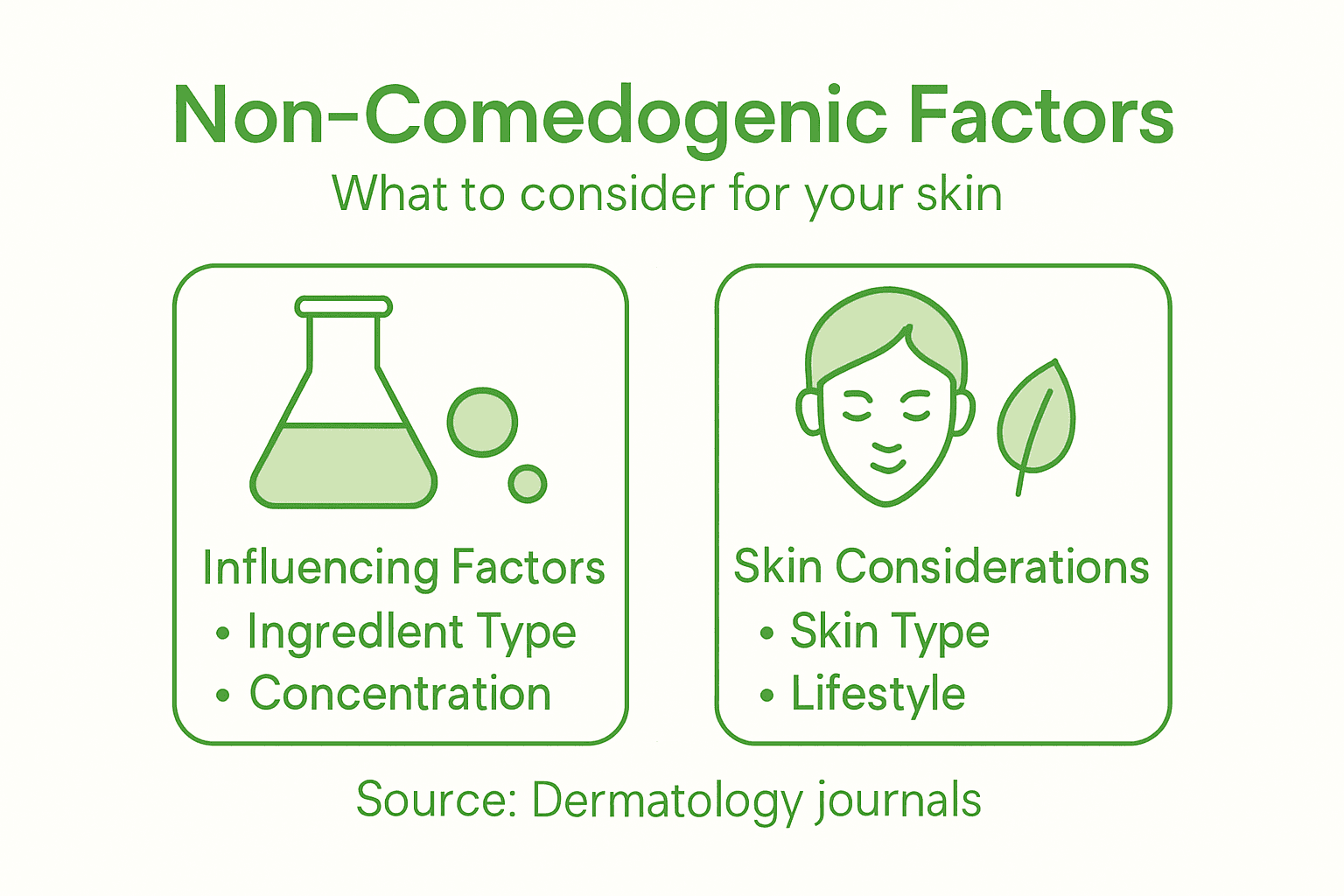
Comedicogenicity testing exists in laboratory settings, but there’s no standardized method that all companies use. Some brands conduct testing on actual skin; others use different protocols entirely. This inconsistency means “non-comedogenic” claims lack universal validation. Your skin becomes the real test.
For Atlanta’s humid climate and active lifestyles, finding truly clean, non-comedogenic formulations matters even more. Products free from synthetic chemicals and common irritants tend to perform better for sensitive, acne-prone skin. Look beyond the label and examine ingredient lists carefully.
Pro tip: Patch test any new non-comedogenic product on a small area of your jawline or inner arm for one week before applying it to your entire face; this reveals whether your individual skin will react negatively.
How Non Comedogenic Skincare Works
Non-comedogenic skincare operates on a simple principle: avoid ingredients that block pores. Rather than fighting acne after it forms, these products work preventatively by selecting components that minimize pore obstruction. The goal is reducing breakouts before they start, especially important for women with sensitive or acne-prone skin dealing with Atlanta’s humid climate.
The magic happens in ingredient selection. Non-comedogenic formulas deliberately exclude heavy oils, silicones, and waxes known to trap bacteria and dead skin cells inside pores. Instead, they incorporate lightweight hydrators and active compounds that nourish without creating a pore-clogging barrier. When you layer active skincare ingredients designed for acne-prone skin, the formulation matters as much as the individual component.
However, non-comedogenic products reduce acne formation through educated guessing rather than guaranteed science. Developers make assumptions about how ingredients interact with skin based on available research and testing protocols. Because there’s no regulatory standard, brands use different methods to determine which ingredients won’t clog pores. Some test on actual skin; others rely on laboratory models or historical data.
Your individual skin chemistry complicates the picture further. Dose matters. Skin type matters. How you apply products matters. Someone with oily skin might tolerate a non-comedogenic moisturizer beautifully while someone with dry, sensitive skin experiences irritation. The same product can behave differently depending on what else you’re using and your skin’s unique microbiome.
Clean, vegan formulations tend to perform better for acne-prone skin because they exclude synthetic chemicals and common irritants that trigger inflammation. When brands commit to removing parabens, sulfates, and synthetic fragrances, they’re already eliminating many pore-clogging culprits. This approach aligns with how non-comedogenic products function at their core.
Pro tip: Introduce one new non-comedogenic product every two weeks rather than overhauling your routine at once, allowing you to identify which ingredient or formulation your skin genuinely tolerates.
Non Comedogenic Ingredients to Look For
Knowing which ingredients work with your skin is the fastest way to identify genuinely non-comedogenic products. Rather than relying solely on packaging claims, you can read ingredient lists and spot components proven to support clear skin without clogging pores. This knowledge transforms you from a passive consumer into an informed shopper.
Glycerin tops the list of reliable non-comedogenic ingredients. This humectant draws moisture into skin without creating a heavy, pore-blocking barrier. It works beautifully in humid Atlanta climates where your skin already has moisture in the air. Aloe vera follows closely, offering soothing, anti-inflammatory benefits without the weight. Many women with sensitive, acne-prone skin notice calming effects within days of using products containing aloe.
Vitamin C stands out as an ingredient unlikely to clog pores while brightening and protecting skin. It delivers antioxidant protection that actually helps prevent acne formation by reducing inflammation. Water-based and lightweight vitamin C serums work particularly well for acne-prone skin types.
Other winning ingredients include niacinamide (which regulates oil production), salicylic acid (a beta-hydroxy acid that gently exfoliates), and hyaluronic acid (an ultra-lightweight humectant). Botanical extracts like green tea, chamomile, and witch hazel offer non-comedogenic benefits too. These plant-based components soothe irritation and provide antioxidant support without synthetic fillers.
Compare common non-comedogenic ingredients by their key benefits and typical skin compatibility:
| Ingredient | Key Benefit | Suitability for Skin Types |
|---|---|---|
| Glycerin | Lightweight hydration | Suitable for all skin types |
| Aloe Vera | Soothes and calms irritation | Best for sensitive, acne-prone |
| Vitamin C | Brightens and protects skin | Effective for dull or uneven |
| Niacinamide | Regulates oil production | Good for oily and combination |
| Hyaluronic Acid | Hydrates without heaviness | Works for dry and oily skin |
When reviewing natural skin care ingredients formulated for clean beauty, look for organic certifications and vegan formulations. Brands committing to clean standards naturally exclude heavy oils and synthetic chemicals that trigger breakouts. Paraben-free, sulfate-free, and fragrance-free products eliminate major pore-clogging culprits from the start.
The ingredient order matters too. If a heavy oil appears in the first five ingredients, it’s likely comedogenic regardless of what follows. Conversely, if glycerin, aloe, or vitamin C ranks in the top three, you’re looking at a formulation genuinely designed for acne-prone skin.
Pro tip: Screenshot ingredient lists of products you love and compare them to ones that trigger breakouts, identifying patterns in which specific ingredients your skin accepts or rejects.
Risks of Comedogenic Ingredients in Skincare
Comedogenic ingredients don’t just sit on your skin inertly. They actively work against clear skin by blocking hair follicles and trapping bacteria inside pores. When these blocked follicles become inflamed, you get acne. The longer you use products containing these pore-clogging substances, the worse the problem typically becomes.
Prolonged exposure to comedogenic ingredients can lead to acne cosmetica, a persistent low-grade acneiform eruption that’s frustrating to treat. This condition develops slowly over time as comedogenic products accumulate damage. By the time you notice consistent breakouts, the barrier damage may already be significant. For women with acne-prone skin in humid Atlanta climates, this risk multiplies because sweat and moisture intensify pore blockage.
Comedogenic ingredients clog pores and weaken skin barriers, leading to inflammation that compounds existing acne. When your skin barrier weakens, it becomes more vulnerable to bacteria, irritation, and sensitivity. You may notice increased redness, flaking, or unexplained breakouts that seem resistant to treatment. This vicious cycle perpetuates itself until you remove the offending ingredients.
Concentration matters significantly. Some ingredients considered comedogenic at high percentages become acceptable in minimal amounts. A moisturizer containing 0.5 percent of a comedogenic oil might not trigger breakouts, while the same oil at 10 percent absolutely would. Product combinations amplify risk too. Layering multiple products with borderline-comedogenic ingredients creates cumulative pore blockage you’d never experience with each product alone.
Different skin types experience varying risk levels. Dry skin occasionally tolerates ingredients that immediately break out acne-prone skin. However, avoiding problematic skincare ingredients protects everyone with sensitivity concerns. Heavy silicones, certain waxes, and thick emollients rank among the most consistently comedogenic offenders across all skin types.
The lack of standardized testing means you’re essentially experimenting on yourself when trying new products. Without regulated definitions, brands make their own decisions about which ingredients to exclude. This inconsistency is precisely why clean beauty standards matter for acne-prone skin.
Pro tip: Keep a simple breakout log for two weeks before introducing any new skincare product, then continue tracking for four weeks after, noting dates, locations, and severity to identify which ingredients genuinely trigger your acne.
Choosing Non Comedogenic Products for Sensitive Skin
Selecting non-comedogenic products for sensitive skin requires more than reading marketing labels. You need a strategy that combines ingredient knowledge, patch testing, and realistic expectations. The goal is reducing inflammation and breakouts while protecting your skin barrier from unnecessary stress.
Start by examining ingredient lists rather than trusting packaging claims alone. Non-comedogenic products reduce acne risk without irritating sensitive skin because they exclude pore-blocking substances. Look for familiar names like glycerin, niacinamide, and aloe vera. Avoid heavy oils, thick silicones, and synthetic fragrances that typically trigger sensitivity in acne-prone skin.
Patch testing becomes non-negotiable when you have sensitive skin. Apply a small amount of any new product to your inner arm or behind your ear for one week before introducing it to your face. This reveals whether your individual skin will tolerate the formulation. Even certified non-comedogenic products occasionally cause reactions in hypersensitive individuals.
Vegan and clean formulations matter significantly for sensitive skin. Products free from parabens, sulfates, and synthetic chemicals naturally avoid many common irritants. When caring for sensitive skin naturally, choose brands committed to transparency about their entire ingredient supply chain. This accountability matters more than marketing claims.
Concentration and formula type influence how well your skin tolerates non-comedogenic products. A lightweight water-based serum performs differently than a cream or oil, even if both are labeled non-comedogenic. Layering matters too. Adding one gentle product at a time prevents overwhelming your barrier. If you introduce a cleanser, hydrator, and treatment serum simultaneously, you cannot identify which ingredient caused irritation if a reaction occurs.
Consultation with a dermatologist accelerates the process if you struggle identifying suitable products independently. Professionals can recommend specific formulations based on your skin’s unique needs rather than generic non-comedogenic guidelines.
Pro tip: Purchase sample sizes or travel sizes of non-comedogenic products before committing to full-size bottles, allowing you to test tolerance with minimal financial risk.
Discover Truly Non Comedogenic Skincare That Works for Your Sensitive Skin
If you are struggling with acne-prone or sensitive skin and tired of products that claim to be non-comedogenic but still cause breakouts, you are not alone. The key challenge is understanding which ingredients genuinely avoid clogging pores while soothing your skin. At Claribel Skincare, we specialize in clean, natural, and ethical formulations designed specifically for sensitive and blemish-prone skin. Our products are free from synthetic chemicals and irritants like parabens and sulfates to protect your skin barrier and reduce inflammation.
Explore our carefully crafted collections such as Blemish Prone and Niacinamide for Skin Care: Amazing Benefits for Your Skin to find lightweight, non-comedogenic solutions with powerful active ingredients backed by clean beauty principles. Don’t wait to stop the cycle of clogged pores and irritation. Visit Claribel Skincare today to start your journey toward clearer, healthier skin with products that respect what matters most to you and your complexion.
Frequently Asked Questions
What does non-comedogenic mean?
Non-comedogenic refers to products or ingredients that are specifically formulated to avoid clogging pores, thereby minimizing the risk of breakouts such as blackheads and whiteheads.
Why is it important to choose non-comedogenic products?
Choosing non-comedogenic products is crucial for individuals with acne-prone or sensitive skin, as these formulations are designed to reduce the likelihood of pore blockage and related skin issues.
Can a product labeled as non-comedogenic still cause breakouts?
Yes, a product labeled as non-comedogenic can still cause breakouts for some individuals, as skin reactions vary based on factors like skin type, microbiome balance, and other products used alongside it.
What ingredients should I look for in non-comedogenic skincare products?
Look for ingredients like glycerin, aloe vera, niacinamide, and hyaluronic acid, which are known to provide hydration and benefits without clogging pores.